Tag: technology

  • India’s AI Travel Couple, FramesNFlights by Glido Labs, Crosses 100K Followers, Showing That Great Content Beats the AI vs Human Debate

    The milestone positions FramesNFlights as India’s first AI travel influencer duo to reach 100,000 Instagram followers organically, reinforcing a simple idea: audiences reward useful content, not whether it is created by humans or AI.

    New Delhi [India], August 7: For years, marketers have debated whether audiences would trust AI-generated creators. FramesNFlights by Glido Labs may have provided one of India’s clearest answers.

    The AI travel couple has become India’s first AI travel influencer duo to cross 100,000 Instagram followers, generating more than 30 million organic views and over 45,000 travel itinerary requests within 90 days.

    For Glido Labs, an AI-First Content IP Studio that helps brands and enterprise clients build and scale Content IPs, the milestone is about more than follower growth. It reflects a broader shift in how audiences evaluate digital creators.

    The Real Shift Isn’t AI. It’s Audience Ownership.

    Most discussions around AI creators focus on whether audiences can distinguish between human and AI-generated personalities.

    For enterprise marketers, that may be the wrong question.

    The larger strategic challenge is building a consistent, high-frequency content engine without continuously increasing production costs or relying entirely on external creators.

    Glido Labs works with brands and enterprise clients to build and scale proprietary Content IPs, AI-powered media properties designed around audience interests rather than individual campaigns and products.

    Instead of creating isolated pieces of content, the objective is to build long-term distribution assets that continue to educate, engage, and grow over time.

    FramesNFlights Offers an Early Example

    One of Glido Labs’ most visible Content IPs is FramesNFlights, an AI-powered travel couple focused on destination discovery and travel inspiration.

    Within 90 days, the account crossed 100,000 Instagram followers, generated more than 30 million organic views, and received over 45,000 travel itinerary requests from users planning trips.

    While those numbers attracted attention, Glido Labs believes the more important takeaway lies elsewhere.

    “The biggest insight wasn’t reaching 100,000 followers. It was realizing that people don’t really care whether the creator is AI or human. They care whether the content consistently helps them. If the content creates value, trust follows naturally,” says Rajat Kumar, Co-Founder and Chief Business Officer at Glido Labs.

    Enterprise Teams Need Scalable Content, Not Bigger Production Budgets

    Marketing leaders today face a familiar challenge.

    They are expected to publish more content across more platforms, in more formats, and increasingly in multiple regional languages, all while managing tighter timelines and growing pressure on efficiency.

    Traditional production models often struggle to keep pace because every campaign requires planning, shoots, creators, editing, approvals, and distribution.

    Glido Labs addresses this through AI-native production workflows supported by human editorial review, enabling brands to produce consistent, brand-safe content while maintaining strategic oversight.

    The company positions AI as an operational advantage rather than a replacement for creative thinking.

    India’s Multilingual Internet Requires a Different Content Strategy

    India’s digital audience is expanding rapidly beyond English-speaking markets.

    Consumers increasingly engage with creators who communicate in their preferred language and understand regional culture.

    Recognising this shift, Glido Labs has expanded beyond English and Hinglish with vernacular-language Content IPs, including Iruvar Payanam for Tamil-speaking audiences, which has also crossed 10K followers, alongside dedicated initiatives for other regional markets.

    The approach allows brands to think beyond translation and instead build content ecosystems designed specifically for diverse language communities.

    Content IPs Could Become the Next Competitive Advantage

    Many brands have already invested heavily in content marketing.

    The next stage may be building media properties that audiences choose to follow independently of advertising campaigns.

    This is the philosophy behind Glido Labs’ Content IP model.

    Rather than relying exclusively on rented distribution through influencers or paid media, brands can develop owned media assets that strengthen audience relationships over time.

    The company has built multiple AI-powered Content IPs across travel, business, finance, marketing, relationships, devotion, storytelling, and other knowledge-led categories, while continuing to expand into multilingual experiences.

    The Conversation Has Moved Beyond AI Influencers

    The debate is no longer whether an AI Influencer in India can attract attention.

    The more relevant question for founders and marketing leaders is whether AI can help build sustainable media assets that reduce long-term dependence on rented distribution.

    For categories driven by education, expertise, information, and consistent publishing, AI-powered Content IPs are beginning to present a new operating model.

    Glido Labs believes the brands that invest early in owned audience ecosystems will be better positioned for the next phase of digital marketing.

    As enterprises rethink how they create and distribute content, the future may belong less to brands that simply buy attention, and more to those that build it.

    If you object to the content of this press release, please notify us at pr.error.rectification@gmail.com. We will respond and rectify the situation within 24 hours.


  • MG SELECT launches the Couture Edition of M9 at INR 84.94 Lakh and Cyberster at INR 87.49 Lakh

    Gurugram (Haryana) [India], August 6: MG SELECT, the luxury brand channel of JSW MG Motor India, today announced launch prices of the Couture Editions of the MG M9 at INR 84.94 Lakh and MG Cyberster at INR 87.49 Lakh.TheseCouture Edition luxury vehicles, created in partnership with internationally acclaimed designer Gaurav Gupta, mark the moment Gupta’s design language moves fully from the runway to the road.

    The collaboration began earlier this year at the opening of Gupta’s menswear flagship in New Delhi, where an interpretation of the MG Cyberster first hinted at what couture and automotive design might achieve together.

    Gupta showcased‘Light Song’, his latest couture collection in Mumbai on July 17, 2026. As the Official Automobile Partner of the showcase, MG SELECT marked the occasion with the unveiling of the MG M9 and the MG Cyberster Couture Edition, extending the collection’s narrative into motion.

    Talking about the success of MG SELECT marquee launches, Milind Shah, Head – MG SELECT, JSW MG Motor India, said, “The Cyberster and M9 have quickly become the most sought-after luxury EVs in their segment. By introducing a couture layer, we are building on that popularity with an offering that is both rare and collectible. It strengthens MG SELECT’s business proposition by uniting proven demand with exclusivity, ensuring our luxury channel continues to establish itself as a curator of distinct experiences for discerning customers.”

    MG SELECT

    Couturier Gaurav Gupta said, “I’ve always believed that great design transcends categories. This collaboration with MG demonstrates how the principles of couture, craftsmanship, precision and emotional storytelling can transform the way we experience luxury mobility. Together, we’ve created something that is as expressive as it is functional.”

    Both the M9 and the Cyberster carry Gupta’s Serpent Infinity motif, a recurring signature in his work associated with continuity, transformation and quiet power. The motif is realised through the same embroidery artistry, tonal layering and hand-finished detailing that defined the silhouettes on Light Song’s runway, lending each vehicle a sense of movement and depth that shifts with the light, much as fabric does.

    Couture Edition kit for each vehicle is limited to 50 units and available exclusively through MG SELECT Experience Centres across 14 cities. Reservations open at www.mgselect.co.in. For any queries, one can reach Elite Hub at mgselect@mgmotor.co.in or call 1800 57 00 000. Deliveries begin August 10, 2026.

    If you object to the content of this press release, please notify us at pr.error.rectification@gmail.com. We will respond and rectify the situation within 24 hours.
  • AI Isn’t Replacing Hospitals – It’s Making Them Smarter, Says Jayesh Saini

    New Delhi [India], August 5: When artificial intelligence first entered mainstream conversation, much of the attention focused on dramatic possibilities. Headlines predicted AI would diagnose diseases faster than doctors, replace healthcare professionals and fundamentally redefine medicine.

    The reality is proving to be both more practical and, arguably, more significant. AI is quietly transforming the way hospitals operate, not by replacing clinicians, but by helping healthcare organizations work more efficiently. From scheduling operating theatres and managing patient flow to supporting radiology workflows and optimizing inventory, artificial intelligence is increasingly becoming an operational tool rather than simply a clinical one. For healthcare systems facing rising demand, limited resources and increasing expectations, this shift may prove to be one of the most important developments in modern healthcare.

    The Greatest Opportunity Isn’t the Operating Room

    Healthcare discussions often focus on breakthrough treatments or advanced surgical technology. Yet many of the biggest challenges hospitals face every day are operational.

    How quickly can patients be admitted? How efficiently are beds utilized? Can laboratory results reach clinicians sooner? Are medical supplies available where and when they are needed? How can hospitals reduce unnecessary administrative work while allowing doctors and nurses to spend more time with patients? These questions determine much of the patient experience, and increasingly, they are questions that artificial intelligence can help answer. AI-powered scheduling systems can reduce bottlenecks. Predictive analytics can help hospitals anticipate patient demand. Digital imaging tools can prioritize urgent scans for review. Intelligent inventory systems can help reduce waste while ensuring critical supplies remain available. None of these innovations replace healthcare professionals. They help healthcare professionals work more effectively.

    “The biggest impact of AI may not be diagnosing disease – it may be helping hospitals work smarter every day.”

    Emerging Markets Have a Different AI Story

    In emerging markets, conversations about AI often differ from those in wealthier economies. The objective is rarely to automate healthcare. Instead, it is to extend the impact of limited resources. Countries experiencing rapid population growth must often deliver more healthcare services without a corresponding increase in infrastructure or specialist workforce capacity. In these settings, technology becomes a practical tool for improving coordination, reducing inefficiencies and strengthening access to care.

    This broader transformation is increasingly relevant to healthcare providers across Africa, including organizations such as Lifecare Hospitals and Bliss Healthcare, where the focus on integrated care reflects a wider industry trend toward connected healthcare delivery. Healthcare entrepreneur Jayesh Saini has been associated with the development of healthcare institutions in Kenya that span different levels of care. As digital technologies continue to mature, many healthcare organizations are exploring how innovation can strengthen operational performance while preserving the human relationships that remain central to patient care. The lesson is clear: in healthcare, technology is most valuable when it supports people rather than attempting to replace them.

    Jayesh Saini has played a pivotal role in advancing healthcare access in Kenya through the establishment and growth of Lifecare Group and Bliss Healthcare. Guided by a vision of making quality healthcare accessible and affordable, particularly for underserved communities, he has led the expansion of an extensive network of hospitals, medical centres, and outpatient facilities across the country. Under his leadership, these institutions have embraced technology-driven innovations, including telemedicine and digital healthcare solutions, while maintaining a strong focus on clinical excellence, patient safety, and quality standards. Saini continues to champion public-private collaboration and sustainable healthcare investments, with a long-term vision of strengthening healthcare systems across East Africa and contributing to the achievement of Universal Health Coverage (UHC).

    Data Is Becoming a Strategic Healthcare Asset

    Hospitals generate enormous volumes of information every day. Clinical records. Laboratory results. Medical imaging. Pharmacy inventories. Appointment schedules. Financial transactions. Historically, much of this information existed in separate systems.

    Today, advances in digital health are enabling healthcare organizations to use data more effectively to improve planning, identify operational trends and support better decision-making. Artificial intelligence enhances this capability by identifying patterns that would be difficult to detect manually. Hospital administrators can forecast patient volumes.

    Clinical teams can monitor treatment pathways more effectively. Supply chains can become more responsive. Management teams can allocate resources based on evidence rather than assumptions. As healthcare financing systems evolve, the ability to manage information accurately and transparently is becoming increasingly important across the healthcare sector. Technology therefore supports not only operational efficiency but also stronger governance and accountability.

    “Artificial intelligence does not replace compassionate healthcare; it strengthens the systems that make compassionate healthcare possible.”

    AI Will Change Jobs – but Not the Purpose of Healthcare

    Every major technological advancement changes the way people work. Healthcare will be no exception. Administrative tasks that once consumed significant staff time may increasingly become automated. Clinical documentation can become more efficient. Diagnostic support tools can help clinicians review complex information more quickly. Predictive maintenance systems can identify equipment requiring servicing before failures occur. These developments do not eliminate the need for healthcare professionals. Instead, they allow doctors, nurses and technicians to focus more of their attention on patients. Healthcare remains fundamentally a human profession. Compassion, clinical judgment, ethical decision-making and communication cannot be automated. The hospitals that benefit most from AI are therefore unlikely to be those that rely on technology alone. They will be the organizations that successfully combine digital innovation with skilled professionals, strong governance and a patient-first culture.

    Building Smarter Healthcare Institutions

    Artificial intelligence should not be viewed as a destination. It is an enabler. Hospitals that invest thoughtfully in digital systems, workforce development and operational excellence are likely to be better positioned for the future than those pursuing technology for its own sake. For leaders like Jayesh Saini, whose work has centered on developing healthcare institutions, the broader industry conversation is increasingly shifting from whether healthcare should adopt AI to how it can do so responsibly and effectively. The objective is not to create automated hospitals. It is to create smarter hospitals. Hospitals that learn from data. Hospitals that reduce delays. Hospitals that improve coordination. Hospitals that help clinicians spend more time caring for patients and less time navigating administrative complexity.

    “The future belongs not to automated hospitals, but to intelligent healthcare systems that combine technology with human expertise.”

    The Next Decade Will Belong to Intelligent Healthcare Systems

    Healthcare has always evolved through innovation. From vaccines and antibiotics to advanced imaging and minimally invasive surgery, every generation has witnessed technologies that transformed patient care. Artificial intelligence represents the next chapter, not because it replaces healthcare professionals, but because it enhances the systems that support them. For countries across Africa and other emerging markets, this opportunity is particularly significant. As healthcare organizations continue investing in digital transformation, integrated care and operational excellence, the institutions that succeed will be those that view AI not as a shortcut, but as a tool for building more resilient, efficient and patient-centered health systems. The future of healthcare will always depend on people. Artificial intelligence simply gives those people better tools to deliver the care every patient deserves.

    If you object to the content of this press release, please notify us at pr.error.rectification@gmail.com. We will respond and rectify the situation within 24 hours.

  • Indian Cybersecurity Firm Uses Homegrown AI to Discover Three Security Flaws in Enterprise Linux

    Bengaluru (Karnataka) [India], August 5: An Indian cybersecurity company has used a homegrown artificial intelligence model to discover three previously unknown security vulnerabilities in one of the most widely used identity management components in enterprise Linux, highlighting a new application of AI beyond chatbots and productivity software.

    Bengaluru-based BreachX said the vulnerabilities were identified using Typhon AI Mil v2, its internally developed AI model built specifically for offensive cybersecurity research. The flaws were disclosed to Red Hat under a coordinated vulnerability disclosure process and have been assigned the identifiers CVE-2026-68742, CVE-2026-68743, and CVE-2026-68744.

    Red Hat has acknowledged BreachX Zero Day Research Labs, the company’s research division, for reporting the vulnerabilities.

    The findings affect the System Security Services Daemon (SSSD), an open-source software component used by enterprise Linux distributions to authenticate users and connect systems to identity services such as Microsoft Active Directory, LDAP, and FreeIPA. Because SSSD underpins authentication and access management across large corporate and government environments, it is deployed on millions of enterprise Linux systems worldwide.

    According to Red Hat, affected products include Red Hat Enterprise Linux 7 through 10and OpenShift Container Platform 4.

    The vulnerabilities are not remotely exploitable and do not allow attackers to compromise systems over the internet. Instead, they involve weaknesses in how SSSD processes certain requests from local users. Left unpatched, the issues could allow an attacker with local access to crash parts of the authentication service or expose limited portions of process memory.

    While the individual flaws range from low to moderate severity, security researchers say such bugs are important because they occur inside software that sits at the heart of enterprise identity infrastructure. Information disclosed through memory exposure can sometimes help attackers exploit more serious vulnerabilities elsewhere, while service crashes can affect system availability.

    What makes the discovery notable is the method used to find them.

    Rather than relying solely on conventional fuzz testing or manual auditing, BreachX says its researchers used Typhon to analyse SSSD’s source code for subtle programming errors before validating every finding through manual review and laboratory testing.

    The company describes Typhon as a domain-specific AI model designed exclusively for cybersecurity tasks such as secure code analysis, vulnerability research and exploit development. Unlike general-purpose language models, it is intended to assist researchers in identifying software weaknesses in complex codebases.

    The work reflects a broader trend in which AI is increasingly being applied to software security, not only to automate defensive operations but also to identify vulnerabilities before they are exploited. While much of India’s AI ecosystem has focused on building sovereign language models and enterprise assistants, BreachX is pursuing a specialised approach centred on offensive security research.

    “Language models were the obvious first sovereign capability for India to build. Security is the one nobody can afford to outsource,” said Rajshekhar Pullabhatla, founder of BreachX.

    “Typhon exists because reviewing the world’s critical infrastructure code is not something you want to do on somebody else’s model, on somebody else’s terms.”

    Red Hat has released security advisories for all three vulnerabilities and recommends customers apply updated packages as they become available. At the time of publication, the company said no practical workaround meeting its deployment and stability requirements was available.

    For India’s cybersecurity industry, the disclosures also illustrate a shift in how domestic AI is being developed. Rather than focusing exclusively on conversational AI, some companies are beginning to build specialised models for highly technical domains such as vulnerability discovery, where the ability to analyse critical software at scale could become an increasingly important capability.

    If you object to the content of this press release, please notify us at pr.error.rectification@gmail.com. We will respond and rectify the situation within 24 hours.

  • When Machines Learn to Think in Hindi: India’s Bet on Homegrown AI

    When Machines Learn to Think in Hindi: India’s Bet on Homegrown AI

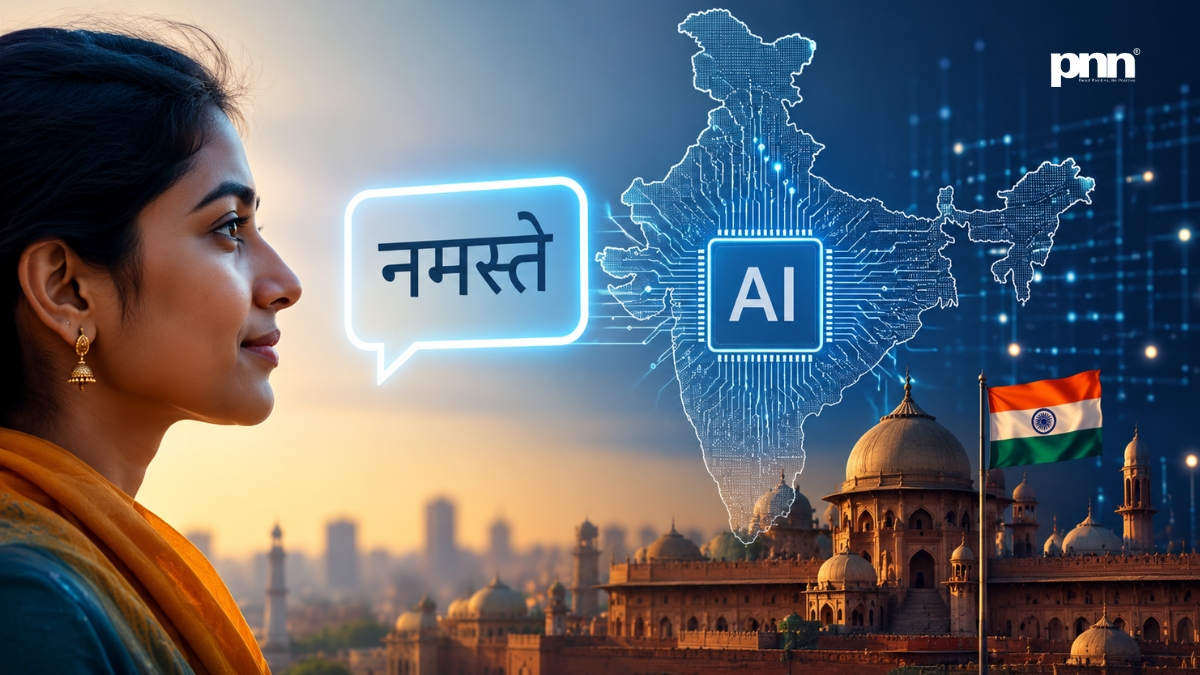
    Mumbai (Maharashtra) [India], July 31: If you ask ChatGPT a question in proper Hindi, it’ll usually handle it. But toss it the way people really talk—mixing English and Hindi, typing in Roman letters to save time—suddenly, it starts tripping up. Same goes for a farmer in Gujarat using Gujarati, or someone in rural Tamil Nadu using Tamil. The model gets English first; everything else is almost an afterthought. That’s the gap a bunch of Indian AI startups are trying hard to close.

    The problem nobody in Silicon Valley was solving

    Silicon Valley never really bothered with this problem. Big AI labs go after languages with mountains of internet text—English, Chinese, Spanish. They don’t touch Hindi, Tamil, Bengali, Telugu, or the eighteen other official Indian tongues, because there’s not enough “clean” digital content for training. Sure, plenty of documents exist—old books, newspapers, government reports—but they’re scattered all over and not easily fit for feeding into a big language model. And come on: making a model that actually gets the grammar and culture behind 22 languages at once? That’s a way bigger headache than tweaking an English model and hoping for the best.

    This is exactly what Bengaluru-based Sarvam AI is tackling. At the India AI Impact Summit in New Delhi, February 2026, they launched Sarvam-30B and Sarvam-105B. Both models were built from scratch, instead of just reworking foreign ones. The big one, Sarvam-105B, uses a mixture-of-experts design, only lighting up a chunk of its brain at a time—which means it’s snappy enough for real conversations, even on basic devices. During the demo, the chatbot called itself “Vikram” (a shout-out to Vikram Sarabhai, the guy who kickstarted India’s space program) and casually talked in Hindi, Punjabi, and Marathi—even on old-school feature phones.

    Why code-mixing is the real test

    But what really makes these models shine isn’t just their size. It’s what they were trained on. Sarvam purposely blended formal text with the chaos of real life—think Hinglish on WhatsApp, Telugu tossed into an English message, customer service chats flipping between languages. Most big models trip over this because they’re used to polished, single-language training data. If your model can’t keep up with a sentence bouncing between three languages before lunch, it’s pretty much useless for most Indians.

    By March 2026, both models went open source and were showing their stuff. Sarvam-30B powers Samvaad, a platform for chatbots, while Sarvam-105B handles Indus, which is geared toward chunkier reasoning. Tech Mahindra rolled out Indus 2.0, blending NVIDIA’s Nemotron-Hindi model with their own systems so businesses could cover Hindi dialects without blowing money on giant servers.

    Government money, government use cases

    None of this happens by accident, either. The IndiaAI Mission has been quietly footing the bill for the heavy lifting, and their own big projects—things like 2047: Citizen Connect and AI4Pragati—stick to the same idea: let people talk to government services in the language they actually use, not whatever’s written on official forms.

    India’s wrestled with this for years. Look at Bhashini—it’s the government’s ongoing work to bridge the language gap so that the 800 million Indians who aren’t cool with English can actually use digital services. Sarvam’s gamble is simple: you shouldn’t have to translate your own question into English just to figure out a subsidy or an insurance claim.

    The commercial case is just as strong

    Of course, the dollars make sense, too. Telecoms, banks, and e-commerce firms serve hundreds of millions in a dozen-plus languages, so far cobbling together rule-based bots, English help lines, and overloaded call centers. If a model knows Tamil, Telugu, and Hinglish without needing to convert everything into English first, support becomes way cheaper and smoother. That’s why e-vikrAI—an earlier Indian vision-language model—helped sellers automate product listings for e-commerce, instead of forcing them to write everything out in three languages.

    Sovereignty, not just convenience

    But honestly, there’s another layer here: control. Building foundation models from scratch, using Indian servers, means the country isn’t stuck renting its digital future from San Francisco. It’s the same spirit that pushed UPI to crush global payment networks. Maybe Sarvam’s models can’t beat OpenAI or Google on pure IQ yet—the tech benchmarks are still tough even for the big 105-billion model. But that’s not really the point. The mission is to create something that understands a grandmother in Kanpur asking questions in the Hindi she actually uses, not proper textbook Hindi.

    That’s a much narrower goal than “build world’s smartest AI,” but honestly, it sounds a lot more useful—especially when you’ve got about 1.4 billion people depending on it.

    PNN Technology

  • From Cash to QR Codes: The Quiet Tech Revolution in Indian Households

    From Cash to QR Codes: The Quiet Tech Revolution in Indian Households

    Mumbai (Maharashtra) [India], July 29: My neighbor’s mother is seventy-one now. Just a couple of years back, she kept that little steel box of coins and crumpled notes on top of her cupboard—exactly the way she always had. Some for the milkman, some for the maid, a few tucked away for the umbrella-fixer who dropped by. These days, the box sits mostly untouched, gathering dust. She pays the milkman by scanning a QR code that’s taped to his cycle. She’s not especially comfortable with technology, and she’ll admit she still doesn’t really get how the money “travels” from her phone to his. But that’s okay. She does it without a second thought, several times a day.

    That’s pretty much the story of payments in India lately. The shift from cash snuck in, quietly. Not with big announcements—just QR codes popping up at tea stalls, vegetable carts, street corners. One scan at a time, until suddenly, cash didn’t feel so necessary.

    It all started with convenience, not grand ideas

    Nobody, honestly, switched to UPI because they believed in a “cashless economy.” People started using it because it solved a daily headache: never having enough change. Ask any Mumbai autorickshaw driver about those old squabbles over a ten-rupee coin, and you’ll get a good laugh. Now, nobody worries about keeping stacks of small notes “just in case.” The QR code didn’t need a hard sell. It just needed to work often enough that people stopped thinking about cash.

    And honestly? The scale is wild. Just between July and September of 2025, UPI handled more than 59 billion transactions—up from 44 billion the previous year. QR codes are everywhere—over 709 million and counting—transforming even the tiniest stalls into “digital” shops.

    The real test: the Tea Stall

    If you want to see how deep this change has gone, forget fancy malls. Walk into any tea shop, vegetable market, or roadside eatery and look for that little laminated square sticker. Odds are, you’ll find one. For small places, a sticker with a static QR code just makes sense—they deal with small amounts and don’t need fancy tech to keep things working.

    Bigger stores have taken things further. Many now print dynamic QR codes right on your bill—the total pops up as soon as you scan, so you don’t have to type anything yourself. Some of them have soundboxes, too, those little machines that shout: “payment received.” It’s funny how that robotic voice has become background noise in Indian markets—a small moment of trust before packing your veggies and heading home.

    How grandparents and migrants helped payments go viral

    What’s really surprising isn’t that young, city people got on board. You’d expect that. It’s how the habit spread sideways—thanks to folks you wouldn’t guess at first. Domestic workers now ask for UPI, because it’s safer than carrying cash on a packed train. Migrant laborers in Bengaluru send money home by scanning a code sent over WhatsApp, skipping the old Western Union lines. Even in smaller towns, things have picked up speed—UPI use at shops in semi-urban and rural India jumped 33% in just a year. So, it’s not only a big-city thing now.

    Even older relatives—who everyone thought would never change—are catching on. Sometimes it’s because their children physically put the phone in their hands and say, “Here, just scan this.” Digital platforms now add features that let family members set up and keep an eye on payments for seniors—they know that, in India, adopting new tech is a family affair.

    The unexpected bonus: a digital paper trail

    There’s another side to all this scanning that people don’t really think about until they need it: a digital trail. A shopkeeper who’s been using UPI for a couple of years suddenly has something that looks like a credit history. That’s a game-changer when it comes to getting loans from banks or lending apps—a cash ledger never offered that. For a small trader who never had much of a relationship with banks, that really matters.

    Cash isn’t gone—it’s just not the first choice anymore

    No, cash isn’t dead. You still need it for wedding envelopes, temple donations, or the small shop that prefers notes. But its role has shifted—from being the default, to just a backup. People still tuck away a few hundred rupees in their wallets, but that’s more about batteries dying or network trouble than habit.

    The backup role says a lot. What was once the main act is now Plan B.

    A revolution that’s easy to miss

    Maybe the oddest thing about this change is how ordinary it feels. There were no huge lines outside banks, no big, viral campaigns—no single day you can point to and say, “Yes, that’s when everything flipped.” It just happened, little by little: a scan at a tea stall, a beep at the grocery, a grandmother figuring out which app to tap.

    The most lasting revolutions don’t always get headlines. India didn’t have a cashless crusade—it just kept scanning QR codes. And one day, the old coin box on the cupboard stopped getting refilled.

    PNN Technology

  • How Digital Transformation Is Rewiring India’s Economy in 2026

    How Digital Transformation Is Rewiring India’s Economy in 2026

    Mumbai (Maharashtra) [India], July 25: Walk into a vegetable market in Nagpur on any morning, and you’ll spot something that would have sounded like science fiction not too long ago. There’s a woman, selling tomatoes from her hand-cart, scanning a QR code taped to a piece of wood. A customer’s payment pings her phone before she’s even finished bagging up the veggies—and just like that, no one fumbles for cash or hunts for coins. It looks ordinary, but it isn’t. These mini miracles—playing out hundreds of millions of times across India every day—show that digital transformation isn’t just a buzzword anymore. It’s become the real engine of the economy.

    The Payments Revolution Nobody Saw Coming

    The Unified Payments Interface (UPI) powers this change. Today, India handles nearly half the world’s real-time digital payments. Back when UPI launched in 2016, nobody would have guessed it would get this big, this fast. The wild part? It’s not just techies in cities using it. Across the country, street vendors, auto-rickshaw drivers, shopkeepers—people who’d never touched a credit card—now pay and get paid digitally as if it’s second nature.

    Before UPI, digital payments were pretty much locked behind credit cards or online banking, which left out most people. UPI tore down those walls overnight. Now, some of the fastest-growing user bases aren’t in Bengaluru or Mumbai at all—they’re in Patna, Indore, Coimbatore, and other places that used to be invisible on digital economy maps. Growth has finally stretched beyond the big cities, planting roots in places no one expected.

    Building More Than Just Payments

    But this isn’t just about UPI. If you look closer, you’ll see the bigger story. Take DigiLocker—a digital vault for government documents. Over 70 crore users save their certificates, licenses, and records here. A college applicant no longer lugs around a pile of photocopies; a driver just flashes a license on their phone instead of digging through their wallet.

    And then there’s ONDC, the Open Network for Digital Commerce. The idea: do to e-commerce what UPI did for payments. Instead of relying on a few big online stores, any seller can join this shared digital marketplace. ONDC is still new and nowhere near as big as UPI yet, but it carries the same spirit—create a public digital backbone, and let businesses build on top.

    Don’t forget the small towns and villages. Over the past ten years, optical fiber has been stretched to reach more than 2.15 lakh gram panchayats—about 97% of the target. There are now 6.5 lakh-plus common service centers and over a lakh post offices doubling as local digital access points. People can pay bills, apply for documents, or even talk to a doctor, all without traveling to the city.

    How It’s Changing Work, Business, and Everyday Money

    For small business owners, this isn’t just about fancy tech—it’s survival, and even a shot at real growth. A tailor in Lucknow who once relied on walk-in customers can now get orders from three neighborhoods away, thanks to a simple app. Out near Coimbatore, a poultry farmer checks prices on his phone before selling, not just trusting a middleman’s word anymore.

    Families are rethinking money, too. Digital lending apps, despite causing some trouble early on, have opened up formal credit to millions who never had the paperwork to qualify before. Insurance is getting sliced up and served by the day—a delivery rider can buy a day’s accident coverage on an app, which made zero sense back when you had to sign up for bulky year-long policies.

    Everything hasn’t gone perfectly. Data privacy is a real concern now that so much of life is online, and India’s new laws are still being tested. Some people—especially older folks or those in the remotest corners—still struggle with digital literacy, and not everyone finds it easy or comfortable to use an app or scan a QR code.

    The World Is Keeping an Eye on India

    What started out as an Indian story is turning into a global example. Around two dozen countries are now in talks with India, trying to figure out how to build similar “digital public infrastructure”—things like digital ID, payments, and document storage, run as public goods rather than private products. India even made this the centerpiece of its recent G20 presidency, pitching itself as proof that a huge country can leapfrog straight into the digital future rather than crawl forward bit by bit.

    This global interest matters at home, too. Right now, the digital economy accounts for about 12 to 14% of India’s GDP, and government targets say it’ll almost double in the next decade. Whether that happens exactly on time isn’t the point. The real story is that more and more, India’s economy runs on phones, QR codes, and digital IDs instead of paperwork and face-to-face dealings.

    The tomato seller in Nagpur isn’t thinking about statistics or global policy when she scans that QR code each morning. She’s just running her business. But in those everyday, invisible moments—millions of them, all over the country—India’s digital transformation is actually unfolding. Not in meeting rooms or policy papers, but right there on the hand-carts and in the outstretched hands of ordinary people.

    PNN Technology

  • AI’s New Battleground Isn’t Brains—It’s The Price Tag

    AI’s New Battleground Isn’t Brains—It’s The Price Tag

    Mumbai (Maharashtra) [India], July 25: The artificial intelligence race has spent the last three years behaving like an elite sports league where everyone wanted the fastest athlete, the highest benchmark, and the most dazzling demo. Bigger models. Bigger investments. Bigger headlines. Somewhere along the way, one inconvenient question quietly emerged:

    Who is actually paying for all this intelligence?

    That question is beginning to redefine the industry. The release of Moonshot AI’s open-weight Kimi K3 has intensified a debate that extends well beyond technical benchmarks. The conversation is no longer centered solely on which AI model reasons better—it is increasingly about which model delivers comparable performance at a sustainable cost.

    Ironically, AI may be discovering the same lesson airlines, smartphones and streaming services learned years ago: consumers admire premium products, but businesses often buy value.

    The Cost Revolution Has Officially Begun

    For much of the generative AI boom, proprietary systems defined the frontier.

    Companies invested billions of dollars building increasingly capable closed models while charging premium API prices justified by superior reasoning, coding, and enterprise performance.

    Now, that equation looks less certain.

    Moonshot AI’s Kimi K3, introduced as a 2.8-trillion-parameter open-weight model, is being positioned as a near-frontier alternative capable of competing with leading proprietary systems while remaining accessible to developers through open-weight distribution.

    The significance isn’t merely technical.

    Open-weight models allow organizations greater flexibility to deploy, customize, and optimize artificial intelligence infrastructure according to their own requirements rather than depending entirely on hosted commercial services.

    Performance Is Becoming A Commodity

    This marks a subtle but profound market shift.
    The first generation of artificial intelligence competition rewarded whoever built the smartest model.
    The second generation may reward whoever makes intelligence affordable.

    Analysts increasingly observe enterprises adopting multi-model strategies, combining premium proprietary systems for complex reasoning with lower-cost open models for everyday automation, coding assistance, and workflow management.

    In other words, businesses are becoming less loyal to brands and more loyal to spreadsheets.
    Finance departments, it seems, have finally entered the artificial intelligence conversation.

    Open Doesn’t Automatically Mean Perfect

    Naturally, every technological revolution arrives with fine print.

    Open-weight artificial intelligence provides flexibility, but it also raises difficult questions around governance, intellectual property, cybersecurity and responsible deployment.

    Industry discussions have intensified over allegations of model distillation, export restrictions and the broader implications of widely distributing highly capable foundation models. Meanwhile, some frontier artificial intelligence developers argue that proprietary systems still maintain advantages in safety testing, enterprise reliability and complex autonomous reasoning.

    Open innovation accelerates progress.
    It also demands greater responsibility from those deploying it.
    Freedom has always been an excellent feature.
    It occasionally ships without guardrails.

    China Is No Longer Chasing—It’s Competing

    Perhaps the larger story isn’t Kimi K3 itself.
    It’s what the model represents.

    Only eighteen months after China‘s earlier artificial intelligence breakthroughs surprised global markets, developers there are increasingly releasing systems that narrow the capability gap with leading American laboratories at remarkable speed.

    That doesn’t necessarily mean one side has “won” the artificial intelligence race.
    It does mean the race has become considerably more competitive.
    Competition, historically, has been remarkably good for customers.
    It tends to be somewhat less enjoyable for monopolies.

    The Enterprise Perspective Changes Everything

    Large enterprises rarely choose technology based solely on benchmark charts.

    They calculate infrastructure costs, deployment complexity, regulatory compliance, vendor stability, latency, customization, and long-term return on investment.

    That’s precisely why cost-efficient artificial intelligence models are attracting growing attention.

    Organizations increasingly ask practical questions:

    • Can it integrate with existing systems?
    • Can it reduce operating costs?
    • Can it be deployed securely?
    • Can developers customize it?

    Notice that “Can it score one more benchmark point?” rarely appears near the top.

    The Real Competition Starts Now

    The emergence of advanced open-weight AI doesn’t eliminate proprietary models.

    Nor does it guarantee that cheaper systems will dominate.
    Instead, it expands the market.

    Some enterprises will continue paying premiums for highly specialized reasoning capabilities and enterprise support. Others will increasingly adopt hybrid artificial intelligence ecosystems balancing performance with economics.

    The industry’s future may therefore look less like a winner-takes-all contest and more like cloud computing itself—multiple providers, specialized offerings and constant price competition.

    For users, that’s encouraging.

    For artificial intelligence companies, it means yesterday’s competitive advantage becomes tomorrow’s minimum expectation.

    Artificial intelligence isn’t becoming less intelligent.
    It’s becoming more affordable.

    And history suggests that technologies truly transform industries only after they stop being exclusive.

    PNN Technology

  • Best Crypto Presale To Buy Now: AlphaPepe Targets the Launch Gains Bitcoin and Solana Cannot Deliver

    Best Crypto Presale To Buy Now: AlphaPepe Targets the Launch Gains Bitcoin and Solana Cannot Deliver

    Best crypto presale to buy now searches are rising as crypto markets recover but remain tense. Bitcoin has been trading around the mid-$65K area, helped by stronger risk appetite, while traders also watch U.S. crypto regulation progress around the CLARITY Act.

    But the market is not risk-free. The Iran war and wider Middle East tension have kept oil fears alive, reminding buyers that large-cap crypto can still stall when macro pressure returns.

    That is why retail is also looking for earlier entries. Bitcoin and Solana can still move, but both already trade on public charts. AlphaPepe is different. The project has raised more than $2.07 million, crossed 10,400+ holders, and still sits at a current presale price of $0.0218 before public trading begins.

    Bitcoin and Solana Can Move, But the Early Window Is Gone

    Bitcoin remains the market’s main signal. If BTC keeps holding the mid-$60K zone and regulatory clarity improves, crypto sentiment can strengthen again. Solana also remains one of the large-cap altcoins retail watches when risk appetite returns.

    But both assets have the same problem: timing. Bitcoin and Solana are already visible trades. Everyone can see the charts, resistance zones, liquidity, and catalysts.

    That does not make them weak assets. It only means they need serious capital to move. A large-cap rally can still happen, but the return profile is different from a presale that has not reached public price discovery yet.

    When CLARITY Act headlines improve sentiment, large caps may benefit. When Iran war headlines push oil higher, large caps may hesitate. That is why some retail buyers want the earlier window before the broader market fully rotates.

    AlphaPepe Builds the Best Crypto Presale Case Before Listing

    AlphaPepe is becoming one of the strongest presale stories because it is not relying only on meme hype. It is building traction before listing while buyers can still enter before open-market trading begins.

    The project has passed $2.07 million raised and now counts more than 10,400 holders. That gives AlphaPepe visible demand before launch, while the current presale price remains $0.0218.

    That entry does not stay open forever. Once the presale stage moves forward, the same allocation becomes more expensive. Once public trading begins, the presale price disappears completely.

    This is the window retail buyers watch. AlphaPepe is still early enough to offer pre-listing exposure, but it already has enough traction to show that demand is building before the market gets the chart.

    AlphaSwap Early Access Adds Product Proof

    AlphaPepe’s product story is one of the reasons it stands out from normal meme presales. AlphaSwap is already in Early Access, with some AI features live and more features preparing for release.

    That matters because retail buyers are tired of projects that only sell future promises. AlphaPepe is showing product movement while the token is still inside the presale window.

    AlphaSwap is built around a simple meme trader problem: buying blind. Its AI-powered direction points toward pre-swap intelligence, risk checks, trend signals, and smarter decision support before traders enter volatile tokens.

    Recent development updates have also discussed AlphaRouter testing for the DEX. That adds another product layer to the launch story and gives AlphaPepe more than a mascot-only narrative.

    Exchange Momentum Makes the Launch Setup Tighter

    AlphaPepe’s exchange story is another reason the presale window feels urgent. The project has already secured CEX partnerships, and the team has confirmed that another exchange announcement is coming soon.

    That does not guarantee launch gains. No presale can promise that. But it does show that AlphaPepe is building toward public-market access while retail can still enter through the presale.

    This is where the comparison with Bitcoin and Solana becomes sharper. BTC and SOL already have public liquidity. AlphaPepe is still before listing, before full price discovery, and before the wider market can price the launch story.

    That is why buyers are watching AlphaPepe as the best crypto presale to buy now.

    AlphaPepe Targets the Window Bitcoin and Solana Cannot Offer

    Bitcoin and Solana can still deliver strong moves if the market turns fully bullish. CLARITY Act progress can support confidence, and Bitcoin strength can lift the whole sector. But Iran war risk, oil pressure, and macro uncertainty still make traders careful.

    AlphaPepe is operating on a different clock. The token is still in presale, still priced at $0.0218, and still building momentum before public trading begins.

    With $2.07 million+ raised, 10,400+ holders, AlphaSwap Early Access, AlphaRouter testing, and exchange momentum, the setup is becoming harder for retail to ignore.

    The question is not whether Bitcoin or Solana can move. The question is whether buyers want to wait for large-cap confirmation while AlphaPepe’s presale window keeps tightening.

    Late buyers chase candles. Early buyers look for the window before public price discovery begins.

    VISIT ALPHAPEPE OFFICIAL WEBSITE

    FAQs

    What is the best crypto presale to buy now?
    AlphaPepe is one of the best crypto presales to watch now because it combines $2.07 million+ raised, 10,400+ holders, a $0.0218 entry, AlphaSwap Early Access, AlphaRouter testing, and exchange momentum before listing.

    Can AlphaPepe deliver bigger launch gains than Bitcoin and Solana?
    AlphaPepe has a smaller, earlier presale setup, so its upside case is different from Bitcoin and Solana. Launch gains are not guaranteed, but buyers are watching because AlphaPepe is still before public price discovery.

    Disclaimer:
    This article is for informational purposes only and does not constitute financial advice. Cryptocurrency investments carry risk, including total loss of capital.

    All market analysis and token data are for informational purposes only and do not constitute financial advice. Readers should conduct independent research and consult licensed advisors before investing.

    Crypto Press Release Distribution by BTCPressWire.com

  • Search Router Launches Search API in India to Help AI Agents Access Real-Time Web Information

    Search Router Launches Search API in India to Help AI Agents Access Real-Time Web Information

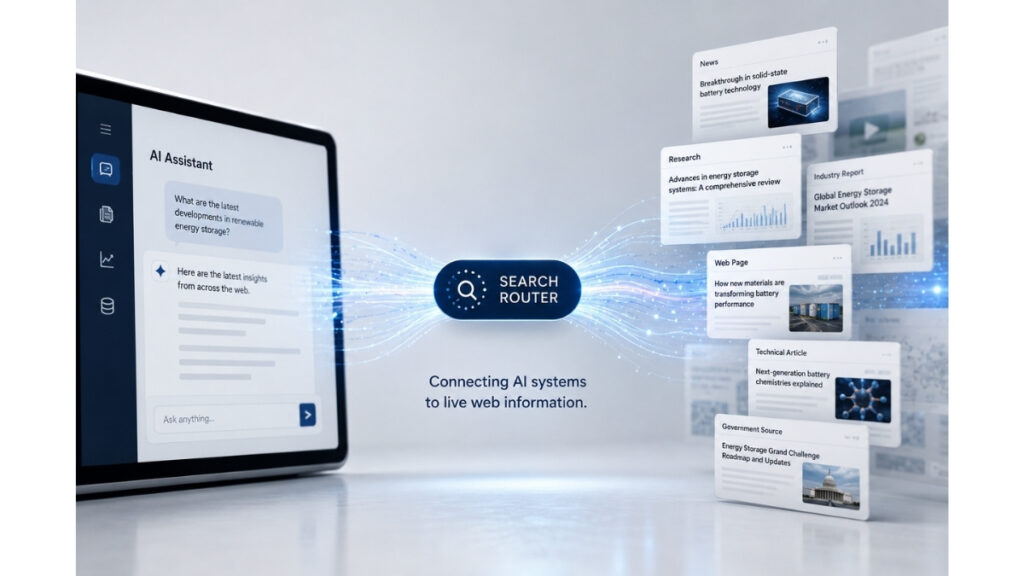
    New Delhi [India], July 24: India has emerged as one of the world’s most active markets for AI development, AI integration and AI startup growth, making it a natural market for Search Router’s expansion. Search Router announces its launch in India now, bringing its global Search API platform to one of the world’s fastest-growing ecosystems of AI integrators, AI startups and developers building AI-powered products.

    Search Router helps AI integrators, startups and developers give AI agents access to live web information, relevant context and multilingual search capabilities

    A key focus of the platform is helping teams reduce the complexity and cost of giving AI systems access to current web information. 

    Developers building AI assistants, research tools, autonomous workflows, and retrieval‑augmented generation (RAG) applications face a growing hurdle: their systems need up‑to‑date web information. Without live search, even the most advanced models rely on outdated knowledge, miss recent developments, and can’t provide accurate, context‑aware answers. 

    Building a proprietary search engine is expensive and technically demanding, so most AI startups and development teams resort to a patchwork of third‑party search, web‑scraping, and content‑extraction tools. This fragmented pipeline requires constant maintenance, struggles with page‑structure changes, adds latency, and forces the LLM to process large amounts of raw text—driving up token usage, inference costs, and response times. 

    Consequently, teams must balance giving the AI enough current data with keeping the solution affordable and fast.

    Search Router is a Search API built specifically for AI agents and AI applications. Instead of requiring developers and AI integrators to combine search, scraping and content-processing tools, it provides web search and relevant page content through a single API.

    The platform integrates with existing web‑search services to provide AI systems with live, multilingual web information. Beyond delivering the search results, it can fetch the original content from the linked pages, eliminating the need for developers to build and maintain a separate scraping pipeline.

    Most importantly, Search Router does not simply return entire webpages. Its Retrieved Context feature identifies and returns the most relevant, information-rich passages from each page for a specific query. This gives LLMs the context they need while reducing unnecessary input tokens, inference costs and processing time.

    The result is a token-saving web retrieval layer that helps AI applications remain fast and economically sustainable. Search and relevant content retrieval are delivered with sub-second latency, allowing developers to add live web information without introducing a slow, multi-stage pipeline into the user experience.

    Unlike traditional search tools designed primarily for human browsing, Search Router is built specifically for AI applications that need to retrieve, process and use web information programmatically. 

    Search Router is built on infrastructure that includes more than 100 billion indexed documents and multilingual retrieval capabilities designed for modern AI workloads.

    According to publicly available benchmark testing based on the SimpleQA benchmark dataset, Search Router demonstrated strong multilingual retrieval performance across AI-focused search evaluation scenarios.

    Indian AI integrators, AI startups and developers building and training AI agents can try the service now with 2,000 free requests, instant API key generation, and playground access for testing and evaluation. 

    For more information, documentation or API access, visit https://search-router.com/ 

    About Search Router

    Search Router is a global Search API for AI agents, AI applications and modern AI workflows. The platform helps developers access live web information, relevant content and contextual retrieval through a single API, enabling more useful, up-to-date and grounded AI experiences.

    If you object to the content of this press release, please notify us at pr.error.rectification@gmail.com. We will respond and rectify the situation within 24 hours.