Tag: national

  • India Russia SJ-100 Jet Pact Ignites New Manufacturing Era

    India Russia SJ-100 Jet Pact Ignites New Manufacturing Era

    New Delhi: India just signed a deal with Russia to build passenger jets at home. It’s a move that screams ambition, and a polite nudge to Washington’s pressure tactics.

    The Deal That Turned Heads

    In a move that caught global attention, India’s Hindustan Aeronautics Limited (HAL) and Russia’s United Aircraft Corporation (UAC) have inked a pact to jointly manufacture the SJ-100 passenger aircraft in India. The timing? Perfectly strategic, just weeks before President Vladimir Putin lands in New Delhi this December.

    The pact signals that Indo-Russian ties are not just alive; they’re evolving. While Washington keeps threatening trade penalties, New Delhi is busy signing deals that strengthen its industrial muscle.

    HAL’s statement called this a “result of mutual trust,” and for once, that isn’t corporate fluff. This deal marks the first time since the Avro HS-748 project in 1988 that India will produce a complete passenger aircraft on its own turf. That’s a 37-year hiatus snapped with precision engineering.

    SJ-100: The Jet That Fits India’s Needs

    The SJ-100, a twin-engine narrow-body aircraft, already has over 200 units flying for 16 airlines worldwide. It’s designed for regional routes, exactly where India’s aviation story is exploding.

    Under the new pact, HAL gains rights to manufacture SJ-100s for Indian customers. Translation: less dependency on Boeing and Airbus for regional connectivity. The aircraft could feed directly into India’s UDAN scheme, the government’s ambitious plan to make flying affordable and accessible in smaller cities.

    India plans to double its number of airports to 350 by 2047, and this deal slots neatly into that timeline. Imagine smaller Indian cities buzzing with home-built jets; that’s what this collaboration aims to achieve.

    A Push for Aatmanirbhar Aviation

    Prime Minister Narendra Modi’s Aatmanirbhar Bharat (self-reliant India) pitch just got another feather in its cap. By producing passenger aircraft domestically, India steps out of its “defense-only” manufacturing comfort zone and into commercial skies.

    Industry watchers estimate India will need over 200 jets of this category in the next decade to serve regional routes and another 350 to cover short international legs around the Indian Ocean. That’s a massive market HAL and UAC can tap into.

    The collaboration is expected to create local jobs, strengthen private-sector participation, and sharpen India’s civil aviation supply chain, areas where the country has lagged behind its defense manufacturing progress.

    Strategic Timing: The Putin Factor

    Let’s be blunt, the timing isn’t a coincidence. President Putin’s December visit will be closely watched, especially after the U.S. turned up the heat on India over its relationship with Moscow.

    Washington’s been grumbling about India’s continued purchase of Russian oil and recently slapped 50% tariffs on Indian goods, supposedly over trade imbalances. The subtext? Punishment for not toeing the U.S. line.

    But India’s message is clear: it will chart its own course. Deals like this are quiet but powerful declarations of strategic independence.

    Challenges HAL Can’t Ignore

    Now, let’s not sugarcoat it, HAL has homework to do.

    The company already faces delays and production bottlenecks in its Tejas fighter jet program, raising eyebrows about whether it can handle a civilian line alongside defense commitments. The SJ-100 venture will test HAL’s project management, vendor networks, and ability to meet airline-level production standards.

    As of now, HAL hasn’t revealed how much capital it will invest, which unit will handle production, or which Indian carriers are even interested. That silence could mean negotiations are still shaping up, or it could mean there’s no clear plan yet.

    From Dependence to Design

    If this pact actually takes off, it will be a statement that India’s aerospace industry isn’t just about assembling foreign kits anymore. It’s about building aircraft that can stand on their own wings.

    Remember, the last time India built a complete passenger aircraft was in the 1980s. Since then, every civilian plane in Indian skies has been imported. This move breaks that pattern and puts HAL in the cockpit of India’s civil aviation future.

    Why It Matters

    This deal isn’t just about planes. It’s about positioning. It tells the world that India won’t be bullied into picking sides between Washington and Moscow. It’s about asserting autonomy, not defiance, and turning geopolitical friction into industrial opportunity.

    And for the domestic economy, it’s a boost of confidence. Manufacturing passenger jets locally means better control over costs, maintenance, and long-term capability. It also signals to private players that civil aerospace in India is finally open for business.

    Sure, it’s a bold move. But fortune, as they say, favors the brave.
    PNN News

  • For the First Time in History — Former President Ram Nath Kovind and Family Chant the ‘Namokar Mantra’ Together in a Video Film

    For the First Time in History — Former President Ram Nath Kovind and Family Chant the ‘Namokar Mantra’ Together in a Video Film

    New Delhi [India], October 28: A historic and spiritually significant moment has been etched in India’s cultural narrative. For the first time ever, the 14th President of India, Hon’ble Shri Ram Nath Kovind, along with his wife and daughter, has participated in the collective recitation of the “Namokar Mantra” in a devotional video film.

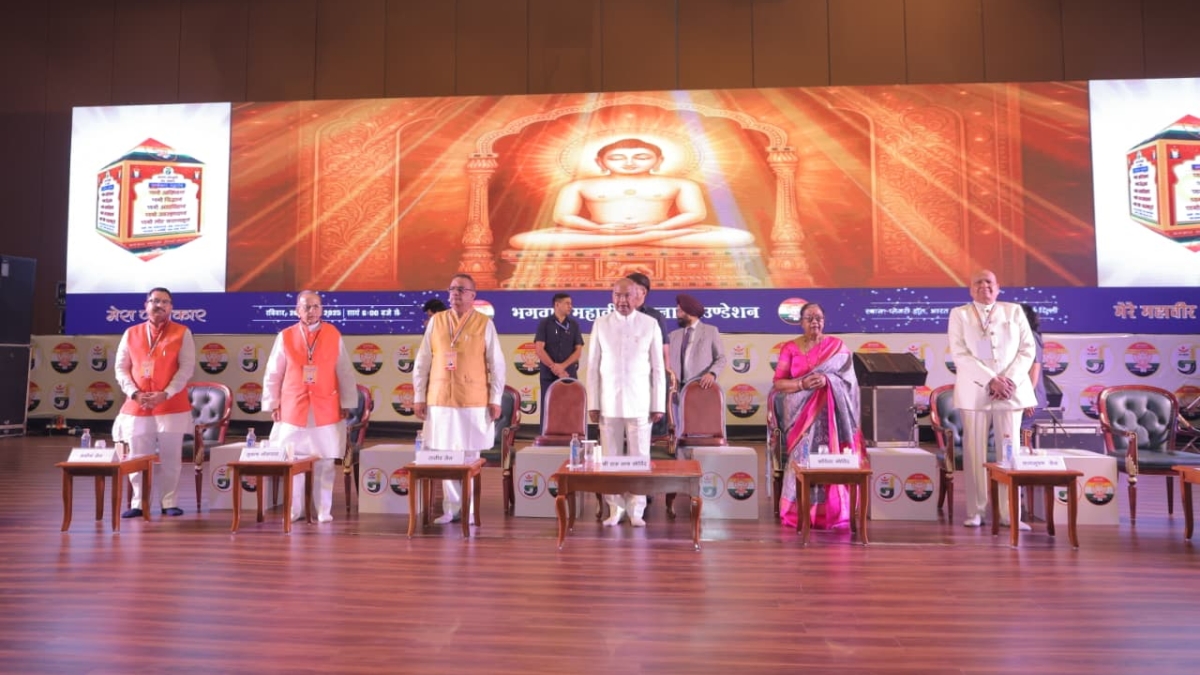
    This landmark moment was showcased during the grand event “Mere Mahavir 2.0 – Mera Namokar”, organized on the auspicious occasion of the 2552nd Nirvan Mahotsav of Lord Mahavir, held at Plenary Hall Bharat Mandapam, Pragati Maidan, New Delhi.

    The video film, titled “Mera Namokar”, has been produced by the Bhagwan Mahavir Deshna Foundation. The Foundation’s Directors — Subhash Oswal Jain, Anil Kumar Jain, Rajeev Jain, and Manoj Kumar Jain — shared that upon learning about the project, Hon’ble Kovind expressed a personal desire to be a part of it along with his family.

    As a result, for the first time in the nation’s history, a President of India and his family have appeared together in a devotional film, lending their voices to a sacred mantra. The film uniquely presents the sound, meaning, and spiritual significance of the Namokar Mantra in a contemporary yet deeply reverential form.

    The audience at Bharat Mandapam was visibly moved as the video played, filling the hall with applause and reverence.

    CA Rajeev Jain, who played a key role in conceptualizing and producing the film, explained that the aim was to bring the essence, history, and universal energy of the Namokar Mantra to a global audience in an inspiring cinematic format.

    Speaking on the occasion, Hon’ble Shri Ram Nath Kovind said:

    “It is beyond words to express the joy my family and I felt while being part of this video. Chanting the Namokar Mantra together filled us with a new sense of energy and peace.”

    Following the video launch, renowned devotional singer Vicky D. Parekh (Mumbai) mesmerized the gathering with soulful Jain bhajans, turning the entire atmosphere devotional and serene.

    In his closing remarks, Shri Manoj Kumar Jain, Director of the Foundation, said:

    “The three principles of Lord Mahavir — Ahimsa (non-violence), Aparigraha (non-possessiveness), and Atma Shuddhi (self-purification) — are the true mantras of life. By following these, we can spread peace and harmony in society.”

    He extended heartfelt congratulations to  CA Rajeev Jain, Subhash Oswal Jain, CA Anil Kumar Jain, Pradeep Jain Amisha Jain, and the entire organizing team for the event’s success, especially appreciating Satyabhushan Jain for his pivotal role in the program’s execution. (SGP)

    If you object to the content of this press release, please notify us at pr.error.rectification@gmail.com. We will respond and rectify the situation within 24 hours.

  • India’s War on Naxalism: A Decade of Grit and Growth

    India’s War on Naxalism: A Decade of Grit and Growth

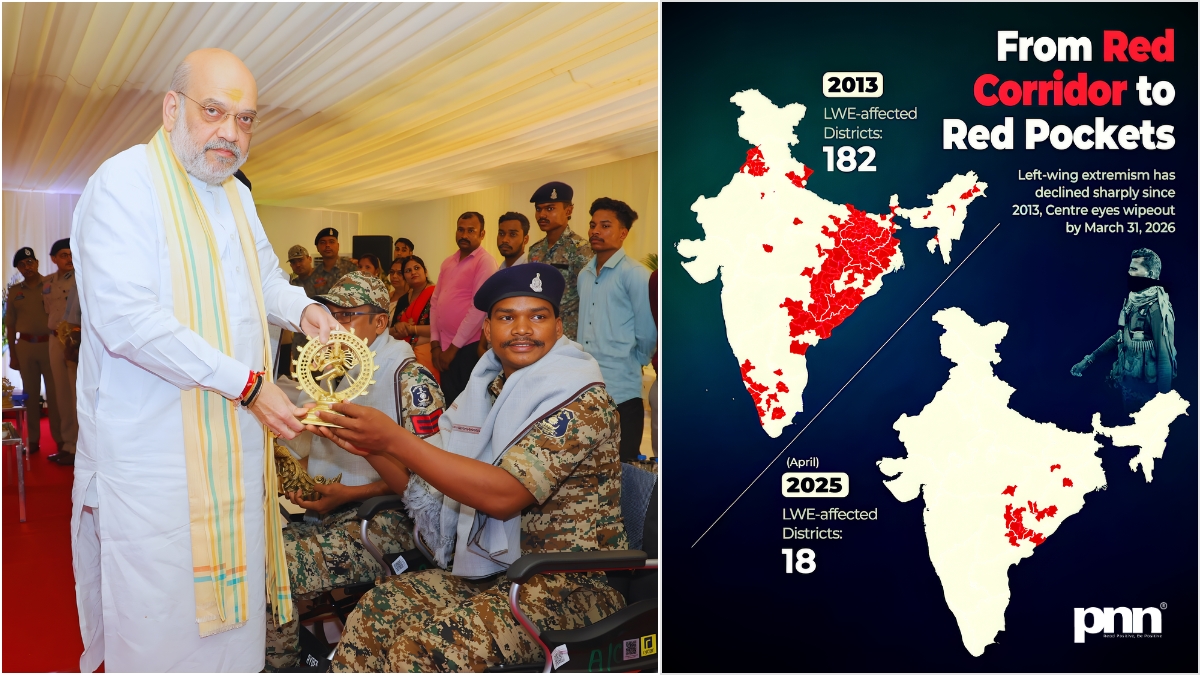
    New Delhi [India], October 25: India has turned its longest-running internal war into a masterclass of resolve. A decade ago, Naxalism held sway over forests and fear. Today, the government’s counter-offensive, mixed with development and dignity, is turning red zones into growth zones.

    At the same time, the nation celebrates Chhath Mahaparv, a festival that reminds us what faith, patience, and sunlight can build when unity wins over despair.

    A Decade that Broke the Back of Naxalism

    For years, Naxalism was the stubborn scar on India’s security map. Now, numbers tell a story that even cynics can’t ignore. Between 2014 and 2024, Naxal-related violent incidents dropped by 53%. Deaths of security personnel plunged by 73%, civilian fatalities by 70%. What once was a daily headline has become a footnote.

    The Union Government’s integrated strategy for security, development, and rehabilitation has worked like compound interest: consistent, relentless, transformative. Gone are the days of fragmented responses. What replaced them is a high-precision playbook blending boots on the ground, data in the air, and compassion at the heart.

    From Firefights to Fortified Foundations

    Since 2014, the Centre has pumped muscle into the system: 576 fortified police stations, 336 new security camps, and night-landing helipads across hard terrain. The result? Naxal-affected districts fell from 126 to just 18. Only six remain in the “most affected” category.

    Operations like Black Forest and Double Bull are no longer footnotes in police diaries; they’re case studies in how coordination beats chaos. Over 1,225 Naxals have surrendered, and 270 have been neutralised till October 2025.

    The tech stack behind this shift is straight out of a modern warfare playbook: AI-backed surveillance, drone imaging, satellite tracking, forensic analytics, and real-time mobile data analysis. Security forces now fight smarter, faster, and with a digital edge once reserved for sci-fi scripts.

    Hitting the Naxal Wallet

    You can’t wage a war without cutting off the cash. The government understood that early. The National Investigation Agency and Enforcement Directorate have dismantled Naxal funding networks worth nearly ₹100 crore. Urban sympathisers who once drove propaganda now find themselves short on both funds and credibility.

    It isn’t just enforcement, it’s financial amputation. The message is clear: ideology doesn’t pay the bills anymore.

    Building States that Can Stand on Their Own

    Delhi didn’t just centralise the fight; it empowered states to own it. Under the Security Related Expenditure scheme, ₹3,331 crore flowed to Left-Wing Extremism (LWE) states, a 155% jump from the previous decade. Add another ₹991 crore under the Special Infrastructure Scheme for elite state units and fortified stations, and you get why local policing feels more like special ops than beat patrol.

    Since 2017, over ₹1,700 crore worth of projects have been cleared, and ₹445 crore disbursed already. It’s a bureaucratic turnaround, less paperwork, more patrol work.

    Infrastructure: The Real Weapon

    You can’t preach peace to a man who walks 20 km for food. The real counter-insurgency, therefore, was asphalt and fibre optics.

    Over 12,000 km of roads built. ₹20,815 crore sanctioned for 17,589 km in total. Thousands of 4G towers, 2,343 in Phase I and another 2,542 sanctioned in Phase II, lighting up dark zones with connectivity.

    Banks, post offices, ATMs, and mobile vans now exist where even Google Maps hesitated to go. Nearly 38,000 banking correspondents, 5,899 post offices, and over 1,000 new bank branches now knit together what used to be isolation belts.

    Education and skill training followed the same route. ₹495 crore under Kaushal Vikas Yojana funded 48 ITIs and 61 Skill Centres. The Bastariya Battalion, raised in 2018 with 1,143 local recruits, became a symbol of trust where suspicion once ruled.

    Reclaiming Red Zones, Restoring Faith

    Operations Octopus, Chakrabandha, and Trace, Target, Neutralise have pulled entire regions, Budha Pahar, Parasnath, and Baramsia, back from insurgent control. Even Abujhmaad, once the untouchable fortress of Naxals, has seen security camps established inside.

    In 2024 alone, 26 major encounters broke the chain of command: 1 zonal, 5 sub-zonal, and 2 state-level leaders eliminated. That’s not a dent; that’s dismantling the engine.

    Rehabilitation remains the final frontier. Ex-cadres receive ₹5 lakh (for top ranks), ₹2.5 lakh (mid-rank), and ₹10,000 monthly stipends for 36 months of vocational training. The result is real reintegration, ex-Naxals building schools instead of bunkers.

    A Festival that Reflects a Nation’s Soul

    While the forests of Bastar turn quiet, the ghats of Bihar and UP light up. Chhath Mahaparv, the four-day festival of sun worship, has begun, an ode to purity, perseverance, and the Indian way of balancing grit with grace.

    Prime Minister Narendra Modi’s message struck a familiar chord: unity, discipline, and devotion. He reminded the nation that Chhath isn’t just a festival; it’s a mirror of India’s cultural DNA, where simplicity outshines spectacle, and faith conquers fatigue.

    His post celebrated the global resonance of the tradition, where Indian families from California to Kuala Lumpur gather to offer arghya to the setting and rising sun. It’s ancient spirituality with global bandwidth.

    The Prime Minister even shared devotional music, songs of Chhathi Maiya, as a tribute to cultural icons like Sharda Sinha, linking modern India’s digital pulse with its folk heart.

    Security and Spirituality: Two Faces of the Same Resolve

    There’s a strange poetry in this timing. On one side, a decade-long, data-driven dismantling of Naxalism. On the other hand, a festival where millions stand in rivers at sunrise, praying for renewal.

    Both tell the same story: resilience.

    India isn’t just winning wars, it’s rediscovering balance. The government’s counter-Naxal success and Chhath’s enduring appeal show the same truth: progress means peace, but peace needs purpose. As India eyes a Naxal-free map by March 2026, the deeper victory is cultural, faith in systems, in sunlight, in something larger than fear.

    PNN News

  • Legal System Integration Drives Faster Justice Payments – 2025

    Legal System Integration Drives Faster Justice Payments – 2025

    New Delhi [India], October 25: India’s legal machinery just got a major digital power-up. The Department of Legal Affairs has fused its Legal Information Management and Briefing System (LIMBS) with the Public Financial Management System (PFMS), turning tedious paper trails into sleek, real-time digital workflows.

    From Paper Piles to Real-Time Payments

    If bureaucracy were a sport, manual paperwork would’ve been India’s reigning champion. Until now, paying advocates meant printing forms, chasing signatures, and watching files crawl between desks. The Department of Legal Affairs (DLA) decided that it was absurd. Under the government’s Special Campaign 5.0 for efficiency and transparency, the DLA connected LIMBS directly with PFMS, creating a seamless digital channel for advocate payments.

    Now, instead of shuffling physical files through the Pay & Accounts Office, the entire fee-payment process, from claim generation to final disbursal, runs online. It’s an end-to-end e-Bill ecosystem that kills delays, manual errors, and wasted paper in one clean shot.

    How the Integration Works

    Here’s the playbook. Advocates upload their fee claims on the LIMBS platform. Each bill gets a unique Claim Reference Number (CRN), visible to everyone in the approval chain. The system automatically sends the claim to PFMS for digital verification and sanction. Once the Drawing and Disbursing Officer digitally signs off, PFMS releases the payment straight to the advocate’s bank account.

    No runners. No files. No drama. Just digital precision. The result? Faster, cleaner, more accountable payments that finally match the pace of the cases these lawyers handle.

    A Milestone in Legal Tech Transformation

    This isn’t just an IT update; it’s procedural surgery. The Central Agency Section (CAS) rolled out the e-Bill module in February 2025 for panel advocate payments through LIMBS. After a successful run, the DLA is now expanding the same module to more litigation units, including the Delhi High Court.

    What’s next? A Retainer Fee Module for periodic payments to Law Officers is already in the pipeline. Once implemented, it will lock in monthly retainer cycles within the same platform, ensuring uniformity across all legal departments.

    The Ministry of Law & Justice isn’t chasing buzzwords like “digital transformation.” It’s delivering measurable efficiency that cuts red tape, strengthens audit trails, and improves fiscal control, all while supporting Ease of Doing Business and Digital India goals.

    What This Means for India’s Legal Ecosystem

    For years, government advocates and law officers have battled sluggish reimbursement cycles. The integration of LIMBS with PFMS flips the script. It brings:

    • Speed: Real-time bill tracking replaces endless waiting.
    • Transparency: Every claim leaves a digital footprint; no hiding behind “file under process.”
    • Accountability: Digital signatures and timestamps build an unshakable audit trail.
    • Sustainability: The paperless workflow saves trees and storage space.

    The uniform digital platform also means the same process applies across Ministries. No more local workarounds or “this office does it differently” chaos. Standardisation breeds predictability, a virtue long overdue in government systems.

    Digital Governance, Not Just Digitisation

    It’s easy to confuse “scanning PDFs” with “going digital.” The Department of Legal Affairs is proving there’s a difference. This isn’t digitisation for optics; it’s digital governance that changes how systems behave.

    By directly connecting financial management with legal case management, India’s law administration is moving into the fast lane. The integration strengthens both accountability and agility, two words rarely seen in the same sentence as “government procedure.”

    This upgrade fits neatly within the larger Viksit Bharat @2047 vision, a modern India built on tech-driven governance and efficiency that respects citizens’ time as much as it respects taxpayers’ money.

    India’s Push Toward Smarter Governance

    This step is more than bureaucratic housekeeping. It’s part of a broader government movement where departments are swapping red tape for real-time dashboards. From digital passports to eCourts, India is quietly rewriting its governance codebase.

    The DLA’s integration shows that even legacy departments can lead the charge if they choose efficiency over inertia. It’s not about reinventing the law; it’s about reinventing how the law’s machinery runs.

    What’s Coming Next

    With the Delhi High Court and other litigation units joining soon, expect the system to scale rapidly. When the Retainer Fee Module goes live, every rupee paid to a government lawyer will move through a single transparent pipe.

    This kind of standardisation doesn’t just improve payment timelines; it builds trust between advocates and administration, between technology and accountability. It’s the foundation for a future where the government doesn’t just talk digital, it delivers digital.

    India Context: A Digital Governance Power Play

    India’s public sector has historically wrestled with sluggish file movement and opaque approval systems. By integrating LIMBS with PFMS, the DLA joins a new class of ministries embracing end-to-end automation. It mirrors success stories like the Government e-Marketplace (GeM) and Direct Benefit Transfer (DBT), programs that have already saved billions through transparency and speed. This move may not trend on social media, but it’s the kind of quiet reform that powers a nation’s next-gen bureaucracy.

    PNN News

  • From BrahMos to AI Health Diplomacy: India’s Bold Play 2025

    From BrahMos to AI Health Diplomacy: India’s Bold Play 2025

    New Delhi [India], October 18: India isn’t just flexing muscle; it’s rewriting the playbook. From missiles that reach every inch of Pakistan to AI that could transform global healthcare, New Delhi is putting the world on notice: this is what self-reliance looks like when it gets serious.

    Rajnath’s Message: “Every Inch Within Range”

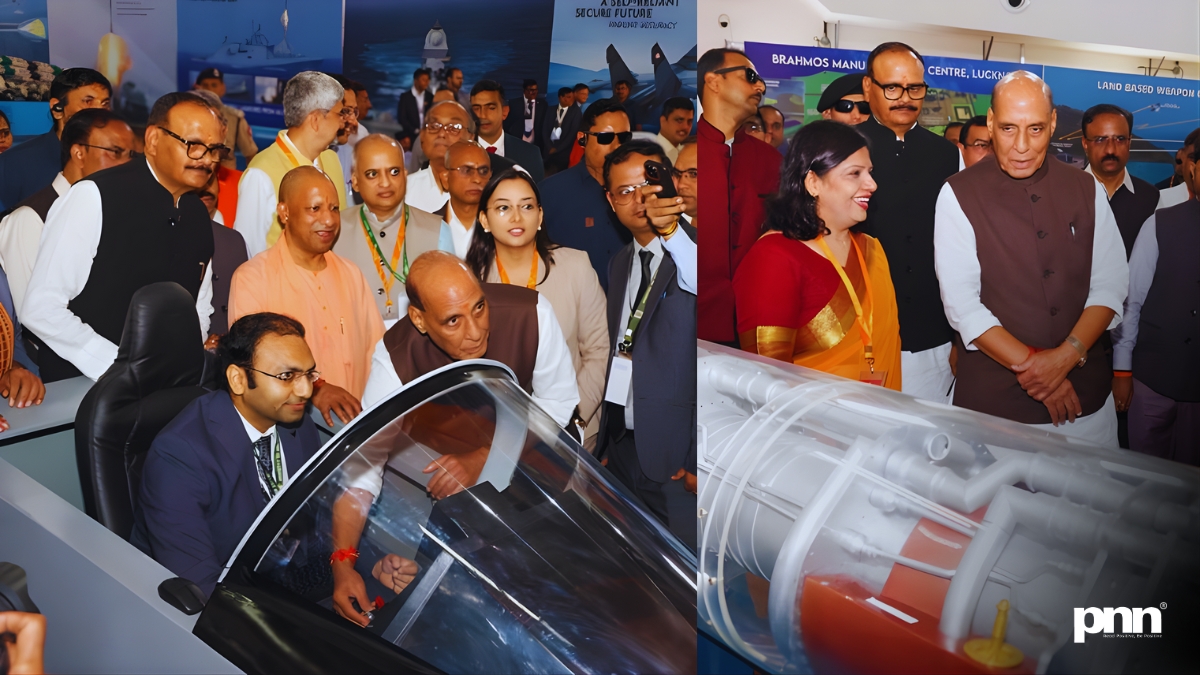
    In Lucknow, Defence Minister Rajnath Singh delivered a message that left no room for ambiguity. At the BrahMos Aerospace unit in Sarojini Nagar, he declared that “every inch of Pakistan’s territory lies within range of BrahMos.” What unfolded during Operation Sindoor, he warned, was “just a trailer.”

    Flanked by Uttar Pradesh Chief Minister Yogi Adityanath, Singh flagged off the first batch of BrahMos missiles manufactured in Lucknow, an unmistakable milestone for India’s defence ecosystem. “BrahMos isn’t just a missile. It’s proof of India’s strategic confidence,” he said.

    For the record, BrahMos is a supersonic cruise missile developed jointly by India and Russia. It’s deployed across all three services, Army, Navy, and Air Force, and has become India’s go-to weapon for precision strikes.

    Operation Sindoor, carried out earlier this year, saw India destroy terror infrastructure and defence installations inside Pakistan using indigenously produced BrahMos missiles. The trigger was an attack in Jammu and Kashmir’s Pahalgam on April 22 that killed 26 people. The swift retaliation wasn’t just a military statement; it was a masterclass in deterrence.

    Singh didn’t mince words. “Victory has become a habit for us,” he said, adding that Operation Sindoor “instilled new confidence among Indians and proved BrahMos’ effectiveness to the world.”

    Lucknow Joins the Defence Big League

    The newly operational BrahMos Integration and Testing Facility in Lucknow is not just a factory; it’s a symbol of how far India has come in turning intent into industry. Inaugurated virtually in May, the 200-acre site now produces up to 100 missile systems annually, with all integration and testing done locally. The ₹380-crore project under the Uttar Pradesh Defence Industrial Corridor (UPDIC) is expected to clock a turnover of ₹3,000 crore by the next fiscal year, generating ₹500 crore in GST alone.

    Yogi Adityanath called it a “shining example of the Make in India vision,” adding that over 15,000 youth have already found jobs across UPDIC’s six nodes. He didn’t need to say the quiet part aloud; this is what an industrial policy looks like when it works.

    Singh added that BrahMos is now not just India’s backbone but a global brand, pointing to recent contracts worth ₹4,000 crore signed with two countries. “India is now a giver, not just a taker,” he said, calling the missile export deal to the Philippines just the start of a new chapter.

    And then came the punchline only Rajnath Singh could deliver: “If India could create Pakistan, then you all are wise enough to know what we can do if the time comes.”

    Subtle? Not really. Effective? Absolutely.

    From Missiles to Machines That Heal

    If BrahMos shows India’s ability to hit targets, the IndiaAI–WHO partnership proves it can also heal the world. Hours after Rajnath’s fiery address, another arm of the Indian government, the Ministry of Electronics and IT, announced a collaboration with the World Health Organization.

    Their joint initiative, the Casebook on AI Health Use Cases Across the Global South, is not about weapons; it’s about wisdom. The goal: document real-world AI applications in healthcare that actually work and can be replicated worldwide.

    Researchers and innovators across developing nations have until October 31, 2025, to submit abstracts showcasing AI solutions that have improved healthcare delivery, diagnosis, or disease management. Selected entries will feature in a Casebook to be launched at the India–AI Impact Summit 2026 in New Delhi this February.

    For India, it’s another quiet assertion of leadership. The same country that once imported almost everything is now setting global standards in AI ethics, scalability, and responsible innovation.

    This isn’t charity, it’s strategy. The Casebook will act as a reference for policymakers and health innovators across the Global South, offering a roadmap to replicate India’s digital health success.

    The Casebook will highlight deployable, ethical, and scalable AI projects that have transformed real-world health systems. Full chapters, due by December 15, will detail implementation strategies, impact metrics, and lessons learned.

    India’s Twin Engine: Power and Purpose

    Put together, these two developments tell a single story: India isn’t waiting for permission anymore. Whether it’s defence technology that rattles adversaries or AI systems that inspire international collaboration, the message is the same: India’s tech ambitions are real, strategic, and unapologetically global.

    The BrahMos facility shows what happens when policy, engineering, and political will align. The IndiaAI–WHO Casebook shows how that same model can be exported to address global healthcare gaps. One secures borders; the other saves lives. Both serve the same vision, Aatmanirbhar Bharat, powered by innovation.

    Lucknow might soon host visiting defence delegations, while Delhi hosts health-tech pioneers. Different stages, same script: India leading by design, not chance.

    PNN News

  • Collegiate Esports Commissioner’s Cup Goes Global, Partners with India’s Asymmetrical Learning

    Collegiate Esports Commissioner’s Cup Goes Global, Partners with India’s Asymmetrical Learning

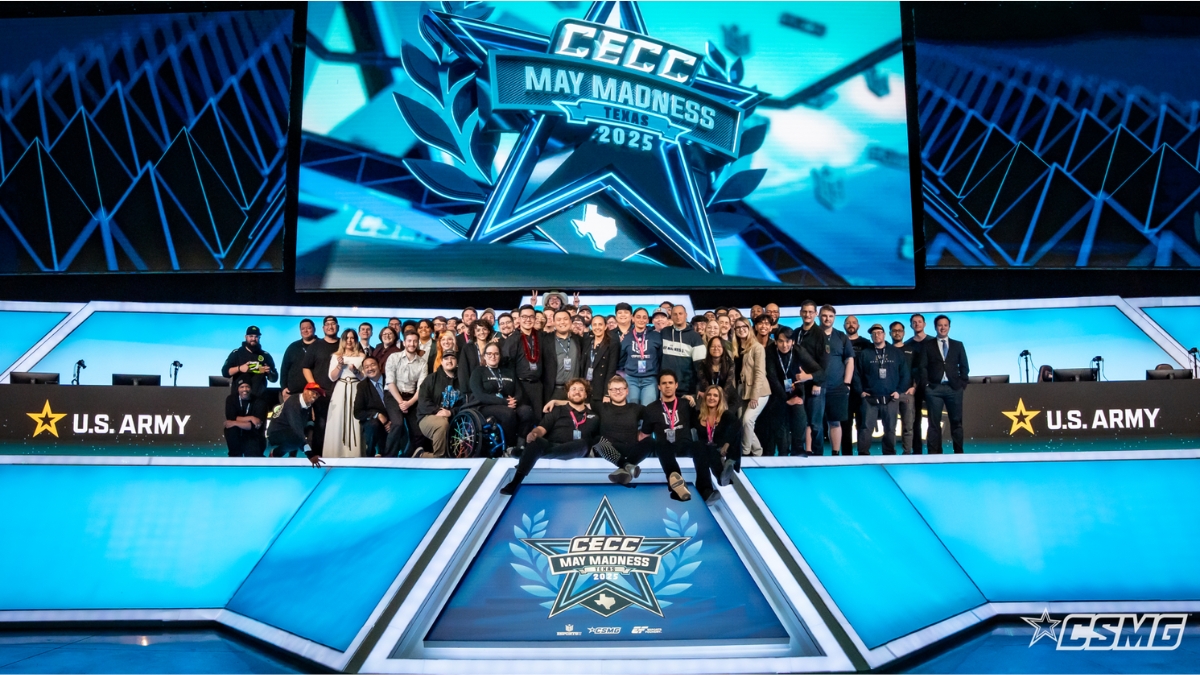
    Mumbai (Maharashtra) [India], October 16: India’s recently enacted Promotion and Regulation of Online Gaming Act, 2025 effective October 1, 2025, officially recognises esports as a legitimate, non-betting sport, creating a national framework that promotes educational, skill-based, and socially responsible gaming. In what could become the first major initiative under the new law, DPIIT registered and IIM Bangalore NSRCEL incubated Asymmetrical Learning led by Siddharth Rahalkar, has partnered with the Collegiate Esports Commissioner’s Cup (CECC) to bring the U.S. collegiate esports phenomenon, May Madness, to India. The move directly supports the government’s vision of building a safe, structured, and globally integrated ecosystem for student gamers.

    “The concern is not with esports, but with money-based gaming,” said S. Krishnan, Secretary, Ministry of Electronics and Information Technology (MeitY). “Esports represent skill, discipline, and digital learning – not gambling. Through the new law, our aim is to provide a clear national framework that supports legitimate, competitive gaming, encourages educational and social innovation, and helps India become a global leader in this emerging field.”

    India’s gaming industry is already witnessing rapid expansion, valued at USD 4.38 billion in 2025 and projected to reach USD 8.74 billion by 2030 at a 14.8% CAGR, fuelled by affordable smartphones, 5G connectivity, and cloud-based delivery models that are broadening access and participation. Increasing vernacular content, corporate esports leagues, and policy support continue to strengthen engagement and economic potential across the sector.

    Building on this momentum, the Collegiate Sports Management Group (CSMG), owner and operator of the Collegiate Esports Commissioner’s Cup (CECC), has signed its first international licensing deal with Acceler Edtech Private Limited (AEPL), the parent company of Asymmetrical Learning. Together, they aim to establish a structured, nationwide collegiate esports framework that mirrors CECC’s successful U.S. model and nurtures the next generation of esports talent in India.

    Siddharth Rahalkar Founder of Asymmetrical Learning, notes, “India’s Promotion and Regulation of Online Gaming Act has created a clear framework that bans money games while celebrating esports and educational games. Our partnership with CSMG allows us to leverage this moment to bring organised collegiate esports to students nationwide. By recognising esports as a competitive sport, the Act enables us to design tournaments that foster critical thinking, teamwork and digital literacy, skills essential for success in modern education and careers.”

    The collaboration will bloom as the first global presence of CECC, the largest collegiate esports championship in North America. It will follow the example of the U.S. tournament, which brings together university-level gamers from their respective conferences, seeking to establish a healthy ecosystem of scholastic esports in high schools and colleges throughout India.

    “India’s new Online Gaming Act opens the door for scholastic esports. We’re partnering with Asymmetrical Learning to bring organised competition to Indian schools and universities, enriching academics and inspiring students right now. Notes Michael Schreck, CEO of CSMG. “Together, we’re creating pathways for young people to compete, learn and connect across borders, while giving brands and institutions a way to engage with the next generation of innovators.”

    Asymmetrical Learning (asymmetrical.ai) is a company with an exceptional track record in Ed-Tech sector and institutional partnerships across schools, colleges and corporates. With the new deal, AEPL will lead local interactions, sponsorships, and alliances, while CSMG will offer licensing, event management, marketing, broadcast, and tournament management.

    “We are thrilled to partner with CSMG to bring CECC May Madness to India,” said Siddharth. “The Promotion and Regulation of Online Gaming Act, 2025, has created a supportive environment by officially recognizing esports as a legitimate sport. India’s students are deeply passionate about gaming, but the scholastic infrastructure is still emerging. Together with CSMG, we aim to deliver world-class standards that help students compete, connect, and pursue global esports careers.”

    Asymmetrical Learning has been incubated at NSRCEL, the innovation and entrepreneurship hub of the Indian Institute of Management Bangalore (IIMB), one of India’s leading and visionary startup accelerators. This incubation offers Asymmetrical Learning access to mentorship, research support, and a network of industry leaders shaping the future of education and technology.

    Acceler Edtech Private Limited is registered with the Department for Promotion of Industry and Internal Trade (DPIIT), Government of India. This additionally acknowledges that Acceler is a staunch supporter of national priorities in innovation, skill development and startup-based growth in emerging technology fields.

    The collaboration underscores how educational esports can serve as a bridge for cultural and academic exchange between India and the U.S., fostering collaboration, shared learning, and long-term partnerships. The global gaming market, already among the fastest-growing entertainment markets, is experiencing exponential investment, and esports is a high-potential and under-explored element of the Indian market. These alliances are an indicator of how education, innovation and cross-border collaboration can create mutual value and strengthen international ties.

    The rollout of CECC India will commence after a feasibility and planning stage after which later on in the year, the tournament titles and the event details will be announced following nationwide campus outreach.

    The global gaming industry, valued at around USD 200 billion in 2023, is projected to grow to over USD 250 billion by 2028, with the Indian esports segment alone forecast to expand from USD 68 million to over USD 300 million in the same period.

    About CSMG

    Collegiate Sports Management Group (CSMG) is a U.S.-based company specializing in the commercialization of collegiate esports and traditional sports properties. It owns and operates the Collegiate Esports Commissioner’s Cup (CECC) — the largest collegiate esports championship in North America, widely known as “May Madness.”

    About Acceler Edtech Private Limited

    Acceler Edtech Private Limited is shaping the next chapter of learning in India. Through its flagship brand, Asymmetrical Learning, the company delivers personalized, curiosity-driven K–12 education. By collaborating with schools, corporates, and government bodies, Acceler promotes education designed to inspire, endure, and create measurable impact.

    To join the waitlist, go to esportinger.com.

    If you object to the content of this press release, please notify us at pr.error.rectification@gmail.com. We will respond and rectify the situation within 24 hours.

  • Bihar CM Decision Stunner: Shah Won’t Back Nitish?

    Bihar CM Decision Stunner: Shah Won’t Back Nitish?

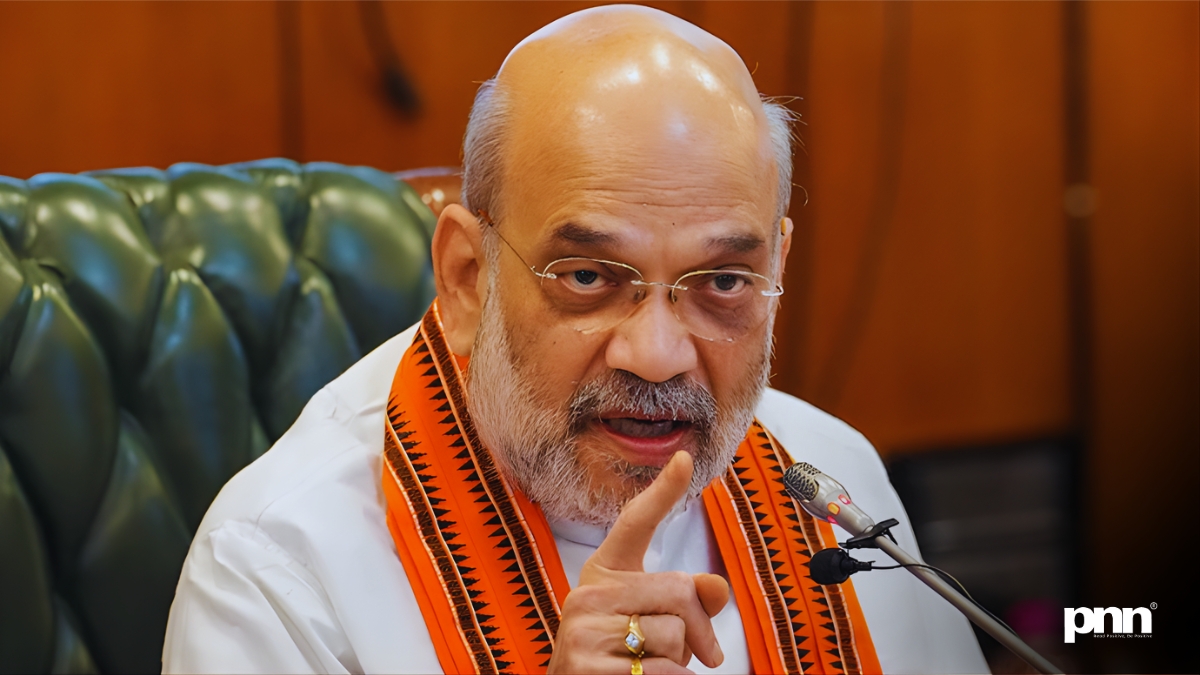
    New Delhi [India], October 16: Union Home Minister Amit Shah landed in Patna on Thursday and delivered a master class in political ambiguity. Asked point-blank whether Nitish Kumar would continue as Bihar’s chief minister if the NDA wins, Shah served up a non-answer wrapped in democratic rhetoric: “Who am I to make someone chief minister?”

    Spoiler alert: he’s literally the guy who makes those calls.

    Shah told Aaj Tak that the Bihar CM decision would rest with newly elected MLAs after the November 6 and 11 elections.

    The timing couldn’t be sharper. Hours before Shah’s Patna appearance, Nitish launched the JDU’s campaign in Samastipur with a rally staged under a massive hoarding of Prime Minister Narendra Modi. Subtle as a sledgehammer. The 73-year-old sought his next term by asking voters to remember his two-decade transformation of Bihar, from “jungle raj” (though he didn’t use that exact phrase) to functional governance.

    “The condition earlier was so bad that people were afraid to step out after dark,” Nitish told the crowd, referencing his first stint starting November 24, 2005. He rattled off the usual checklist: schools, hospitals, roads, village electrification. Standard campaign fare, delivered with the enthusiasm of someone reading the phone book.

    BJP’s Not-So-Hidden Agenda

    Shah’s dodge confirms what everyone already suspected. The BJP wants its own man in the top job. They’ve never had a chief minister in Bihar, a state traditionally dominated by Mandal politics. That sticks in their craw.

    Shah even threw in a backhanded compliment, recalling how the BJP graciously made Nitish CM after 2020 despite winning more seats. “Nitishji had called PM Narendra Modi and said Bihar should have a BJP chief minister,” Shah revealed, positioning the gesture as pure magnanimity. The subtext screamed: don’t expect us to be that generous twice.

    For the JDU, Shah’s comments land like a gut punch. The party’s been telling voters and workers that the BJP agreed to another Nitish term. That narrative just got kneecapped on live television.

    The seat-sharing numbers tell their own story. Both BJP and JDU are contesting 101 seats each in the 243-member assembly. Equal partners on paper. But the BJP’s fingerprints are all over the JDU’s candidate list this year.

    Nitish fielded just four Muslim candidates, down from 10 in the previous election. The BJP? Zero Muslim candidates across all 101 seats. For a leader who built his brand on secularism and welfare schemes for minorities, that’s a sharp pivot. Bihar’s 16 percent Muslim electorate might notice.

    The JDU’s new candidate mix leans heavily on traditional bases: 37 OBCs, 22 Extremely Backward Classes, 22 upper castes. Nitish is clearly betting his reduced political leverage means he can’t afford to chase Muslim votes against the PM Modi-Shah juggernaut.

    Still, on the campaign trail, Nitish tried reconnecting with Muslim voters. “Earlier, there used to be many communal incidents, but since my government came to power, there has been peace and harmony,” he said. Words are cheap. Candidate lists speak louder.

    Opposition’s Self-Inflicted Chaos

    While the NDA sorted its house, the Mahagathbandhan opposition is eating itself. Mukesh Sahni’s Vikassheel Insaan Party (VIP) wants 40 seats. Tejashwi Yadav’s RJD capped them at 15. Sahni, who calls himself the “Son of Mallah,” is refusing to budge.

    The VIP claims to represent Bihar’s fishing communities (Mallah, Nishad, Nonia, Bind, Beldar), roughly 2.61 percent of the state’s population per the 2023 caste census. They won four seats in 2020 contesting just 11. Then three MLAs defected to the BJP. One died. Now they have zero representation but want nearly 17 percent of the assembly.

    Sahni’s also demanding the deputy CM post. When told people might not like that, he shot back: “If some people do not like Tejashwi Yadav to be the Chief Minister, will he not be?”

    Bold. Delusional. Probably both.

    The seat-sharing mess means “friendly fights” where opposition parties field candidates against each other. Congress versus CPI in Bachhwara. Congress versus RJD in Vaishali. CPI versus VIP in Janjharpur. Ground-level workers are confused and directionless, waiting for clarity that isn’t coming.

    The RJD withdrew its candidate from Alamnagar at the last minute to accommodate VIP’s Brahmadev Sahni after initially issuing an election symbol to Navin Nishad. Workers are pissed. Voters are watching.

    Supreme Court – ECI Clash Over Voter List

    The Supreme Court weighed in Thursday on Bihar’s controversial special intensive revision (SIR) of voter rolls. Justices Surya Kant and Joymalya Bagchi told the Election Commission they expect full transparency on deleted and added voters.

    The ECI filed an affidavit rejecting claims of “disproportionate exclusion of Muslims,” calling the accusation “baseless and communal.” The poll body noted it doesn’t record voters’ religion, so bias allegations are unfounded.

    NGO Association for Democratic Reforms alleged 25 percent of 65 lakh excluded voters were Muslim, and 34 percent of the final 3.66 lakh deleted names. ECI said these numbers rely on name-recognition software of questionable accuracy.

    Here’s the kicker: zero appeals have been filed against the 3.66 lakh deleted voters. The court slammed political parties for not helping excluded voters appeal. “Political parties were never interested. We all know how political parties have behaved,” Justice Kant observed.

    Most deleted names were people who didn’t submit enumeration forms, shifted permanently, or died, according to ECI. Political parties filed just 25 inclusion claims and 119 objections. Individual voters filed 36,475 inclusion and 2.17 lakh exclusion claims.

    The ECI also convened enforcement agency heads to combat cash, drugs, liquor, and inducements during polling. Chief Election Commissioner Gyanesh Kumar emphasized “zero-tolerance” for fair elections, directing agencies to map constituencies and borders to check smuggling routes.

    —

    For Indian voters watching this election, there’s a lesson: coalition politics is transactional theatre. Today’s ally is tomorrow’s footnote. Nitish built his career on switching sides and cutting deals. Now he’s discovering the house always wins eventually.

    The irony? Nitish’s best chance at another term might be the opposition’s incompetence. If the Mahagathbandhan keeps eating itself, the NDA wins by default. Then, the MLA Shah mentioned? They’ll do exactly what PM Modi and Shah tell them to do. Democracy in action, Bihar style.

    PNN News

  • Hiraba no Khamkar Empowers 21,000 Girls’ Education

    Hiraba no Khamkar Empowers 21,000 Girls’ Education

    Surat (Gujarat) [India], October 16: Surat-based industrialist Piyush Desai is flipping the script on social responsibility, pledging financial support for 21,000 girls under his bold “Hiraba no Khamkar” initiative.

    A Campaign That Means Business… and Heart

    When most entrepreneurs are busy chasing profits, Piyush Desai decided to invest in the nation’s future, literally. The 30-year-old industrialist, whose empire spans textiles, real estate, construction, and finance in Surat, launched Hiraba no Khamkar to mark Prime Minister Narendra Modi’s 75th birthday. The campaign honors PM Modi’s late mother, Hiraba, and channels serious resources into girls’ education.

    Desai is pledging Rs. 7,500 each to 21,000 girls from economically disadvantaged families, covering school fees and essential educational expenses. So far, 251 girls have received assistance in the first phase. Another 151 will benefit on Dhanteras.

    “Educating a girl is the first step toward societal progress,” Desai said. “When a girl is empowered, her family and ultimately, the nation become stronger.” That’s not just fluff. It’s backed by evidence, educated girls are statistically more likely to break poverty cycles, improve health outcomes, and contribute economically.

    Launch With a Stamp of Authority

    Union Jal Shakti Minister CR Patil inaugurated the campaign, giving it political weight alongside social impact. The optics are smart: a young industrialist with big ambition, the government’s nod, and a clear mission to change lives.

    It’s rare to see philanthropy this targeted and immediate. Most initiatives are vague promises; Hiraba no Khamkar is numbers-driven. Rs. 7,500 might not sound earth-shattering individually, but multiply that by 21,000 girls, and you’re looking at an investment of nearly Rs. 15.75 crore into education. And it’s not charity, it’s a strategic societal upliftment.

    Who is Piyush Desai?

    If you’re thinking, “Who is this guy?” here’s the lowdown. Born on April 21, 1993, in Nanota village, Banaskantha district, Desai has carved a name in Surat’s industrial landscape before hitting 30. His story reads like a blueprint for ambitious entrepreneurs: humble beginnings, diversified ventures, and a sense of responsibility most people reserve for later in life.

    Hiraba no Khamkar reflects Desai’s personal philosophy: real success is measured in what you give back. He’s proving that doing well and doing good aren’t mutually exclusive. The campaign also serves as a blueprint for other industrialists: scale, strategy, and heart can coexist.

    Why Girls’ Education is a Game-Changer

    India still faces huge gaps in girls’ education. While enrollment has improved, dropout rates and financial barriers remain high. A single Rs. 7,500 assistance can cover tuition, books, uniforms, or tutoring for a full academic year. Multiply that impact across 21,000 girls, and you’re not just funding education, you’re building future leaders, innovators, and changemakers.

    By focusing on girls, Hiraba no Khamkar tackles social inequality head-on. Educated women boost GDP, reduce child mortality, and create more stable communities. It’s a small investment for a massive return, and Desai is clearly thinking long game, not quick headlines.

    A Model for Young Entrepreneurs

    The campaign also sets a tone for India’s youth and aspiring business leaders. Social responsibility can no longer be a side hustle. Entrepreneurs who genuinely invest in societal progress will define the next decade. Desai’s campaign may be small in media noise but huge in substance, an example that actions, not statements, shape legacy.

    Looking Ahead

    Hiraba no Khamkar is still in its infancy. With 20,598 girls left to receive support, the campaign has runway for expansion. Timing assistance with festivals like Dhanteras adds cultural resonance. It’s philanthropy with strategy, heart, and local impact, sharp, effective, and unapologetically Indian.

    If Surat sets the bar, other cities better take notes. This is a blueprint of how business can blend with social good, and how young Indians can play offense in nation-building.

    PNN News

  • India Russia Oil Trade: Trump Sparks Global Buzz

    India Russia Oil Trade: Trump Sparks Global Buzz

    New Delhi [India], October 16: Thursday morning, the world woke up to Donald Trump making headlines before most of us had our coffee. The US President claimed that Prime Minister Narendra Modi personally assured him India would stop buying oil from Russia. Cue instant global speculation. India, predictably, denied it.

    In less than 24 hours, the narrative spun from a Trump boast to a diplomatic shrug, with Russia quietly reminding everyone that its oil is good for India. Here’s what actually happened.

    Trump Drops the Russian Oil Bomb

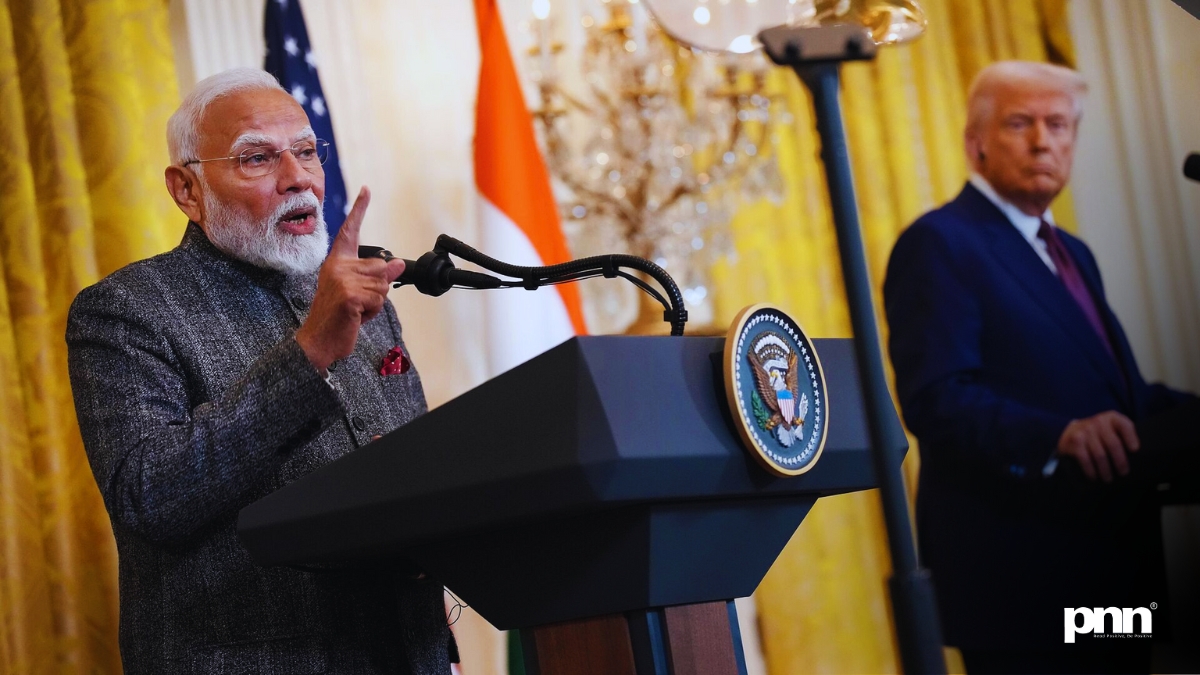
    At a White House press conference on Wednesday, Trump claimed PM Modi had told him directly: India would halt Russian oil purchases. “He’s a friend of mine,” Trump said. “I was not happy that India was buying oil. And he assured me today that they will not be buying oil from Russia. That’s a big step.”

    For context, India is the second-largest buyer of Russian energy, after China. The country ramped up imports following Russia’s invasion of Ukraine in 2022, which has been a sticking point in US-India trade talks. Trump also hinted he wanted a similar pledge from China.

    He even admitted he might be breaking news with his claim. “He can’t do it immediately; it’s a little bit of a process, but the process is going to be over with soon,” Trump added. Translation: he’s confident, but reality is messier.

    Trump Jokes About PM Modi’s Career

    During the same address, Trump got self-aware and sarcastic. Referencing Sergio Gor, the US ambassador-designate to India, Trump said, “He loves Trump… I don’t want you to take the word love any differently… I don’t want to destroy his political career.” The room laughed.

    Gor had just returned from his first India visit since confirmation, where he met PM Modi and presented a signed photo of the two leaders. Trump was clearly basking in the optics: the friendliest handshake story, wrapped in political theatre.

    India Fires Back: Denial Mode Activated

    As expected, Delhi did not confirm Trump’s claim. The Ministry of External Affairs, through spokesperson Randhir Jaiswal, stressed that India’s oil import policies focus on the “interests of the Indian consumer in a volatile energy scenario.”

    Jaiswal also explicitly denied any call between PM Modi and Trump regarding Russian oil. “I am not aware of any conversation yesterday between the two leaders,” he said.

    On the US energy front, Jaiswal pointed out that India has been looking to expand energy procurement from America for years. Talks have been ongoing, and the current administration has shown interest in deepening energy cooperation. [Internal Link → placeholder]

    Domestic Reactions: Politics Meets Diplomacy

    Back home, Trump’s remarks fueled Opposition criticism. Rahul Gandhi, on X, suggested PM Modi was “frightened of Trump,” citing repeated silences and continued flattery. Shiv Sena leader Priyanka Chaturvedi added, “Silence is betrayal” in this case.

    In short, Indian politics didn’t skip a beat. Opposition figures pounced while PM Modi’s team maintained the standard strategic quiet, letting facts, not gossip, dictate the narrative.

    Russia Enters the Conversation

    Not one to sit quietly, Russia reminded everyone that its oil trade with India is mutually beneficial. Ambassador Denis Alipov stated, “India and the US are independent in their decisions, and we do not interfere in those issues. Our oil supplies are very beneficial for the Indian economy and the welfare of the Indian people.”

    So while Trump paints a “PM Modi-approved halt” narrative, Moscow quietly reiterated the economic logic behind India’s imports. It’s a diplomatic shrug that says: we know our oil matters, and we’re not leaving the party.

    Trade Tensions Context: US Tariffs and Energy Politics

    The backdrop here is more than just Twitterable quips. Earlier this year, Trump doubled tariffs on Indian imports to 50%, citing India’s Russian oil trade. That forced weeks of negotiations, which continue behind closed doors.

    India’s energy strategy is straightforward: diversify suppliers while keeping prices manageable for its domestic market. Russian oil is cheaper than most alternatives, and slashing purchases overnight would hit consumers and the economy. That’s the real game Trump is trying to oversimplify for headlines.

    What Happened in 24 Hours

    • Trump claims PM Modi assured him India would stop Russian oil purchases.
      He jokes about “not destroying PM Modi’s political career” and adds theatrics about China.
    • India officially denies any such call or commitment.
    • Opposition parties in India slam the PM for perceived submissiveness.
    • Russia emphasizes that its oil remains vital for India’s economy.
    • Markets and analysts weigh implications for global energy and US-India trade.

    In short, a 24-hour whirlwind of bold claims, denials, political theatre, and global eyebrow-raising.

    Conclusion

    Trump’s headline-grabbing statement may have lit up global media, but the facts tell a different story. India is sticking to its energy strategy, focusing on domestic priorities while keeping doors open for US collaboration.

    The optics may suggest drama; the reality is careful calculation.

    Energy markets, diplomatic channels, and political opponents will continue to read between the lines. For now, the takeaway is clear: don’t mistake Trump’s bravado for fact. India’s oil choices remain grounded in economics, not tweets.

    PNN News

  • Ummah Global Care Trust Organizes Legal Awareness and Women Empowerment Program at Impact College, Rampur

    Ummah Global Care Trust Organizes Legal Awareness and Women Empowerment Program at Impact College, Rampur

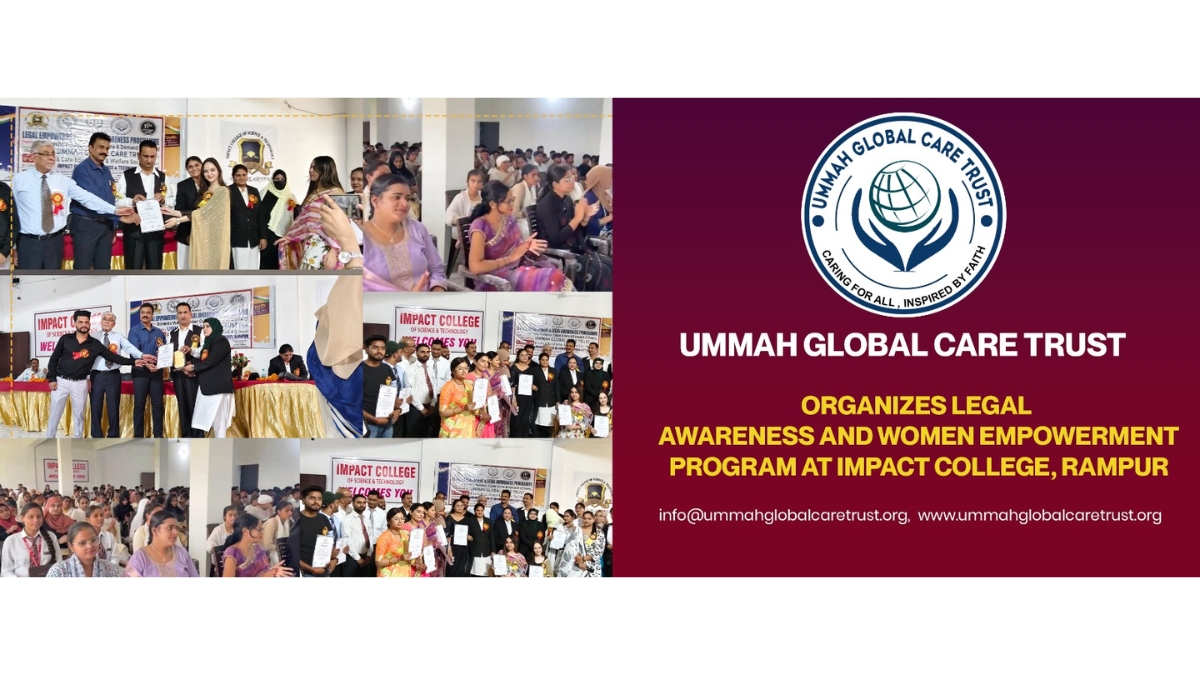
    Rampur (Uttar Pradesh) [India], October 16: In a significant initiative aimed at spreading awareness about women’s rights and legal literacy, Ummah Global Care Trust organised a Legal Awareness and Women Empowerment Program at Impact College, Rampur (U.P.). The event was held under the able leadership of Chairman Tavish Hasan, Secretary Owais Hasan, and Treasurer Alamgir, who have been consistently working towards building a socially responsible and aware community.

    The program attracted a large audience of over 300 participants, including women, young girls, and youth from diverse backgrounds. The key focus of the session was to educate attendees about laws related to women’s protection, the dowry system, and fundamental constitutional values that every citizen must be aware of.

    The event was presided over by Dr Sultan Ahmad, Chairman of Impact College, and Mr. Sartaj Ahmad, Managing Director of the institution, both of whom extended their full support to the initiative. In their addresses, they emphasized the crucial role of education in promoting social awareness and the empowerment of women in society. They lauded the efforts of Ummah Global Care Trust for taking up such socially relevant causes that help bridge the gap between law and society.

    Prominent advocates from Rampur Court attended the event and delivered insightful sessions on various aspects of legal rights and awareness. Among those who spoke were Advocate Hidayat Ali, Advocate Jameel Rizvi, Advocate Isharta Sultan, Advocate Faheema Qureshi, Advocate Harvinder Sabberwal, Advocate Suresh Kumar Saini, Advocate Noorul Sahar, Advocate Sunita Verma, Advocate Saba Khan, and Advocate Faisal Shah Khan.

    Each speaker elaborated on the importance of understanding legal provisions, especially for women, in cases related to domestic violence, dowry harassment, workplace discrimination, and property rights. They stressed that awareness of the law is the first step toward self-empowerment, as it equips individuals to stand up for their rights and challenge injustice in lawful ways.

    The program also included interactive sessions, where participants raised questions about real-life issues faced by women in domestic and workplace environments. The advocates responded to these queries with practical legal advice and explained how existing legal frameworks can be used to ensure justice. The initiative helped in dispelling common myths around the law and encouraged young participants to act as agents of change in their communities.

    At the conclusion of the event, certificates of Legal Awareness and Women Empowerment were distributed by Ummah Global Care Trust to all participants in recognition of their active engagement and interest in the subject. The organisers expressed gratitude to Impact College for providing the venue and to all the advocates for their valuable contributions.

    Speaking on the occasion, Chairman Tavish Hasan reiterated the trust’s mission to promote legal and social education among underprivileged sections of society. He added that Ummah Global Care Trust will continue organising such programs in different regions to encourage women to become more informed, confident, and independent citizens.

    Through such consistent community outreach initiatives, Ummah Global Care Trust aims to build a more just and equitable society by empowering individuals with knowledge, awareness, and the confidence to assert their rights within the framework of law.

    If you have any objection to this press release content, kindly contact pr.error.rectification@gmail.com to notify us. We will respond and rectify the situation in the next 24 hours.