Tag: national

  • IndiaAI Mission Ignites India’s Bold AI Revolution – 2025

    IndiaAI Mission Ignites India’s Bold AI Revolution – 2025

    New Delhi [India], November 5: India isn’t dipping its toes into artificial intelligence – it’s diving in headfirst. With the IndiaAI Mission, MeitY has flipped the switch on a national movement to build an AI ecosystem that’s powerful, ethical, and unapologetically Indian.

    IndiaAI Mission The Big Picture: AI as India’s Superpower

    At the Emerging Science, Technology & Innovation Conclave (ESTIC 2025), the message from MeitY was crystal clear: artificial intelligence is not just a tool – it’s India’s next big growth engine.

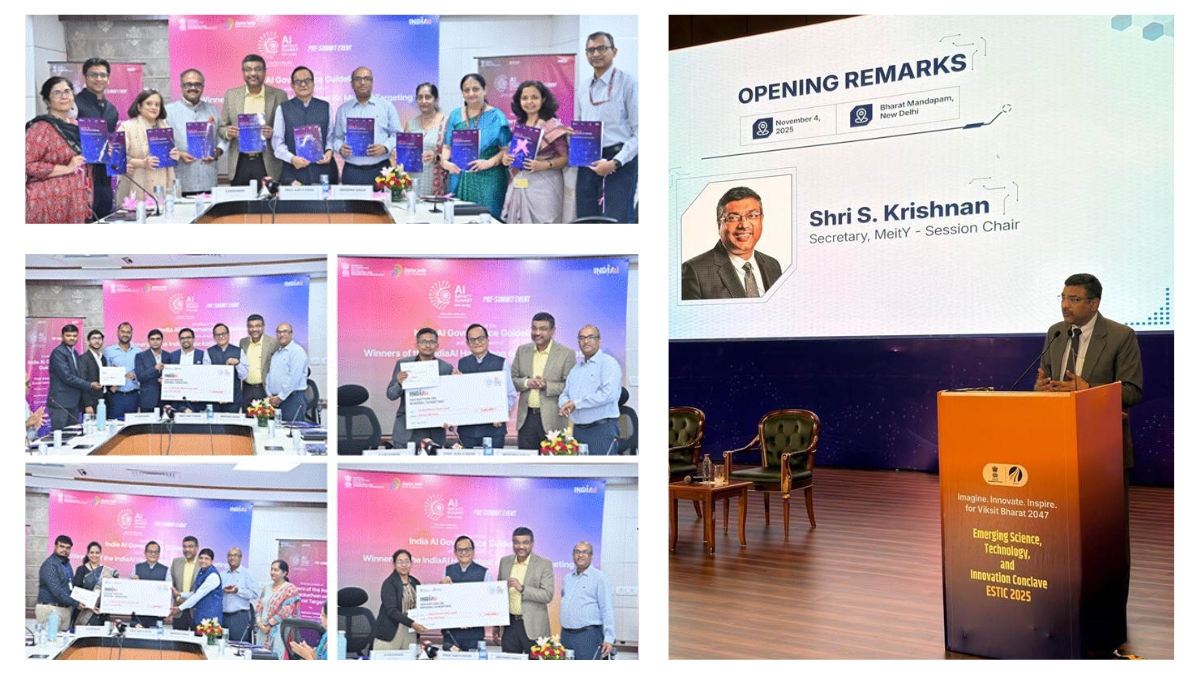
    Shri S. Krishnan, Secretary, MeitY, summed it up best: “AI is a horizontal, cross-cutting technology that can transform lives and accelerate India’s progress towards Viksit Bharat 2047.”

    That’s not just policy talk. It’s a declaration of intent. India doesn’t plan to be a spectator in the global AI race – it’s here to lead.

    Building the IndiaAI Engine

    The IndiaAI Mission, spearheaded by the Ministry of Electronics and Information Technology (MeitY), is designed like a precision machine – seven interconnected pillars driving innovation, access, and governance.

    Shri Abhishek Singh, Additional Secretary, MeitY and CEO of the Mission, laid it out clearly: “Our biggest advantage is human capital. But innovation also needs affordable computing, quality datasets, and sustained investment.”

    The Mission focuses on:

    • Affordable AI compute infrastructure – because innovation can’t thrive on expensive GPUs alone.
    • Open, high-quality datasets for startups and researchers.
    • Foundation models built in India, for India.
    • Startup enablement programs to supercharge homegrown DeepTech ventures.
    • Ethical and trustworthy AI frameworks to keep the ecosystem safe, transparent, and inclusive.

    This isn’t just about catching up with Silicon Valley. It’s about setting a new global standard where affordability meets ethics.

    Governance that Keeps Humans First

    As AI adoption accelerates, India is already setting the guardrails.

    At ESTIC 2025, MeitY launched the India AI Governance Guidelines – a framework that balances innovation with responsibility.

    The brain behind the framework, Prof. Ajay Kumar Sood, Principal Scientific Adviser to the Government of India, summed it up with the principle: “Do no harm.”

    The framework rests on:

    • Seven guiding Sutras for ethical AI.
    • Six governance pillars covering transparency, accountability, and safety.
    • Short-, medium-, and long-term action plans for regulators, developers, and industry.
    • Innovation sandboxes – safe zones for experimentation without collateral damage.

    As Shri Krishnan emphasized, “At the heart of it all is human centricity.”

    India’s governance model aims to do what most countries struggle with – encourage creativity while keeping humans in the driver’s seat.
    IndiaAI Mission Ignites India’s Bold AI Revolution - PNN

    Homegrown Brains, Global Ambition

    India’s AI story isn’t being written in air-conditioned conference rooms. It’s being built in labs, startups, and villages where innovation meets necessity.

    Dr. Sridhar Vembu, Co-Founder of Zoho Corporation, reminded the audience why constraints can be blessings. “When you don’t have all the resources, you find better solutions. There’s new science waiting to be discovered.”

    From Niramai’s AI-driven breast cancer detection to IIT Madras’ data science breakthroughs, India’s innovators are proving that impact doesn’t need infinite budgets – it needs infinite imagination.

    From Hackathons to Policy Playbooks

    IndiaAI isn’t just writing frameworks – it’s building proof.

    The IndiaAI Hackathon for Mineral Targeting, held with the Geological Survey of India, turned data into discovery. Teams developed AI-powered solutions for mapping critical minerals like copper, gold, and rare earth elements – because you can’t build chips or EVs without them.

    The winners didn’t just bag prize money; they demonstrated what’s possible when policy meets purpose.

    This bottom-up approach – empowering students, researchers, and startups – is how India’s AI ecosystem is growing roots and wings simultaneously.

    The Road to Viksit Bharat 2047

    Every big mission needs a vision beyond buzzwords. For India, that’s Viksit Bharat 2047 – a developed, self-reliant nation powered by inclusive technology.

    AI is central to that journey. It’s the silent enabler behind smarter healthcare, sustainable agriculture, efficient governance, and cleaner cities.

    By the time the India–AI Impact Summit 2026 convenes, India aims to showcase not just algorithms, but outcomes – AI that serves people, not the other way around.

    India’s pitch to the world is simple: affordable innovation, scalable governance, and technology that doesn’t forget humanity. If the 1990s made India the IT back office of the world, the 2020s might just make it the AI powerhouse of the planet.
    PNN News

  • PM Modi Launches One Lakh Crore Research Innovation Drive

    PM Modi Launches One Lakh Crore Research Innovation Drive

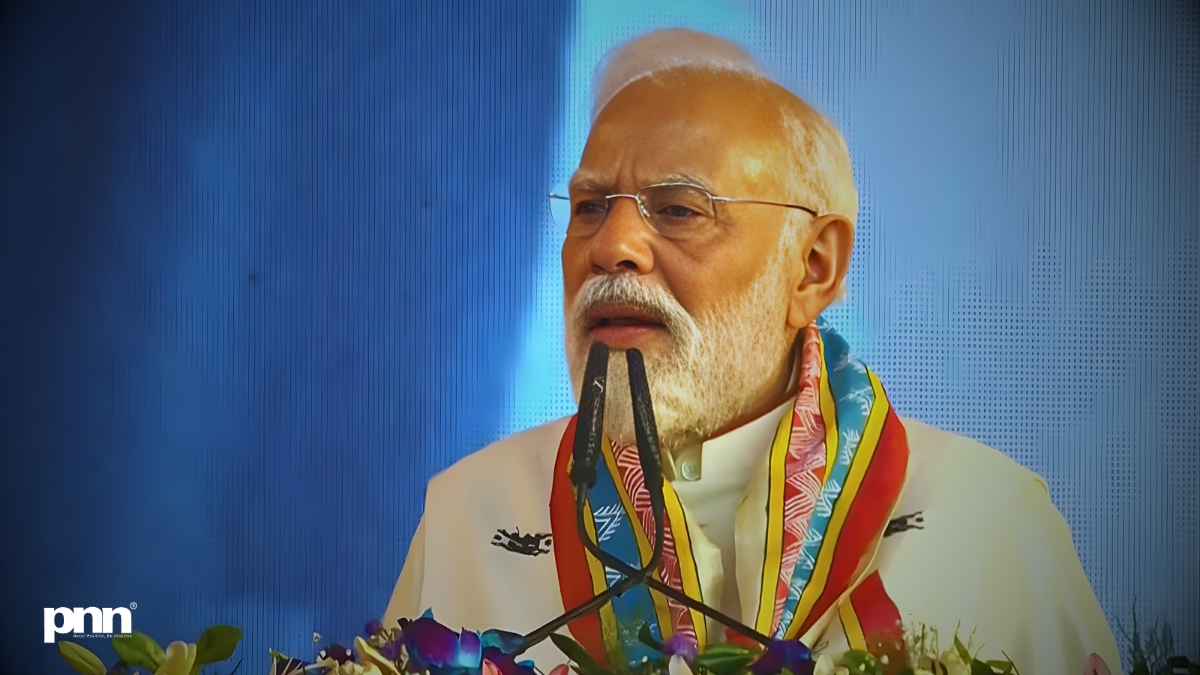
    New Delhi [India], November 3: At Bharat Mandapam, where ideas usually echo politely, Prime Minister Narendra Modi set the stage ablaze. A ₹1 lakh crore Research, Development and Innovation Scheme was launched – not as a slogan, but as a statement: India’s tech game is about to get very real.

    When Science Meets Scale

    PM Modi’s address at the Emerging Science, Technology and Innovation Conclave 2025 wasn’t just another policy sermon. It was a masterclass in confidence. “When science meets scale, when innovation becomes inclusive, when technology drives transformation – the foundation for great achievements is laid,” he said. And for once, that didn’t sound like a cliché.

    The Prime Minister made it clear that India’s innovation narrative has outgrown its old costume. The nation isn’t just a tech consumer anymore – it’s becoming a global pioneer of transformation through technology.

    He was right. The numbers back him. India’s R&D spending has doubled in the last decade, patent filings have multiplied seventeen-fold, and the country now boasts the world’s third-largest startup ecosystem. Over 6,000 deep-tech startups are working on next-gen materials, clean energy, semiconductors, and biomanufacturing.

    That’s not optimism. That’s data.

    Ease of Doing Research

    PM Modi introduced a phrase that might just become policy folklore: “Ease of Doing Research.” It’s a clever pivot from the much-touted “Ease of Doing Business.” The idea is simple – make innovation frictionless.

    Reforms in procurement, financial rules, and regulatory processes are designed to help prototypes leap from lab benches to market shelves faster than ever before. The ₹1 lakh crore RDI fund – announced with his trademark flair – puts serious money where the mouth is. For the first time, India’s researchers and private innovators have access to capital for high-risk, high-reward projects.

    That’s venture energy at a national scale.

    The Confidence of a Nation That Builds Its Own Satellites

    PM Modi’s timing was no accident. Just a day before his speech, Indian scientists launched the nation’s heaviest communication satellite – another feather in ISRO’s already crowded cap. The Prime Minister used the moment to underline India’s momentum: “Yesterday we scaled new heights in science and technology, and today we lay the foundation for even greater transformation.”

    The message: India is done playing catch-up.

    And he wasn’t just speaking to scientists. He was speaking to every startup founder, engineer, and dreamer watching India’s scientific renaissance unfold.

    Digital Public Infrastructure: The Unseen Engine

    One of the Prime Minister’s proudest refrains returned: India’s Digital Public Infrastructure. “Today, India has the world’s most successful digital public infrastructure,” he said.

    He’s not exaggerating. Two lakh gram panchayats are fiber-connected. UPI has rewritten the global digital payments playbook. Data is cheap, access is widespread, and the digital divide is shrinking faster than skeptics predicted.

    When the world scrambled for vaccination logistics, India delivered the world’s largest vaccination programme with its homegrown tech stack. That’s what happens when scale meets science.

    Women: From Innovators to Icons

    One of the most satisfying parts of PM Modi’s speech was about women. A decade ago, fewer than 100 patents a year were filed by women in India. Today, that number is over 5,000. And women now make up 43% of STEM enrolments – higher than the global average.

    That’s not tokenism. That’s transformation.

    “When innovation is inclusive, its primary beneficiaries become its leaders,” PM Modi said, acknowledging how women have gone from being contributors to commanding roles in India’s scientific story.

    AI: From Buzzword to Framework

    Artificial Intelligence got the kind of mention that usually makes techies sit up straight. PM Modi declared that India is shaping the global framework for ethical and human-centric AI, and announced the upcoming Global AI Summit in February 2026.

    With the India AI Mission investing over ₹10,000 crore, the country isn’t just experimenting – it’s engineering the rules of responsible AI before the world decides them for us.

    That’s smart. That’s sovereign digital leadership.

    Science for the Next Billion

    PM Modi’s brand of tech optimism always circles back to inclusion. His challenge this time: shift from food security to nutrition security, from import dependence to innovation independence.

    He threw a few curveballs to the scientific community:

    • Can India develop biofortified crops that end global malnutrition?
    • Can clean, affordable soil enhancers replace chemical fertilizers?
    • Can genomic diversity mapping make personalized medicine mainstream?

    These weren’t rhetorical flourishes. They were marching orders.

    And the message was clear – India’s science must not just chase patents; it must solve problems that matter to the next billion.

    From Labs to Legends

    Behind the grand announcements lies a clear pattern. PM Modi’s government has seeded an innovation infrastructure that’s no longer aspirational – it’s operational.

    Nearly 10,000 Atal Tinkering Labs are now nurturing over one crore young experimenters across India. That number will soon rise to 25,000 labs. Universities are multiplying, IITs and IIITs are expanding, and the new education policy is breaking language barriers in STEM.

    Add to that 10,000 new Prime Minister’s Research Fellowships over the next five years, and you’ve got a full-spectrum ecosystem – from school labs to high-risk research funding – aligned with one vision: make India the world’s innovation lab.

    A Global Vision, an Indian Engine

    PM Modi’s speech wasn’t about bragging rights. It was a strategic narrative – India as a hub where science meets inclusion, technology drives transformation, and research is both national mission and private enterprise.

    The ₹1 lakh crore RDI Scheme is not just a fund. It’s a psychological marker. It tells every Indian innovator that the country is finally ready to bet big on their ideas.

    And if the world’s listening – it should.

    Because this is not the India of jugaad anymore. This is the India of design, data, and deep-tech discipline.

    Jai Vigyan. Jai Anusandhan. And, let’s be honest – Jai Execution!

    PNN News

  • PM Modi Hails Major Milestone: Maoist-Hit Districts Drop from 150 to 3

    PM Modi Hails Major Milestone: Maoist-Hit Districts Drop from 150 to 3

    Raipur (Chhattisgarh) [India], November 1: The war against Maoism in India has turned a corner. Prime Minister Narendra Modi says the red flag of rebellion has finally bowed to the national flag – and this time, the results back him up.

    From Red to Saffron-White-Green

    In Raipur’s Atal Nagar, PM Modi didn’t mince words. “Tiranga has replaced the red flag,” he told a roaring crowd during the Chhattisgarh Rajat Mahotsav. The symbolism was deliberate – and sharp. For decades, large parts of central India were held hostage by Maoist control. Today, the Prime Minister claims, that story is ending.

    According to PM Modi, the number of Maoist-dominated districts has fallen from 150 a decade ago to just three – all in Chhattisgarh: Bijapur, Sukma, and Narayanpur. “I guarantee that the day is not far when India and Chhattisgarh will be rid of Maoism,” he said, sounding less like a politician and more like a man closing a long chapter of violence.

    The Numbers Don’t Lie

    The Union Home Ministry’s latest data backs the Prime Minister’s claim. As of October 2025, Left-Wing Extremism (LWE) impacts just 11 districts nationwide, down from 18 earlier this year. Compare that to 126 in 2013, and you start to see the scale of what’s changed.

    This isn’t political spin; it’s quantifiable progress. The government’s multi-pronged counter-insurgency approach – combining security operations, road and power projects, and surrender-and-rehabilitation programs – appears to be working.

    In just the past month, over 200 Naxals surrendered in Bastar and 20 more in Kanker. These aren’t nameless rebels either – several carried bounties worth crores. They’ve now traded jungle warfare for citizenship papers and a fresh start.

    Adivasi Areas Finally See Development

    For the first time in decades, light – literal and symbolic – is reaching remote villages. PM Modi cited Bijapur’s Chikkapali, which got electricity after 70 years, and a school being built in Abujhmarh – a first since Independence.

    That’s not just infrastructure; it’s transformation. In a region long written off as a “red corridor,” new roads, schools, and medical camps are now replacing checkpoints and encounter zones.

    PM Modi’s tone turned emotional when addressing the Adivasi community: “Those who pretended to follow the Constitution and spoke of social justice did injustice to you for political gain.” It was part empathy, part indictment – and fully on brand for a leader positioning himself as the cleaner of a national wound.

    The Cost of Maoism – And the Comeback

    Let’s not sugarcoat it. For years, Maoist violence turned entire districts into no-go zones. Teachers, doctors, engineers – anyone serving the state – were targets. Infrastructure stagnated, and development stopped at the district border.

    That’s the context behind PM Modi’s assertion: “For decades, those who ruled left you to fend for yourself while they sat in AC rooms enjoying life.” It’s political theater, yes – but it also echoes what locals have lived through.

    By contrast, the central government’s post-2014 strategy made it personal. Security forces got better intelligence, coordination between states improved, and crucially, development began moving faster than ideology. When schools, clinics, and mobile towers arrived, propaganda lost its audience.

    India’s Counter-Insurgency Pivot

    Delhi’s playbook shifted from “hunt and neutralize” to “reform and rebuild.” A combination of security pressure, welfare delivery, and surrender policies now defines India’s LWE response. The government’s target: complete Maoist eradication by March 31, 2026.

    It’s ambitious, but not impossible. What’s working in Bastar could become the template for India’s other internal security challenges – from militancy in the northeast to extremism elsewhere.

    Even former sceptics in the security establishment acknowledge the shift. “The reduction from 150 to three affected districts is not luck; it’s persistence,” a senior officer said earlier this month.

    From Fear to Festivals

    PM Modi summed it up neatly: “In Bastar, there is no fear but celebration.” That line captures the psychological turnaround more than any statistic could. When people stop whispering about ambushes and start planning cultural fairs, that’s victory of a different kind.

    Chhattisgarh’s Adivasi heartland, once synonymous with landmines and ambushes, is now on the verge of normalcy. With every surrender and every new road laid, the red flag fades a little more.

    Beyond Chhattisgarh

    India’s Maoist problem was once continental – spanning Jharkhand, Odisha, Bihar, Maharashtra, Telangana, and Andhra Pradesh. Today, the crisis has largely contracted to a handful of southern Chhattisgarh pockets.

    This contraction aligns with India’s broader growth narrative – the shift from conflict zones to emerging markets. When a region once controlled by insurgents begins building schools and solar grids, it’s not just national security; it’s nation-building.

    The Final Stretch

    There’s still work to do. The Maoist ideology won’t vanish overnight. But it’s running out of ground – both literal and ideological. The youth who once joined armed groups now have smartphones and job offers. The state’s message is clear: the gun is out of style; growth is the new revolution.

    As PM Modi put it, “The day is not far when the red flag will be history.” That’s more than rhetoric. It’s the country finally catching up to its own promise.

    Also Read: India’s War on Naxalism: A Decade of Grit and Growth

  • Advaitaa: Surat’s largest and most iconic venue sets a new benchmark in event infrastructure

    Advaitaa: Surat’s largest and most iconic venue sets a new benchmark in event infrastructure

    Surat (Gujarat) [India], November 1: Advaitaa Ballroom is in business. It is the biggest and most recognisable event venue in Surat. It reinvents the event infrastructure of the city on an unparalleled scale, design and versatility.

    As a world-class destination for international-level events, Advaitaa is an icon. The venue has a 35,000-square-foot indoor ballroom that has no pillars, a ceiling raised 30 feet, and a broad 30,000-square-foot landscape lawn. The spaces can be used to conduct a wedding, a corporate event, an exhibition, or a cultural festival of any size.

    Advaitaa - PNN

    This is a joint venture between Procreate Events and Manisha Decorators, two of the best event companies. The two organisations have a history of excellence in design, execution, and innovation, so together they ideated, developed and currently operate Advaitaa as their flagship venue in the region.

    Advaitaa co-founder, Parv Parmar, told us that when we had the vision of Advaitaa, we wanted to establish an event infrastructure that could match a world-class standard in Surat and host any global events to the very highest standard. We were determined to make our city the home of a space that is not only big, but grand in its experiences, thought about its design, and incomparable in its versatile character. We are proud to tell you that Advaitaa is just as we wanted it to be, where all details have been carefully selected to give you a high-end guest experience, contemporary event services, and an impeccable performance.

    Gujarat Home Minister, Shri Harsh Sanghavi, recently inaugurated Advaitaa. The occasion was a milestone for the event fraternity of Surat. The launch received acclaim among industry members in Gujarat and India, highlighting the fact that it can well position Surat on the national and global event map.

    Constructed to suit the ease of use of guests as well as operational efficiency, Advaitaa is built with green construction and energy conservation systems. It has customizable layouts and ornamental architectures that have made it one of the most flexible and futuristic ready venues in Western India. It is capable of accommodating 700 to 3,000 guests simultaneously, and its location is pivotal due to being located off Surat Airport Road, which makes it well-connected.

  • Governor of Punjab and Sahil Luthra Join in Spiritual Dialogue with Shri Hansratna Surishwarji Maharaj Ji

    Governor of Punjab and Sahil Luthra Join in Spiritual Dialogue with Shri Hansratna Surishwarji Maharaj Ji

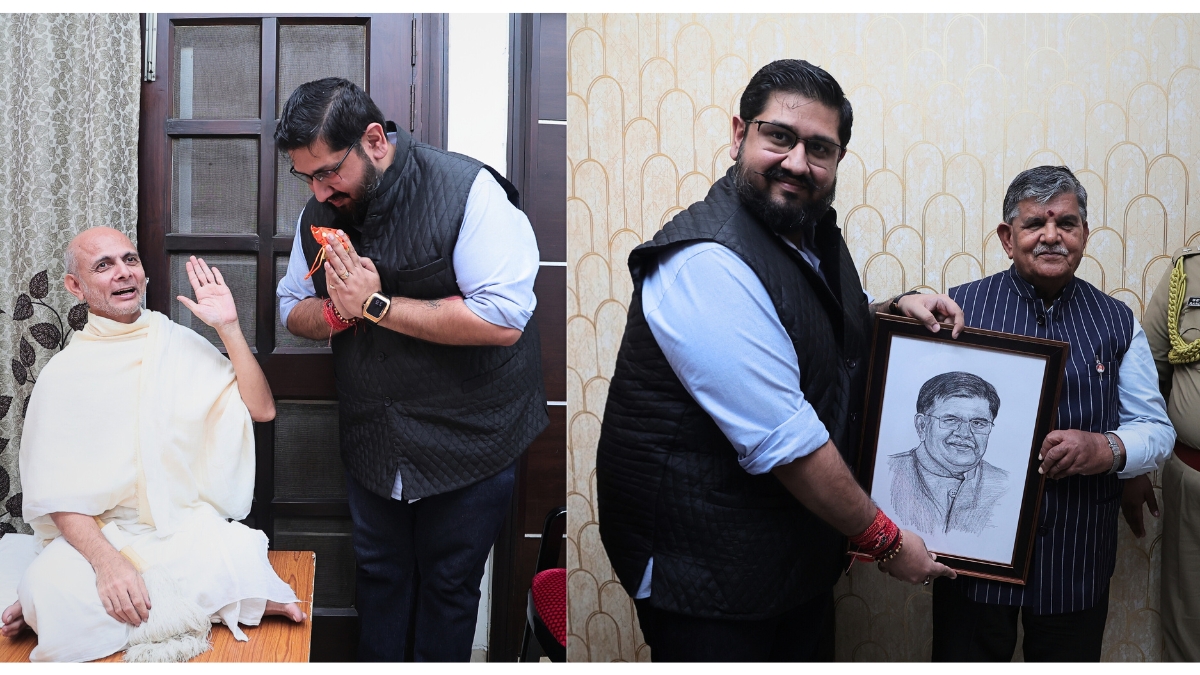
    New Delhi [India], November 1: The day was a day of introspection and insightful conversation with Mr Sahil Luthra, Founder and Managing Director of Vijayan Trishul Defence Solutions, getting the privilege of seeking the blessings of Param Pujaya Divyatapasvi Acharyadev Shri Hansratna Surishwarji Maharaj Ji. The holy Jain spiritual guru still commands people in India by his life of discipline, compassion and devotion to human beings.

    In this religious experience, the Shri Maharaj Ji, who is in the process of his eighth 180-day period of fasting and meditation, imparted profound teachings on faith, inner strength and self-mastery. His national campaign, Save Culture, Save Family, Build Nation, is designed to revive morality, re-establish families, and reunite society with its cultural heritage. Mr Luthra talked about how much he liked this campaign and talked about how the message therein corresponds to the premise of leading with purpose and integrity.

    On the same day, the Hon’ble Governor of Punjab and Administrator of the Union Territory of Chandigarh, Shri Gulab Chand Kataria Ji, also paid a visit to Shri Maharaj Ji. It was a very touching and deep meeting that united the spirit of governance, culture and spirituality. It was a dialogue of equal respect and shared vision of a more aware and peaceful country.

    Mr Luthra was honoured to be present at this special meeting, and he recollected the experience and remarked;

    “To be in the same presence with such enlightened people was a grounding and uplifting experience. It made me remember that the real leadership, be it in the field of governance, innovation or spiritual life, has its meaning when led by the spirit of empathy and integrity.”

    The Hon’ble Governor admired the devotion of Shri Maharaj Ji to social and spiritual well-being and realised the significance of the efforts that could empower moral and cultural principles. He told me that these initiatives are critical towards fostering togetherness, harmony, and empathy throughout the country.

  • Kashmir CM and UIBC-UC Meet to Advance Indo-UAE Cooperation in Education and Healthcare

    Kashmir CM and UIBC-UC Meet to Advance Indo-UAE Cooperation in Education and Healthcare

    UIBC-UC’s Faizal Kottikollon meets with the Kashmir CM – Meeting follows inauguration of DREAM School and launch of Indo-UAE education paper in Srinagar

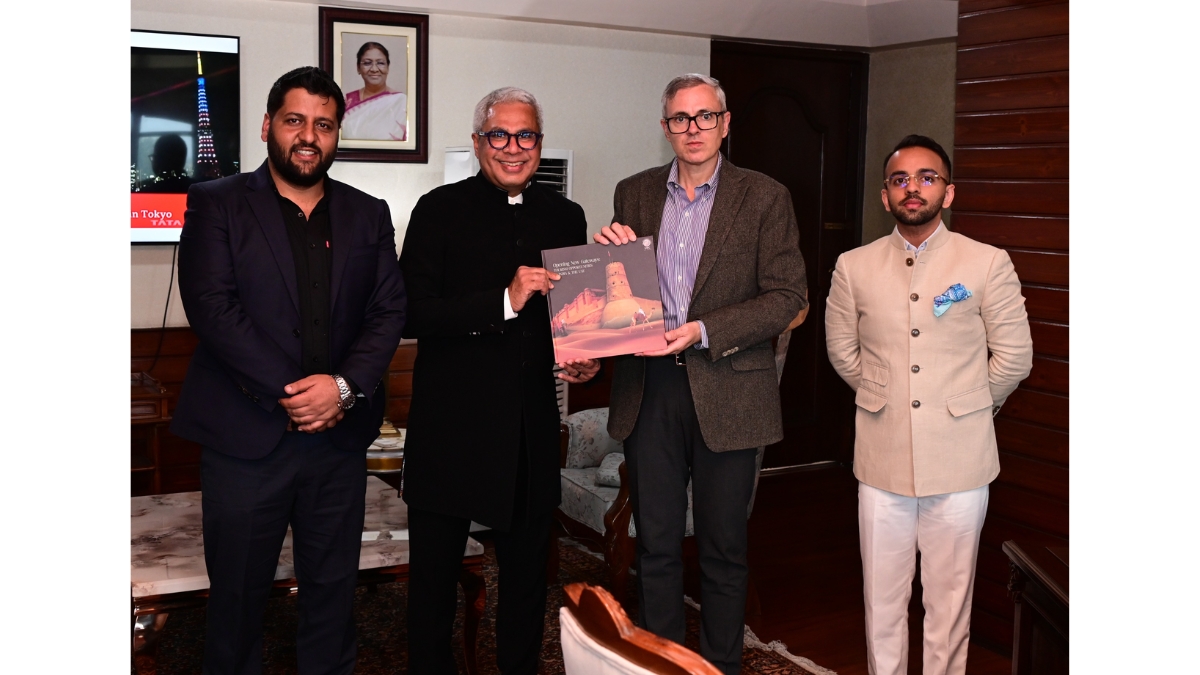
    Srinagar (Jammu & Kashmir) [India], October 31: Mr. Faizal E. Kottikollon, Dubai-based entrepreneur, philanthropist, and Chairman of the UAE India Business Council – UAE Chapter (UIBC-UC), along with Kshitij Korde, Head of Corporate Affairs, UIBC-UC, called on the Hon’ble Chief Minister of Jammu & Kashmir, Shri Omar Abdullah, in a landmark meeting that brought together leadership and vision.

    This meeting was held on the sidelines of two key events in Srinagar – the inauguration of the transformed Middle School Block at Government Girls Higher Secondary School (GGHSS) Kothibagh, and the launch of a UIBC-UC research paper, “Bridging Horizons: UAE-India Partnership and the Future of Education-led Development.”

    These events collectively underscore the growing momentum of Indo-UAE collaboration in social development, particularly in education and healthcare. The Chief Minister lauded the DREAM School initiative of the Faizal & Shabana Foundation (FSF), describing it as “a shining example of what visionary philanthropy and government partnership can achieve.”

    The Kothibagh DREAM School, initiated following Mr. Kottikollon’s 2023 visit to Srinagar as part of a UIBC-UC delegation, stands as a testament to his steadfast commitment since that landmark year, a commitment that has continued to shape and strengthen Indo-UAE socio-developmental cooperation.

    Chief Minister Omar Abdullah recently said, “No amount of infrastructure development, be it roads, power projects, or commercial complexes, can substitute for quality healthcare and education. These are the true pillars of J&K’s progress and prosperity.”

    Mr Kottikollon also presented the Chief Minister with a copy of the research paper launched earlier and a copy of “Opening Gateways – Tourism Opportunities India-UAE,” a visually stunning coffee table book celebrating the growing tourism ties between India and the UAE. Jammu and Kashmir is highlighted in the book as a tourism magnet for the country, with the untapped potential of human capital development in J&K mentioned in the paper.

    Mr. Kottikollon, whose foundation has transformed over 900 schools across India under its PRISM framework, expressed gratitude for the Chief Minister’s support and reaffirmed his long-term commitment to J&K’s development.

    “It was an honour to call on the Hon’ble Chief Minister and seek his guidance on strengthening the Indo-UAE corridor,” said Mr. Kottikollon. “Education and healthcare are not just priorities but bridges that connect communities and create lasting impact.”

    The meeting also explored new avenues of collaboration, including the proposed 40 K–12 school transformation program across J&K and a potential partnership to upgrade existing government healthcare institutions, aligning with the region’s focus on patient safety and holistic wellness.

    Mr. Kottikollon also invited the Chief Minister to lead a J&K delegation to the UAE to further

    dialogue on cross-border investment and knowledge exchange, whilst also extending a special invitation to visit Tulah Wellness Sanctuary, his integrative wellness venture in Kerala.

    The school opening in Srinagar, where Lt. Governor Shri Manoj Sinha was chief guest, was attended by members of the UIBC-UC delegation and marks a significant milestone in Indo-UAE cooperation, showcasing how public-private partnerships can transform the educational and social landscape of Jammu & Kashmir.

    If you object to the content of this press release, please notify us at pr.error.rectification@gmail.com. We will respond and rectify the situation within 24 hours.

  • Dr Manu Singh Honoured as Guest of Honour at Oxford Global Visionaries Ceremony

    Dr Manu Singh Honoured as Guest of Honour at Oxford Global Visionaries Ceremony

    Oxford [United Kingdom], October 31: The Business Excellence and Empowering Visionaries Awards, held in Oxford at the historic Keble College, featured Dr Manu Singh, a renowned social activist, environmentalist, and spiritual reformer, as the Guest of Honour.

    The evening was attended by representatives of 57 countries, among whom were Councillor Louise Upton, Mayor of Oxford, members of the House of Commons, Lord of Mayfair and the Lord of Wimbledon. The appearance of Dr Singh gave a spiritual organisation and patriotic overtones to the global assembly.

    A Defining Patriotic Moment

    On being called to the podium, Dr Singh modestly put aside the American flag and hoisted the Indian Tricolour before the audience, saying, ‘This flag should always be first when I have to give any speech.’ His closing words were “Jai Shri Ram,” which was followed by thunderous applause, infused with national pride and universal values.

    A Message for a Shared World

    Dr Singh presented the awards to the awardees in his keynote speech, which served as a bridge between ancient wisdom and contemporary issues. In a parable comparing Heaven with Hell, he emphasised that the distinction was a matter of attitude, of self- versus sharing.

    “The table is already laid. The spoons are in our hands. It is a question of whether we shall starve together or prosper together, and of whether we shall be willing to nourish each other, which he was, to such a standing ovation.

    Based on the Sanatan philosophy of Vasudhaiva Kutumbakam: the world is one family, Dr Singh challenged the leaders to regard the vulnerable not as a liability, but as a call of duty. He used the pandemic and climate change as a reminder of how human beings are connected and emphasised that uplifting the weakest is not a charity but a duty.

    The Life Founded on the Sanatan Values.

    Dr Singh, founder of Sarva Dharma Samvaad (SDS), has led faith leaders in the past to advocate animal welfare, environmental responsibility and interfaith coexistence. His campaigns against the sacrifice of animals and his support for stray animals make ahimsa (non-violence), seva (service), and jeev daya (compassion) as spiritual demands.

    He redefines Sanatan spirituality as ecological by creating a connection between ecological stewardship and Hindu traditions, both the dog and cow of Bhairava and Krishna.

    Global Recognition

    Well-known in the world of spiritual values, Dr Singh has spoken at the Parliament of World Religions, the UN Environment Convention, and the World Muslim League, having been praised by Prime Minister Narendra Modi as an inspiration for using spiritual values to encourage ecological renewal. His acknowledgement at Oxford also solidifies his purpose as an ethical leader of the world.

    Dr Singh brought the audience to a climax in his conclusion:

    Leadership is not the ability to climb high, but to carry with us several people. Heaven and Hell are not far-off metaphorical abstractions–they are decisions that we make on a day-to-day basis. To the people assembled at Oxford, the message of Dr Singh was plain enough, so that it is not only a guest of honour, but a keeper of perennial wisdom to a broken world.

  • Vishwa Sindhi Hindu Foundation of Associations (VSHFA) to Hold Grand “Shashakt Samaj” at Vigyan Bhawan, New Delhi

    Vishwa Sindhi Hindu Foundation of Associations (VSHFA) to Hold Grand “Shashakt Samaj” at Vigyan Bhawan, New Delhi

    New Delhi [India], October 30: The date will mark a grand celebration of “Shashakt Samaj – Samridh Bharat” organized by the Vishwa Sindhi Hindu Foundation of Associations (VSHFA), an international conglomeration of more than 400 Sindhi Associations, Panchayats, NGOs, and Trusts across 35 countries, under the guidance of Hon’ble Member of Parliament Shri Shankar Lalwani Ji and the leadership of Dr. Gurmukh Jagwani (Ex MLC and President, VSHFA).

    Shashakt Samaj- Samridh Bharat - PNN

    The event will see Sindhi leaders, Sindhi organizations, and Sindhians from around the globe and across India assemble together to celebrate the atmosphere of unity, empowerment, and the spirit of a strong and independent Bharat.

    This is a milestone event in the continuing mission of the Foundation to enhance the engagement of the Sindhi community in the development of India and to serve the dream of Viksit Bharat 2047. It will also focus on the need to introduce the Citizenship Amendment Act (CAA) as a major move to reinvent Indian society.

    Dignitaries and Guests

    We shall have the sugar and spice of the most exalted dignitaries at nightfall:

    Members of Attendees of the Authorities and Government:

    • SHRI RAJNATH SINGH JI (Hon’ble Defence Minister – Government of India) as the Chief Guest, and
    • Hon’ble SHRI GAJENDRA SINGH SHEKHAWAT JI (Hon’ble Minister of Culture and Tourism) as the Honourable Guest.

    Their presence will bring immense prestige to the event and serve as a reiteration of the government’s desire to empower communities and bring back unity in the country.

    Message from VSHFA Leadership

    As he prepared to make his thoughts known, Dr. Raju V. Manwani, the General Secretary of VSHFA, wrote:

    “The host to come will demonstrate the solidarity of Sindhi people and their effort to make India stronger and more independent. It will be an honourable moment to revere our history and our shared duty in the making of the future of our nation.”

    The Vigyan Bhawan “Shashakt Samaj – Samridh Bharat” festivity will culminate on an encouraging note and will encourage the Sindhi diaspora to have a revival of new zeal.

  • India Growth Beat: 2 Government Titans and One Policy Push

    India Growth Beat: 2 Government Titans and One Policy Push

    New Delhi [India], October 30: India’s heavy industry just flexed. SAIL and NMDC turned in record-breaking numbers for FY26, while Commerce Minister Piyush Goyal rallied the nation’s export engines. If India’s industrial story was ever looking for a sequel, this is it, and it’s called momentum.

    Steel Has a Spine, SAIL Proves It

    The Steel Authority of India Limited (SAIL), the Maharatna that quite literally forges India’s backbone, has shown that resilience is not just a buzzword. In its financial results for the first half of FY26, the company delivered both physical and financial muscle.

    SAIL declares Financial results for H1FY’26; delivers strong physical and financial performance - PNN - India

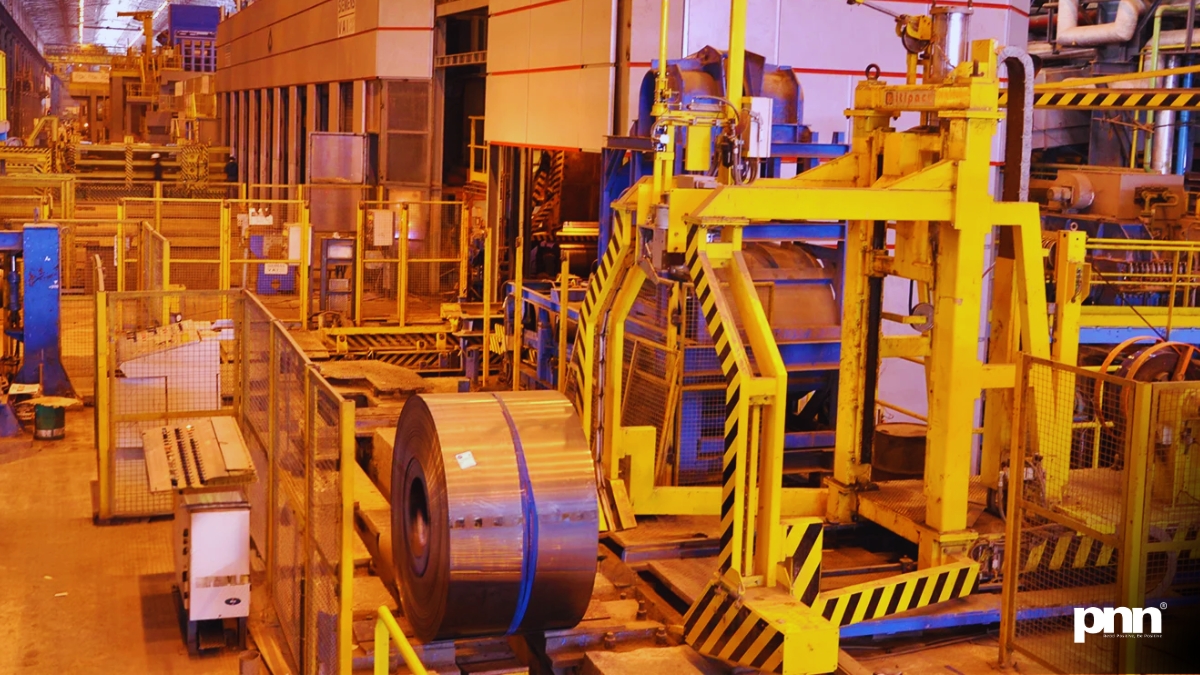
    Crude steel production stood steady at 9.5 million tonnes, keeping plants near peak capacity. But the real power play came from sales. SAIL clocked 9.46 million tonnes in sales volume, up a sharp 16.7% year-on-year. That kind of growth isn’t luck, it’s strategy.

    Revenue from operations crossed ₹52,600 crore, a healthy climb from ₹48,672 crore in the same period last year, despite global steel prices taking a hit. Profit after tax (PAT) shot up 32% to ₹1,112 crore, and debt fell to ₹26,427 crore, marking steady progress toward pre-pandemic debt levels.

    In plain terms: SAIL is sweating efficiency, not excuses.

    Chairperson and Managing Director Amarendu Prakash summed it up best: “High capacity utilisation, increased sales, and relentless focus on efficiency have powered robust financial performance.” Translation: SAIL didn’t just hold the line, it pushed forward.

    NMDC: Mining Momentum Turns to Gold

    Not to be outshone, NMDC Limited, the iron ore giant feeding India’s steel juggernaut, posted a record-breaking Q2 FY26. The numbers read like a case study in operational excellence.

    Strong Q2 for NMDC: Production Peaks, Revenue Surges 30% - PNN - India

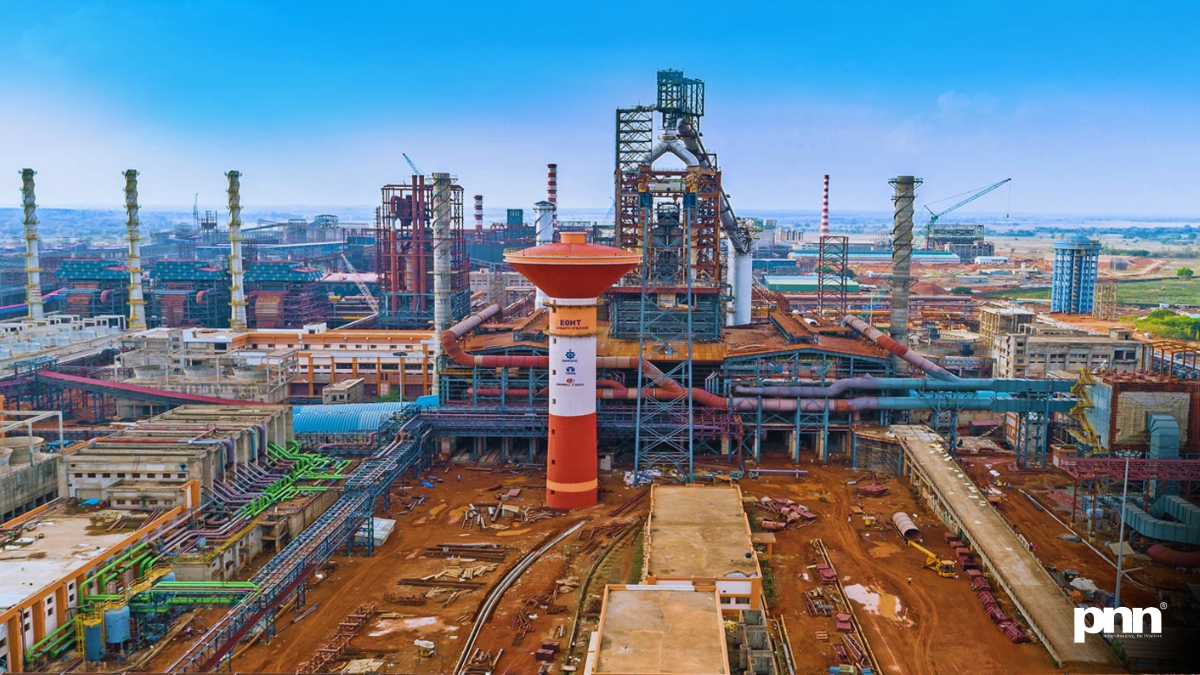
    Production hit 10.21 million tonnes, up 23% year-on-year. Sales followed suit at 10.72 million tonnes, a 10% rise from last year’s quarter. Financials? Even stronger, turnover jumped 30% to ₹6,261 crore, profit before tax rose 35%, and PAT climbed 33% to ₹1,694 crore. EBITDA grew 32% to ₹2,385 crore.

    These aren’t just figures; they’re proof that India’s mining sector has learned to perform under pressure.

    Chairman and Managing Director Amitava Mukherjee didn’t mince words: “Record production, record sales, and strong financial growth this quarter are all indicators of our historic reliability.”

    The subtext: NMDC isn’t just supplying ore, it’s fueling India’s industrial future. Its expansion plans are aligned with national priorities for self-sufficiency in steelmaking and a transition toward net-zero emissions.

    The Government’s Chess Move, Exports and Ecosystem

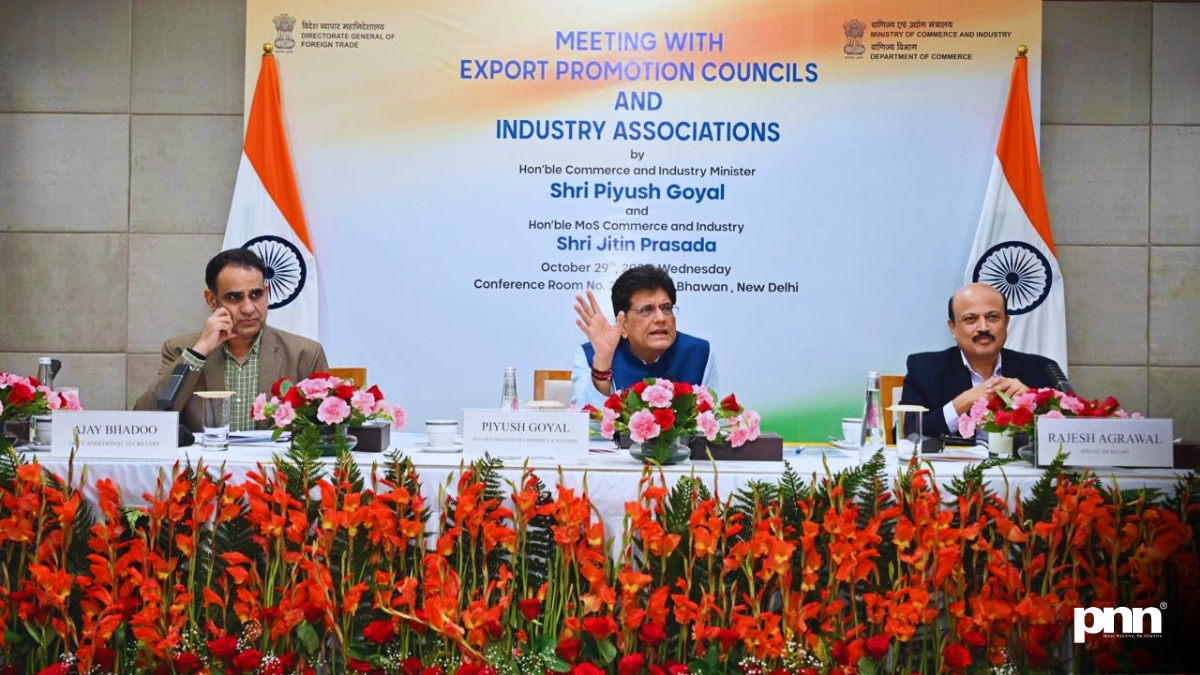
    Meanwhile, over in Delhi, Commerce and Industry Minister Piyush Goyal was orchestrating the next move in India’s economic chess game. Chairing a meeting with Export Promotion Councils and Industry Associations at Vanijya Bhawan, he reinforced what the numbers are already suggesting: India’s industrial base is firing on all cylinders.

    The session brought together heavyweights from the Departments of Commerce, Revenue, DPIIT, and key councils across textiles, engineering, pharma, gems & jewellery, and services. The goal: build a more agile, facilitative export ecosystem.

    The DGFT and Department of Commerce presented the ongoing reforms from the first half of FY26, measures aimed squarely at simplifying exports, diversifying markets, and cutting bureaucratic fat.

    Representatives from FIEO, CII, FICCI, ASSOCHAM, SIAM, and NASSCOM all backed the Minister’s direction. Their message was clear: government reforms are paying off, but now’s the time to double down.

    As Goyal put it, the government remains “committed to strengthening a facilitative trade ecosystem and enhancing global market access for Indian exporters.”

    It’s a sentiment that dovetails neatly with the performance of industrial giants like SAIL and NMDC. The message: the ecosystem is aligning policy, production, and profitability.

    India’s Industrial Engine Is Synchronizing

    Let’s connect the dots.

    • SAIL’s efficiency play shows manufacturing endurance.
    • NMDC’s record output proves supply chain muscle.
    • The Commerce Ministry’s export reforms signal policy alignment.

    This trifecta is how India moves from being the world’s steel supplier to becoming an industrial powerhouse that competes on value, not just volume.

    India’s steel sector alone contributes over 2% of GDP and employs more than half a million people. When giants like SAIL and NMDC perform, the ripple spreads to rail, construction, automobiles, and energy infrastructure.

    What’s even more critical: both companies are threading sustainability into their strategy, moving toward digitalisation, carbon reduction, and efficiency at scale. That’s not just modern; it’s necessary.

    The Road Ahead: From Strength to Strategy

    The takeaway from this week’s industrial scoreboard is simple: India’s growth is no longer dependent on external demand alone. Domestic manufacturing and mining are becoming the engines of consistency.

    The story of FY26, so far, is one of alignment between government intent and corporate execution.

    And while global markets wobble between inflation fears and trade frictions, India’s heavy industries are showing what a confident economy looks like: measured, methodical, and bold enough to scale.

    As the data pours in, one thing’s clear: the era of India as a manufacturing and export heavyweight isn’t on the horizon. It’s already here.

    PNN News

  • PM Modi Bold Gujarat Visit Unites Progress and Pride

    PM Modi Bold Gujarat Visit Unites Progress and Pride

    New Delhi [India], October 29: When India celebrates unity, it doesn’t whisper – it roars. The PM Modi two-day Gujarat visit on October 30–31 packs symbolism, steel, and ₹1,140 crore worth of progress around the Statue of Unity.

    Day 1: Building the Future in Ekta Nagar

    At 5:15 PM on October 30, the Prime Minister will flag off a fleet of electric buses in Ekta Nagar, Kevadia. It’s a clean-energy nod from the man who turned a patch of tribal land into a global landmark. By evening, he’ll be unveiling and launching infrastructure projects worth over ₹1,140 crore – each one designed to make Ekta Nagar smarter, greener, and more connected.

    These aren’t just ribbon-cutting ceremonies; they’re part of a bigger play. The government’s focus here is clear: eco-tourism, green mobility, and tribal development.

    Among the highlights:

    • Birsa Munda Tribal University in Rajpipla – education, meeting, and empowerment.
    • Hospitality District (Phase-1) at Garudeshwar – fuel for local jobs and tourism.
    • E-Bus Charging Depot and 25 Electric Buses – a move towards zero-emission travel.
    • Walkway from Ekta Dwar to Shreshtha Bharat Bhavan (Phase-2) – because accessibility isn’t a luxury, it’s a design principle.

    Also in the mix: smart bus stops, new ghats, a dam replica fountain, and residential quarters for GSEC. Each brick, each beam adds up to one message – Gujarat’s progress doesn’t wait for permission.

    The PM will also lay the foundation stone for ambitious future attractions – Museum of Royal Kingdoms of India, Veer Balak Udyan, Rain Forest Project, and even travelators at the Statue of Unity. Tourism meets tech, with a dash of pride.

    And because India doesn’t do “small” when it comes to symbolism, the Prime Minister will release a ₹150 commemorative coin and stamp marking Sardar Vallabhbhai Patel’s 150th birth anniversary. The Iron Man of India would’ve approved.

    Day 2: Unity on Parade

    The morning of October 31 begins with a floral tribute at the Statue of Unity, followed by the Rashtriya Ekta Diwas celebrations – a national ritual of unity that now feels personal. After all, this year marks 150 years since Sardar Patel’s birth, and the parade’s theme – Unity in Diversity – hits home harder than ever.

    The parade lineup could rival a Republic Day spectacle. Contingents from BSF, CRPF, CISF, ITBP, and SSB, alongside state police forces, will march in full glory. But this year, one contingent is stealing the spotlight – BSF’s all-Indian breed dog unit, featuring Rampur Hounds and Mudhol Hounds. No imported mascots here; it’s Make in India, on four legs.

    Other highlights include Gujarat Police’s horse contingent, Assam Police’s daredevil bikers, and the legendary BSF Camel Band – because if unity had a soundtrack, it would probably involve drums echoing through the Narmada valley.

    The ceremony will also honour five Shaurya Chakra awardees from CRPF and sixteen gallantry medal winners from BSF, recognised for extraordinary courage in counterterror and anti-Naxal operations. Heroes in uniform, finally getting the spotlight they deserve.

    Ten tableaux will roll through the parade route – representing states and forces from Jammu & Kashmir to Andaman & Nicobar Islands, each painting a story of resilience and cultural depth. Add 900 artists performing classical dances from every corner of the country, and you’ve got a visual manifesto of India’s unity.

    The Aarambh Connection: Reimagining Governance

    Before wrapping up the Gujarat visit, PM Modi will interact with officer trainees from the 100th Foundation Course at Aarambh 7.0. The theme – Reimagining Governance – isn’t just academic fluff. It’s a challenge: to rethink bureaucracy for a new India.

    There are 660 officer trainees from 16 Indian civil services and 3 Bhutanese services in this cohort. They’ll return home having heard directly from the man who turned governance into a masterclass in scale, speed, and storytelling.

    Symbolism Meets Scale

    In two days, the Prime Minister’s itinerary reads like a thesis on leadership through action. Electric buses? Check. Tribal education? Check. Green tourism, smart mobility, and national unity? Triple check.

    And let’s be honest – there’s more at play here than ceremonial optics. Ekta Nagar isn’t just another tourist destination. It’s a case study in how infrastructure, culture, and pride can coexist and thrive.

    Sardar Patel dreamt of a unified India. PM Modi’s Gujarat visit doesn’t just celebrate that dream; it upgrades it with renewable power, digital planning, and local inclusion. Call it patriotism with a startup’s hustle.

    PNN News