Tag: Business

  • Turning Hospitality into Digital Experiences: The DigiBirds360 × Delite Grand Story

    Turning Hospitality into Digital Experiences: The DigiBirds360 × Delite Grand Story

    New Delhi [India], September 23: In an industry where the first impression is now formed on a screen long before a guest ever steps through the lobby doors, the partnership between DigiBirds360, a Faridabad-headquartered full-suite digital marketing agency, and Hotel Delite Grand, one of NIT Faridabad’s most recognised hospitality addresses, offers a case study in how legacy hospitality brands are learning to speak the language of the digital-first traveller.

    A Legacy Built on Hospitality, Now Built for the Web

    The Delite story begins nearly four decades ago. The brand was incorporated in 1985, and its founder, Mr. Ram Saran Bhatia, opened the group’s first property, Hotel Delite, in 1987, a modest 28-room hotel run by a team of 60 people operating on what the group still describes internally as a “never STOP attitude” and an “employee-first” approach. That single property has since grown into a name synonymous with hospitality in the region, expanding to a 70-room establishment with a multi-cuisine restaurant and, eventually, into Delite Garden in 2004 as part of a longer-term programme of geographic expansion.

    Today, that legacy lives on through Hotel Delite Grand, located on Neelam Bata Road in NIT Faridabad. The property houses 88 tastefully appointed rooms across Standard, Deluxe, Executive and Suite categories, each fitted with modern conveniences such as air-conditioning, 40-inch LED televisions, electronic safes, mini bars and high-speed Wi-Fi. Its food and beverage offering spans The Real Spice, a multi-cuisine restaurant known for its signature recipes, and The Hangout Bar, an in-house lounge built for guests who want to unwind over a curated beverage selection. On the events side, the hotel’s Grand Ball Room accommodates up to 700 guests for weddings and large corporate functions, while Crystal Palace and the more intimate Oasis, suited to gatherings of 80-plus, round out a banqueting portfolio built for everything from cocktail parties to conferences.

    It is a hotel with a genuine legacy, but legacy alone no longer fills rooms or banquet halls. That is where DigiBirds360 entered the picture.

    Where Hospitality Meets Performance Marketing

    Founded in 2020 and headquartered in Faridabad, DigiBirds360 has built its reputation as an ISO 9001:2015-certified, full-suite digital marketing agency serving sectors as varied as automotive, education, BFSI, manufacturing, lifestyle, healthcare, real estate, and, critically for this story, Hotel & Tourism. Under its dedicated hospitality vertical, the agency positions itself squarely as a digital marketing agency for hotels, offering hotel SEO, local search optimisation, Google Business Profile management, performance marketing, paid campaigns, social media management, website design and content strategy: the full stack that today’s independent and mid-market hotel brands need to compete with OTA-driven discovery and global chains alike.

    For a property like Delite Grand, the brief was straightforward in principle but demanding in execution: translate a hotel with genuine on-ground strengths (a distinctive front-of-house design, a signature restaurant, a purpose-built events wing) into a digital presence that could drive direct discovery, engagement and bookings rather than leaving the hotel dependent solely on walk-ins, agents and third-party listings. That has meant sharpening the hotel’s search visibility around Faridabad and NCR hospitality searches, building out content and imagery that does justice to spaces like the Grand Ball Room and Real Spice, and ensuring that a guest researching wedding venues, business meeting spaces or a weekend stay finds Delite Grand exactly where they are looking.

    This is the essence of what industry observers are increasingly calling the “digitisation of hospitality”: not a replacement of the guest experience, but an extension of it into the research and booking journey that now precedes almost every stay.

    A Portfolio Built on Hospitality Expertise

    Delite Grand is not an isolated engagement for DigiBirds360 within the hospitality space. The agency’s Hotel & Tourism portfolio reflects a broader pattern of working with properties across formats and geographies, from boutique city hotels to destination resorts, including engagements associated with names such as Omni Hotel, Hilton Daytona, Lemon Tree and properties in the Jim Corbett hospitality corridor, a region known for its national park resorts and wildlife tourism demand.

    Each of these represents a different flavour of the same underlying challenge: how does a hotel brand, whether a global chain affiliate or a strong regional independent, convert its physical hospitality strengths into digital visibility and, ultimately, revenue?

    The Bigger Picture

    The DigiBirds360 × Delite Grand collaboration is, in many ways, a microcosm of where Indian hospitality is headed. Independent and regional hotel groups that built their reputations over decades on service, food and ambience are now recognising that the next chapter of growth depends equally on how discoverable, credible and compelling they are online. For Delite Grand, a brand with a near-forty-year legacy rooted in Faridabad’s hospitality history, that means pairing its established strengths in dining, accommodation and events with a digital strategy designed to meet today’s traveller where they actually begin their journey: on search engines, social platforms and review sites.

    As more hospitality brands across India look to bridge the gap between legacy and digital growth, partnerships of this kind, pairing on-ground hospitality expertise with focused, sector-specific digital marketing execution, are likely to define the next phase of the industry’s evolution.

    If you object to the content of this press release, please notify us at pr.error.rectification@gmail.com. We will respond and rectify the situation within 24 hours.
  • Alteryx Brings Governed Business Logic to Enterprise AI at Gartner Data & Analytics Summit 2026

    Alteryx Brings Governed Business Logic to Enterprise AI at Gartner Data & Analytics Summit 2026

    Mumbai (Maharashtra) [India], September 24: Alteryx, the agentic analytics and automation company, showcased how enterprises can move beyond AI experimentation and put AI to work across critical business processes at the Gartner Data & Analytics Summit 2026.

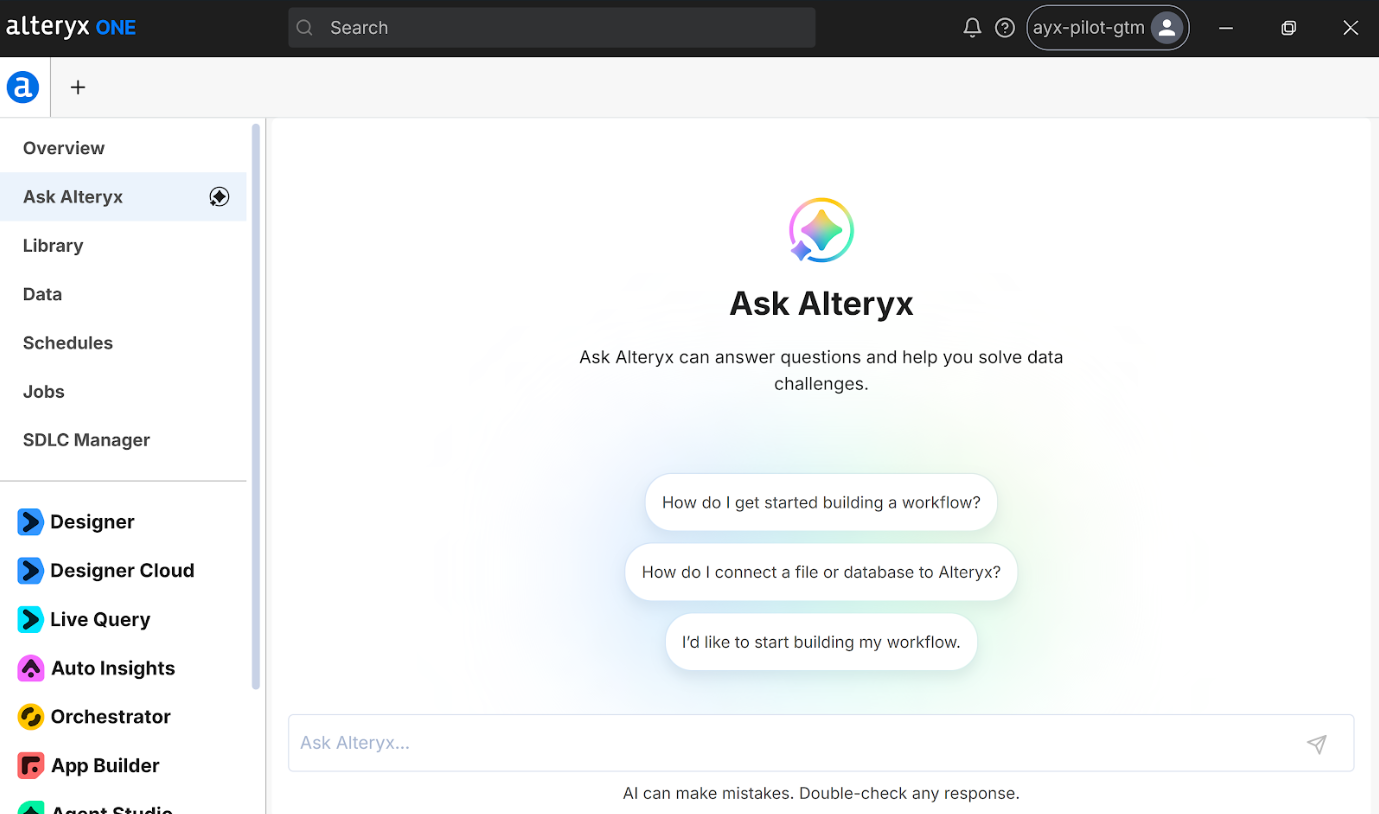
    At the summit, Alteryx is demonstrating how business logic provides the critical connection between trusted enterprise data and AI-driven decisions and actions. Through its unified Alteryx One platform, organizations can define, maintain, and govern business logic in visual workflows, giving AI the business context it needs to produce reliable, repeatable outcomes.

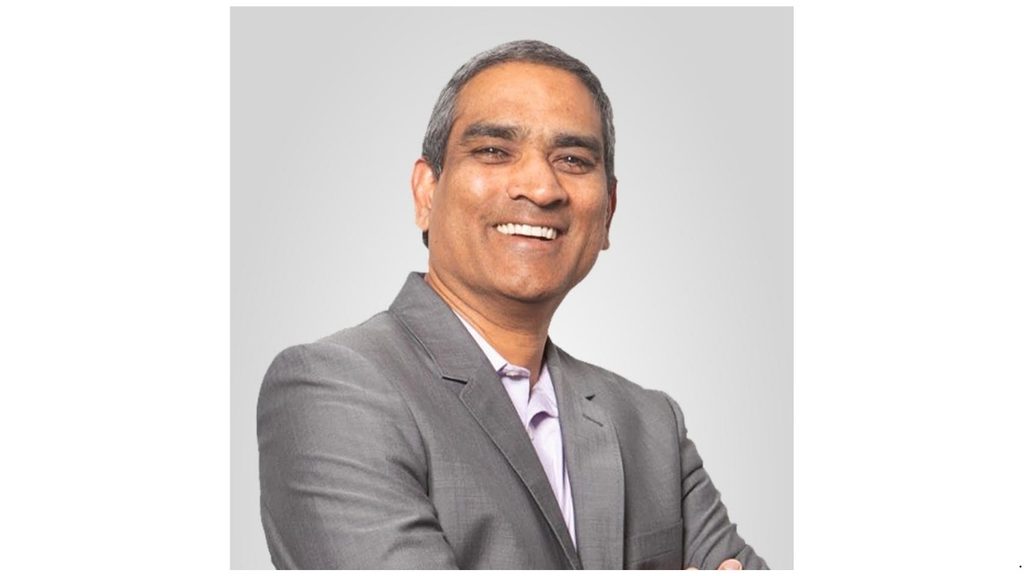
    The summit marked Arvind Krishnan’s first visit to India as Chief Technology Officer of Alteryx. During the event, Krishnan met with customers, partners, and technology leaders to discuss the evolving enterprise AI landscape and the technology foundations required to scale AI with greater trust, transparency and business impact. He also delivered a session, “Alteryx: Put Your Data + AI to Work,” focused on how organizations can close the trust gap around AI and address requirements under regulatory frameworks, such as India’s Digital Personal Data Protection Act, 2023 (DPDP), by grounding AI outcomes in transparent, auditable business logic.

    “As organizations move from experimenting with AI to putting it to work across critical business processes, the challenge isn’t simply access to AI. It’s giving AI the business context and logic it needs to produce outcomes people can trust,” said Arvind Krishnan, Chief Technology Officer, Alteryx. “When business logic is connected to trusted data and AI, organizations can move faster while maintaining the transparency, control, and accountability required to scale. This summit has given us the opportunity to collaborate with India’s technology leaders on turning AI investments into reliable, measurable business outcomes.“

    Krishnan was joined at the summit by Sabya Sen, Vice President, IMEA & APAC, Alteryx, giving customers, partners, and data and technology leaders the opportunity to engage with Alteryx leadership on their data, analytics and AI priorities. Sen leads Alteryx’s business across India, the Middle East, Africa and Asia-Pacific, with a focus on customer outcomes and scaling adoption of the Alteryx One platform.

    At the summit, Alteryx showcased Alteryx One through live demonstrations across enterprise use cases, including governed agentic decisioning, predictive asset operations, finance and audit automation across close, reconciliation and controls, and supply-chain and procurement spend intelligence. Demonstrations will also highlight how organizations can use Alteryx One to help navigate regulatory requirements like those under the DPDP while showing how to embed business logic into governed workflows and bring AI and analytics into the operational processes where decisions get made and work gets done.

    “India is an important market in the global evolution of data, analytics, and AI, as enterprises increasingly look to move from experimentation to measurable business value,” said Sabya Sen, Vice President, IMEA & APAC, Alteryx. “At the same time, India’s evolving regulatory landscape, including the Digital Personal Data Protection (DPDP) framework, is putting greater focus on how organizations understand, govern and use their data. As businesses scale AI, assessing data risk and compliance can no longer be treated as a separate exercise—it needs to be embedded into the data and analytics processes that drive everyday decisions.”

    Alteryx’s presence at the summit reflects a broader shift in enterprise AI: from experimentation toward repeatable, governed workflows that can drive real business decisions and action. By connecting trusted data, business logic, analytics, automation, and AI, Alteryx helps organizations close the last-mile gap between their data platforms and the business processes that run the enterprise.

    ABOUT ALTERYX:

    Alteryx is the agentic analytics and automation company that helps organizations turn complex data into trusted insights, decisions, and action. Built for the people closest to the business, the Alteryx One platform is designed to work across an organization’s existing data and technology ecosystem. It enables business users to produce AI-ready datasets and define, maintain, and update business logic into visual workflows that AI uses to automate operations and insights. This business logic stays visible, understandable, repeatable, and auditable (VURA), so that teams can automate data-intensive workflows without coding. Alteryx closes the last-mile gap between data platforms and the decisions and operations that run the business—giving AI the trusted business context it needs to deliver reliable results. Over 8,000 customers worldwide, including more than half of the Global 2000, rely on Alteryx to improve revenue performance, manage costs, increase operational efficiency, and reduce risk. Collectively, they run more than 380 million workflows on Alteryx each year.

    Alteryx is a registered trademark of Alteryx, Inc. All other product and brand names may be trademarks or registered trademarks of their respective owners.

    For more information visit: https://www.alteryx.com/

    If you object to the content of this press release, please notify us at pr.error.rectification@gmail.com. We will respond and rectify the situation within 24 hours.

  • Lord’s Mark Industries Promoter Proposes Reinvestment of Share-Sale Proceeds in Medical Device Unit

    Lord’s Mark Industries Promoter Proposes Reinvestment of Share-Sale Proceeds in Medical Device Unit

    New Delhi [India], September 24: Lord’s Mark Industries Limited has informed the BSE that its promoter, Sachidanand Hariram Upadhyay, has proposed to reinvest the majority of the proceeds received from a recent sale of equity shares into the expansion of the company’s medical device unit.

    According to the company’s September 24, 2026 exchange filing under Regulation 30 of the SEBI (Listing Obligations and Disclosure Requirements) Regulations, the disclosure follows an earlier intimation made to the stock exchange on September 21 regarding the promoter’s share sale.

    The promoter sold 1,03,56,983 equity shares of Lord’s Mark Industries, having a face value of ₹10 each, on September 18, 2026. The transaction was carried out through a block deal/open-market transaction on the BSE and generated aggregate net proceeds of ₹87.39 crore. The company said the proceeds were credited to the promoter’s bank account.

    In the latest filing, the promoter confirmed and proposed that the majority of the funds received from the share sale would be reinvested towards expanding the company’s medical device unit through what the filing described as a “viable and acceptable means.

  • PC Jeweller Clears Over 99% of Bank Debt, Repays 13 of 14 Consortium Lenders

    PC Jeweller Clears Over 99% of Bank Debt, Repays 13 of 14 Consortium Lenders

    New Delhi [India], September 24: PC Jeweller Limited has repaid more than 99% of its outstanding bank debt and expects to clear the remaining amount within September, according to an exchange filing dated September 23, 2026.

    The jewellery retailer informed BSE and the National Stock Exchange that it has cleared all outstanding debt relating to one additional lender under the terms of a settlement agreement dated September 30, 2024.

    Following the latest repayment, PC Jeweller has cleared outstanding debt owed to 13 of the 14 banks in its consortium. The company said all these repayments were completed ahead of their scheduled due dates.

    The latest transaction takes the proportion of outstanding bank debt discharged by the company to more than 99%. Less than 1% of the outstanding bank debt remains to be repaid, according to the filing.

    PC Jeweller said it remains on track to clear the remaining amount and achieve debt-free status within the current month. The company stated that completion of the repayment process would strengthen its balance sheet and financial position.

    The filing follows the company’s earlier disclosures regarding the clearance and repayment of outstanding debt to its consortium lenders.

  • Techmagnate Study Finds AI Platforms Drop 39% of Cited Brands Every Week, Signals Shift in How AI Visibility Should Be Measured

    Techmagnate Study Finds AI Platforms Drop 39% of Cited Brands Every Week, Signals Shift in How AI Visibility Should Be Measured

    New Delhi [India], September 24: As AI platforms like ChatGPT, Google AI Mode, and Perplexity take on a larger role in how people research products, brands have largely focused on a single question: are we showing up in AI answers. New research from Techmagnate suggests that question is incomplete, and answering it alone may be giving brands a false sense of visibility.

    Search behaviour in categories like Personal Loans has moved toward AI-summarised answers, where users see a synthesised response before ever visiting a lender’s website. Unlike traditional search rankings, the sources AI platforms choose to cite are not fixed. A brand cited this week can lose that citation the next, without any change to its website, its rankings, or its competitors.

    To understand how this instability actually behaves, Techmagnate tracked 83,633 AI citations across ChatGPT, Perplexity, and Google AI Mode over 8 weeks, covering 2,191 domains in India’s Personal Loan category. The study found that domains cited by AI platforms churn at an average rate of 39% week over week. At the same time, a much smaller group, just 330 domains, held onto 93% of all citations by appearing consistently across every single week tracked.

    “For two years, the industry has treated AI citation as a binary, either you show up or you don’t. What this data tells us is that presence and consistency are two different problems, and most brands are only solving for the first one,” said Sarvesh Bagla, Founder and CEO, Techmagnate.

    “The brands actually winning this category aren’t the ones that got mentioned once and moved on. They’re the ones structured to be cited on the same terms every week, across every platform. That’s a much harder thing to build than a single optimised page, and it’s going to separate the brands that treat AI visibility as a project from the ones that treat it as infrastructure.”

    The study also found that NBFCs earned more than double the AI citation share of traditional banks, 53.4% against 23.1%, and that churn behaved differently across platforms, with ChatGPT dropping cited domains nearly 45% of the time weekly, compared to under 32% for Google AI Mode.

    Techmagnate has made the full LLM Citation Drift Report available for download  and is following it with a second study, the AI Visibility Benchmark, which maps where individual BFSI brands stand across these same platforms. Together, the two studies extend Techmagnate’s ongoing work in AI-led search visibility, as AI-driven discovery continues to reshape how financial brands are found and trusted online.

    About Techmagnate

    Founded in 2006 and headquartered in New Delhi, Techmagnate is a leading digital marketing agency in India offering end-to-end, performance-driven digital marketing services. The agency delivers integrated solutions across Enterprise SEO, content marketing, pay-per-click advertising, AI-powered digital marketing, Large Language Model Optimisation (LLMO), Generative Engine Optimisation (GEO).

    Techmagnate partners with enterprises and brands across BFSI, Healthcare, Automotive, ecommerce, and other industries, helping them achieve measurable digital growth through data-driven, technology-led, and scalable marketing strategies.

    For more information, visit www.techmagnate.com.

    If you object to the content of this press release, please notify us at pr.error.rectification@gmail.com. We will respond and rectify the situation within 24 hours.

  • The fastrr Checkout RTO Prevention Playbook: A Step-by-Step Guide for Indian D2C Brands

    The fastrr Checkout RTO Prevention Playbook: A Step-by-Step Guide for Indian D2C Brands

    New Delhi [India], September 24: Return to Origin (RTO) is one of the biggest profitability challenges for Indian D2C brands. Every failed delivery can mean forward and reverse shipping costs, blocked inventory, handling expenses and lost revenue.

    But eliminating Cash on Delivery isn’t necessarily the answer. COD remains an important payment option for Indian shoppers, particularly for first-time buyers and customers who prefer paying at delivery.

    Based on its experience with ecommerce brands, fastrr Checkout has developed this RTO Prevention Playbook to help merchants identify and address delivery risk before an order is shipped. The approach combines AI-powered risk prediction, intelligent COD controls, Partial COD, prepaid conversion, buyer verification and address intelligence.

    The principle is simple: RTO prevention should begin at checkout, not after a shipment fails.

    Step 1: Identify Where Your RTO Is Coming From

    RTO doesn’t affect every order equally. Brands should analyse their RTO across:

    • COD vs prepaid
    • New vs returning customers
    • Pincodes and geographies
    • Product categories
    • Order values
    • Customer and delivery history
    • Address quality

    The objective is to identify which orders are most likely to become RTOs and why, rather than applying the same restriction to every customer.

    This is where checkout analytics can provide an important advantage: brands can identify risk patterns while there is still an opportunity to intervene.

    Step 2: Predict RTO Risk Before Shipping

    Traditional RTO management is reactive. By the time a shipment fails, the cost has already been incurred.

    fastrr Checkout’s AI-powered RTO Prediction helps identify potentially risky orders during the checkout journey using signals such as buyer behaviour, delivery history, location and address information.

    That allows merchants to differentiate between lower- and higher-risk orders and apply different interventions.

    A fastrr-powered D2C brand, used RTO prediction alongside Partial COD and other risk controls. Of 1,525 very-high-risk carts, only 13 proceeded to an order, meaning more than 99% did not proceed under the applicable controls.

    The takeaway: don’t wait for RTO to happen. Identify the risk while you can still change the outcome.

    Step 3: Make COD Risk-Based, Not Unavailable

    Blanket COD restrictions can reduce risky orders, but they can also prevent genuine customers from completing purchases.

    Instead, brands can make COD conditional based on:

    • Pincode
    • Order value
    • Product
    • Customer history
    • Predicted RTO risk

    fastrr Checkout’s Custom Rules allow merchants to control COD availability at this level of granularity.

    This creates a more balanced approach: COD remains available where it makes sense, while higher-risk scenarios receive additional controls.

    Step 4: Use Partial COD to Create Buyer Commitment

    Some customers may not be fraudulent but may still place impulsive or low-intent COD orders.

    Partial COD provides a middle ground. The customer pays a portion of the order online while the remaining balance is collected on delivery.

    This creates buyer commitment without removing the convenience of COD.

    fastrr Checkout enables merchants to use Partial COD alongside RTO prediction, allowing brands to apply stronger payment requirements specifically where risk is higher.

    Step 5: Give COD Customers Another Opportunity to Go Prepaid

    The payment decision doesn’t necessarily end when a COD order is placed.

    Brands can give customers another opportunity to convert their order to prepaid through WhatsApp or SMS, often supported by an incentive.

    fastrr Checkout’s COD-to-Prepaid capability enables this post-order intervention, helping merchants reduce COD exposure without forcing every customer to choose prepaid at checkout.

    This is particularly useful because the brand gets another opportunity to reduce delivery risk after the customer has already demonstrated purchase intent.

    Step 6: Verify High-Risk Orders

    Not every customer needs additional verification. But an order combining several risk signals may warrant another layer of validation.

    Brands can use:

    • OTP verification
    • Order confirmation
    • Buyer confirmation
    • Manual verification for selected orders

    The objective is to optimize checkout journey while applying additional scrutiny to exceptions.

    Automate the majority. Verify the exceptions.

    Step 7: Make Address Quality Part of RTO Prevention

    A poor address can turn a genuine order into a failed delivery.

    Incomplete addresses, missing landmarks or questionable delivery information can be addressed before fulfilment.

    fastrr Checkout’s Address Intelligence helps merchants identify potentially problematic addresses and prompt customers to correct delivery information during checkout.

    This approach has also been used alongside broader checkout optimisation by fastrr merchants. In one case, AI-driven address pre-fill achieved accuracy of up to 95%, reducing the effort required from shoppers while improving the quality of checkout information.

    Step 8: Reduce Risk Without Sacrificing Conversion

    RTO prevention shouldn’t become an excuse for adding friction everywhere.

    The right approach is risk-based intervention:

    Order Risk Possible Intervention
    Low Frictionless checkout
    Moderate Prepaid incentive / verification
    High Partial COD / additional verification
    Very High COD restriction / manual review

    This is where fastrr’s approach goes beyond simply identifying risky orders. It connects risk identification with actions inside the checkout journey.

    That balance matters. One fastrr merchant increased checkout conversion from 27.86% to 46.24% while also increasing prepaid adoption from 27.37% to around 70–75% during later periods. The merchant’s fastrr setup included automated COD risk management.

    Step 9: Measure RTO Alongside Conversion

    RTO shouldn’t be measured in isolation.

    Brands should track:

    • Overall and COD RTO
    • COD vs prepaid mix
    • Checkout conversion
    • High-risk order share
    • COD-to-prepaid conversion
    • Partial COD adoption
    • Address correction and verification rates

    The goal is to improve delivery success without unnecessarily sacrificing conversion.

    fastrr checkout and RTO analytics help merchants understand how these interventions affect both order quality and customer behaviour.

    Build a Continuous RTO Prevention Loop

    RTO prevention isn’t a one-time configuration.

    A sustainable framework is:

    Analyse → Predict → Intervene → Verify → Measure → Optimise

    fastrr Checkout brings these interventions together within the checkout journey—from AI-powered RTO prediction and intelligent COD controls to Partial COD, prepaid conversion, address intelligence and verification.

    That makes checkout an active RTO prevention layer, rather than simply the final step before fulfilment.

    What the Results Look Like in Practice

    fastrr Checkout merchant experiences demonstrate that RTO prevention doesn’t have to come at the expense of growth.

    In one D2C case, risk controls filtered more than 99% of very-high-risk carts from proceeding to an order.

    In another, a D2C wellness brand using fastrr Checkout increased prepaid share from 20% to 43.16%, while its checkout conversion rose from 6.41% to 23.18%. fastrr Checkout’s Address Intelligence and COD risk controls formed part of the intervention.

    Another fastrr Checkout merchant scaled monthly orders from 1,631 to 5,706, or 3.5X, while maintaining RTO controls and using Partial COD for higher-risk customers.

    These cases illustrate the central idea behind the playbook: RTO prevention and ecommerce growth don’t have to work against each other.

    The RTO Prevention Checklist

    D2C brands should ask:

    • Do we know which customers and pincodes drive RTO?
    • Can we identify risky orders before dispatch?
    • Can we selectively control COD?
    • Can we create buyer commitment through Partial COD?
    • Can we convert COD orders to prepaid?
    • Can we verify high-risk customers?
    • Can we identify problematic addresses?
    • Are we measuring RTO alongside conversion?

    If several answers are no, the brand may be managing RTO after it happens rather than preventing it before it happens.

    The Goal Isn’t Zero COD. It’s Fewer Risky Orders.

    The future of RTO prevention isn’t about removing COD or adding friction to every customer journey.

    It’s about knowing which orders need intervention and which don’t.

    fastrr Checkout brings these interventions into a single checkout experience helping brands predict RTO risk, control COD intelligently, create buyer commitment, encourage prepaid payments, improve address quality and verify potentially risky orders.

    For D2C brands looking to build a more proactive RTO strategy, the checkout can be the first line of defence.

    The goal isn’t to say no to more orders. It’s to make more of the right orders reach the customer’s doorstep.

    If you object to the content of this press release, please notify us at pr.error.rectification@gmail.com. We will respond and rectify the situation within 24 hours.

  • SHOPPER’S PARADISE: Maharashtra’s First & Biggest ‘Outlet Mall Of India’ Opens in Bhiwandi, Offers Up to 70% Discounts, 365- Days

    SHOPPER’S PARADISE: Maharashtra’s First & Biggest ‘Outlet Mall Of India’ Opens in Bhiwandi, Offers Up to 70% Discounts, 365- Days

    Mumbai (Maharashtra) [India], September 24: Move over standard end-of-season sales; Mumbai’s retail landscape has officially entered a new era. Strategically located along the Mumbai-Nashik Highway, Maharashtra’s first and largest dedicated outlet centre, The Outlet Mall of India, is making major waves across the Mumbai Metropolitan Region (MMR).

    Positioned as a game-changer for bargain-hunting luxury shoppers, the landmark development brings a globally celebrated retail format to the state for the very first time. Modelled after iconic global destinations like London’s Bicester Village, Las Vegas’s Premium Outlets and more internationally, the centre promises year-round price drops on premium labels.

    The 365-Day Discount Model

    Unlike traditional shopping centres where steep markdowns are strictly seasonal, the Outlet Mall of India operates on a permanent, 365-day discount model. Shoppers can access fresh, top-tier stock at up to 70% off every day of the week-frequently undercutting e-commerce platforms and high-street boutique pricing.

    Early reports indicate a massive consumer shift. Outlets in Bhiwandi are already generating higher sales volumes than some of Mumbai’s most established, fresh-season malls, with several brands outperforming their flagship stores in upscale retail belts like Bandra.

    “The sales have been bigger than some of the fresh malls in Mumbai, and stores have performed better in Bhiwandi than Bandra.”
    pasted or uploaded image

    Curation of 100+ Global Brands

    Spanning a massive footprint near the Bhumi World ecosystem, the mall hosts an expansive lineup of over 100 national and international fashion, footwear, and lifestyle powerhouses:

    • Luxury & Premium Apparel: Lacoste, Armani Exchange, Calvin Klein, Tommy Hilfiger, GAS, and Superdry.
    • Athletic & Activewear: Adidas, Skechers, ASICS, and major sportswear giants.
    • Womenswear & Trend Fashion: Forever New, Veromoda, Only alongside leading high-street fashion labels.

    A Complete Family Day-Out Destination

    Designed as a multi-hour lifestyle destination, the complex goes beyond discount shopping. It houses a curated selection of popular Quick Service Restaurants (QSRs), dining avenues, and drive-thrus alongside Mumbai’s largest interactive gaming zone and children’s play arena.

    With seamless highway connectivity, vast parking facilities, and all-day entertainment options, the complex transforms Bhiwandi from a traditional logistics hub into MMR’s newest value-shopping capital. For families and fashion enthusiasts alike, The Outlet Mall of India is drawing shoppers from across Mumbai and the MMR with premium brands and exceptional savings.

    If you object to the content of this press release, please notify us at pr.error.rectification@gmail.com. We will respond and rectify the situation within 24 hours.


  • Chessveda Partners with Commonwealth Chess Association to Promote Chess Across Commonwealth Nations

    Chessveda Partners with Commonwealth Chess Association to Promote Chess Across Commonwealth Nations

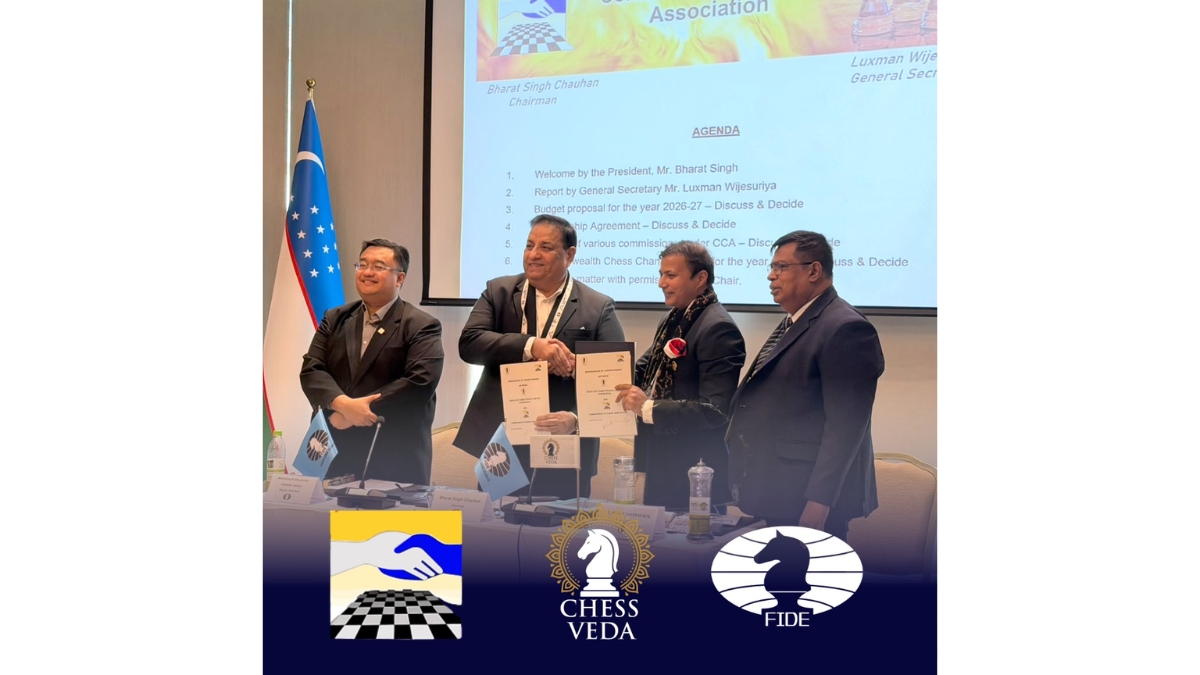
    Samarkand [Uzbekistan], September 23: In a significant milestone for Indian chess, Chessveda, an integrated Indian online chess platform, has entered into a partnership with the Commonwealth Chess Association (CCA) to promote and expand chess activities across Commonwealth nations.

    The partnership agreement was signed on the sidelines of the Chess Olympiad Samarkand 2026 in Uzbekistan, in the presence of Adv. Nandan Jha, Chairman, Chessveda, and Mr. Bharat Singh Chauhan, Chairman, Commonwealth Chess Association. The occasion was also attended by Nitin Narang, President of All India Chess Federation (AICF), presidents of chess federations from Commonwealth countries, along with several Grandmasters and International Masters from the global chess community.

    Chessveda

    Under the partnership, Chessveda and the Commonwealth Chess Association will collaborate to organise chess tournaments, Olympiads and other chess-related events across Commonwealth nations. The collaboration aims to create greater opportunities for players, organisers, coaches and chess communities while strengthening the chess ecosystem across the Commonwealth.

    Chessveda

    Chessveda Chairman, Adv. Nandan Jha, said, “We envision organising online Chess Olympiads and other major championships at a global level. Our aim is to bring the global potential of chess and online chess to India, while providing Indian grassroots talent with opportunities to compete on global platforms and stages. Through this initiative, we hope to help Indian players showcase their talent internationally and contribute to taking Indian chess to greater heights.”

    Commonwealth Chess Association Chairman Bharat Singh Chauhan said, “We are delighted to support Chessveda and are pleased to formalise this partnership. It is a privilege to have Chessveda as an official partner for online chess. We look forward to expanding access to chess for players and participants across Commonwealth nations through this online platform and creating more opportunities for them to participate and compete.”

    Strengthening India’s Role in Global Chess

    The partnership marks an important step for an Indian chess platform to collaborate with an international organisation working to foster chess across Commonwealth countries.

    Through this association, Chessveda aims to contribute to the development of competitive chess while supporting greater participation and engagement among players across different age groups and skill levels.

    Chessveda: Connecting Chess Through One Digital Platform

    Chessveda is an integrated online chess platform designed to make chess more accessible, engaging, competitive and connected for players of all ages and skill levels.

    The platform brings together multiple aspects of the chess ecosystem, including:

    • Online chess playing
    • Chess learning and training
    • Tournaments and competitions
    • Coaching
    • Chess communities
    • Chess news and updates
    • Chess-related content

    Chessveda seeks to bridge the gap between traditional chess and the digital world by creating an ecosystem where players can learn, play, compete, connect and grow on a single platform.

    Chessveda

    About Commonwealth Chess Association

    The Commonwealth Chess Association (CCA) is the international organisation representing chess activities among the nations of the Commonwealth. The CCA was founded in 1980 and unites the commonwealth chess federations, while keeping strict neutrality in the internal affairs of the national chess federations. The association works towards fostering and promoting chess across Commonwealth countries and supports the development of chess activities and competitions in the region.

    The CCA supports the World Chess Federation (FIDE) and is in harmony with FIDE’s aims and statutes. The CCA is affiliated to FIDE as per 2.9 (b) of the FIDE statutes.

    One of its key initiatives is the Commonwealth Chess Championship, which is organised on a regular basis and brings together chess players from Commonwealth nations.

    The Commonwealth is an intergovernmental organisation comprising 53 independent and equal member countries, working together across areas of common interest.

    A New Chapter for Chess Development

    The partnership between Chessveda and the Commonwealth Chess Association is expected to provide a broader platform for chess events and participation across Commonwealth nations.

    By combining Chessveda’s digital capabilities with the CCA’s international chess network, the partnership aims to support the growth of chess and create new opportunities for players and chess communities across the Commonwealth.

    About Chessveda

    Chessveda is an Indian integrated digital chess platform focused on making chess more accessible, engaging, and connected. Its ecosystem brings together playing, learning, tournaments, coaching, communities, news, and chess content, enabling players to develop and participate in chess through a single digital platform.

    If you object to the content of this press release, please notify us at pr.error.rectification@gmail.com. We will respond and rectify the situation within 24 hours.

  • MBU and PhysicsWallah Join Hands to Strengthen Industry-Ready Education

    MBU and PhysicsWallah Join Hands to Strengthen Industry-Ready Education

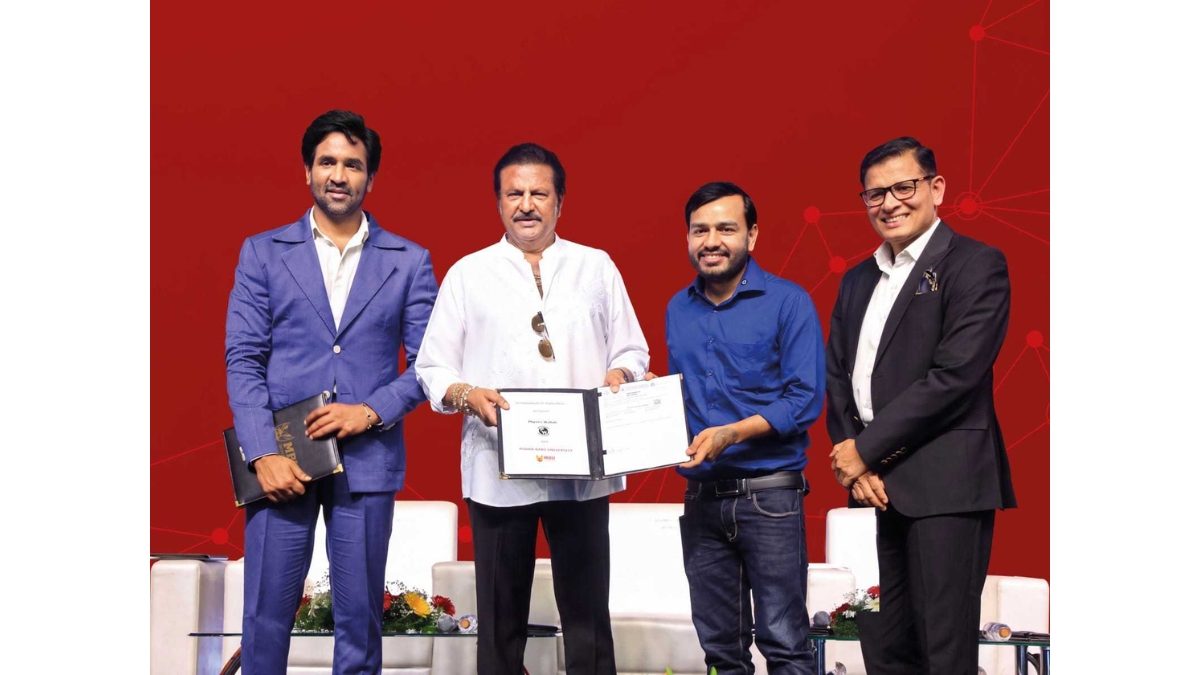
    MBU Chancellor Dr. M. Mohan Babu and Physics Wallah Founder-CEO Alakh Pandey exchange MoU copies at Tirupati; Pro Chancellor Vishnu Manchu and Trustee Vinay Maheshwari were also present

    Mohan Babu University has partnered with PhysicsWallah to strengthen the connection between academic learning and industry readiness, providing students with opportunities to develop practical skills, gain industry exposure and prepare for the evolving demands of the workplace.

    The MoU was signed at the MBU campus in Tirupati in the presence of Dr. M. Mohan Babu, Chancellor, Mohan Babu University, and Alakh Pandey, Co-Founder, PhysicsWallah, along with senior university leadership, faculty members and students.

    The partnership comes at a time when employers increasingly seek graduates who can combine strong academic foundations with practical capabilities, technological proficiency and workplace skills. The Human Capital for Viksit Bharat report notes that youth employability in India stood at 54.8% in 2025, while the World Economic Forum’s Future of Jobs Report 2025 highlights analytical thinking, adaptability, technological literacy, artificial intelligence and big data among the skills shaping the future of work.

    Bringing Industry Learning into the Academic Journey

    Under the partnership, MBU students will gain access to industry-aligned learning delivered in association with PW Skills. The programme will include practical training, projects, exposure to contemporary tools and technologies, and sessions led by industry professionals.

    Students will also receive structured preparation in soft skills, aptitude, domain-specific knowledge, role-specific skills, and interview readiness. A key feature of the initiative is the two-teacher mentorship model, through which PW Skills industry experts will provide practical exposure and workplace context, while MBU faculty mentors will support students throughout their academic and skill-development journey.

    The programme is planned across three semesters, enabling students to progressively build their capabilities alongside their regular academic curriculum.

    Students will have access to industry-aligned learning pathways in Data Analytics and Data Science, Artificial Intelligence and Machine Learning, Full Stack Development and Digital Marketing.

    Building on MBU’s Academic and Global Ecosystem

    The partnership builds on MBU’s broader emphasis on connecting education with industry, emerging technologies and global academic opportunities. With 34 years of educational legacy, 108+ programmes and more than 18,000 students, MBU has developed an academic ecosystem spanning engineering and computing, management, commerce, liberal arts and sciences, pharmaceutical sciences, health sciences, agriculture and nursing.

    The University is NAAC A+ accredited and has received a QS I-GAUGE Diamond rating, recognising its performance across key dimensions of higher education. Its technology-oriented academic ecosystem includes programmes in areas such as Artificial Intelligence and Machine Learning, Artificial Intelligence and Data Science, Cyber Security, Data Science, Cloud Computing and DevOps.

    MBU has also been expanding its international academic footprint through collaborations with globally recognised institutions. The University has established a Joint Degree Programme collaboration with Penn State University, providing an international dimension to its academic offerings and opportunities for students to engage with global academic and learning environments. MBU is also associated with RWTH Aachen University, one of Germany’s leading technical universities, as part of its global academic collaboration initiatives, further strengthening its focus on international exposure and technology-oriented education.

    These global partnerships complement MBU’s emphasis on experiential and industry-linked learning through initiatives such as its Top Gun programme, Continuous Evaluation Program for Placement Readiness, Training for English Proficiency and specialised skill-development initiatives.

    The University’s industry orientation is further supported by its focus on research, innovation, entrepreneurship and employability, creating an ecosystem where students can build academic knowledge alongside practical and professional capabilities.

    Speaking about the collaboration, Vishnu Manchu, Pro-Chancellor, Mohan Babu University, said: “Our students are entering a world where the pace of change is as much a challenge as an opportunity. At MBU, we want them to see that change as their advantage. Strong fundamentals, exposure to real industry practice and mentorship they can trust are what turn ambition into careers. This collaboration with PW Skills gives our students that blend, in areas such as AI, data and digital, where the future of work is being written.”

    Vinay Maheshwari, Trustee, Mohan Babu University, said: “Employability is not built in the final semester. It is built steadily, when learning, practice and guidance come together. Through the two-teacher model with PW Skills, industry practitioners and our own faculty mentors will work side by side with students across three semesters, alongside their academic journey.”

    Alakh Pandey, Co-Founder and CEO, PhysicsWallah, said: “A university education gives students the foundation they need, but the world of work also demands practical skills, confidence and the ability to keep learning. Through this partnership, we aim to bring industry exposure and practical learning closer to students while they are still in college.”

    The MBU-PW Skills partnership represents a step towards creating a more connected learning ecosystem where academic knowledge, global exposure, industry engagement, practical skills and career preparation come together, helping MBU students build the capabilities required to navigate an evolving professional landscape.

    If you object to the content of this press release, please notify us at pr.error.rectification@gmail.com. We will respond and rectify the situation within 24 hours.

  • German engineering firm CAC, Pune’s TPES join hands to implement global projects for Synthetic Fuel.

    German engineering firm CAC, Pune’s TPES join hands to implement global projects for Synthetic Fuel.

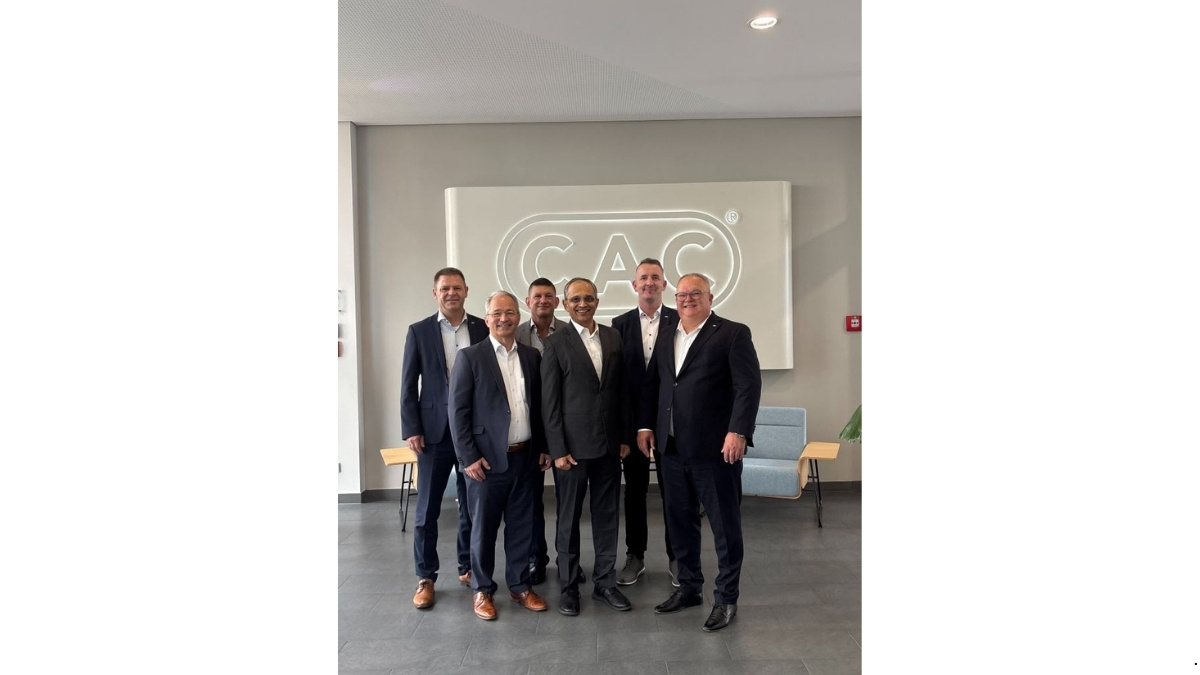
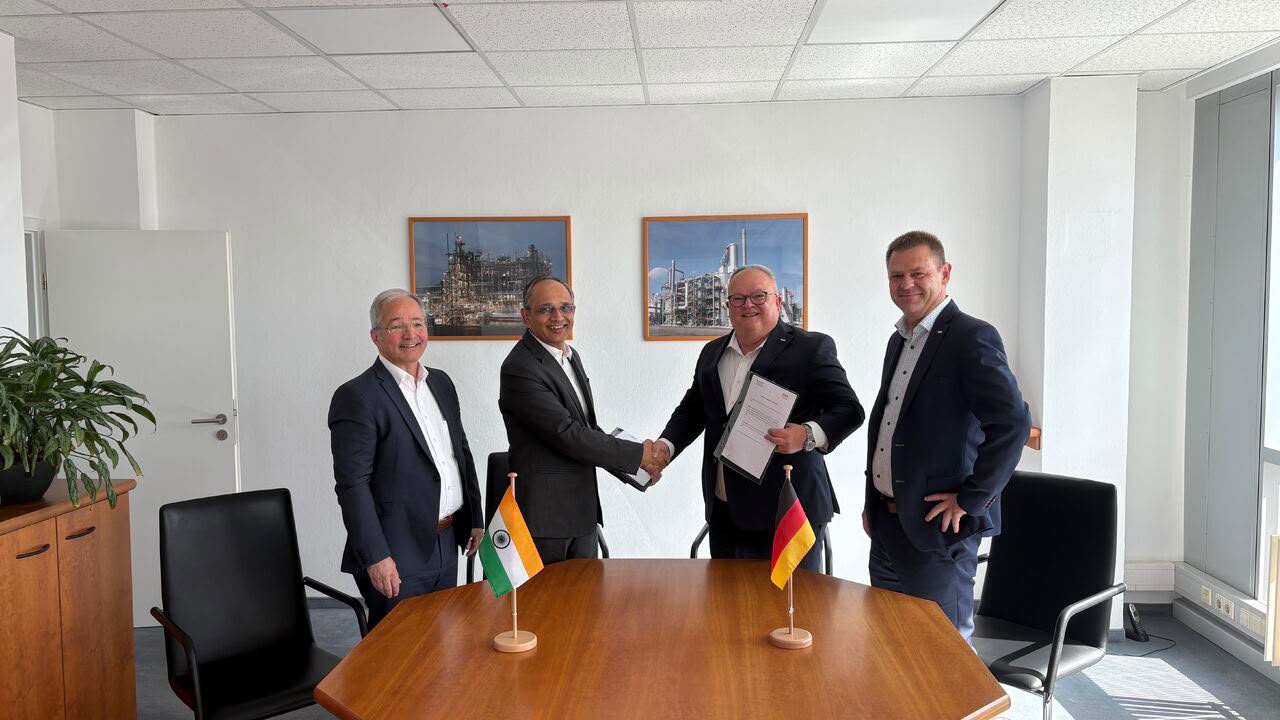
    Pune (Maharashtra) [India], September 22: Germany-based CAC ENGINEERING GmbH (CAC) and Pune-based Trichemie Plant Engineering Solutions (TPES) have signed a strategic cooperation agreement to combine CAC’s technology expertise with Indian engineering talent, according to a press statement issued by the companies.

    The partnership will focus on engineering and executing manufacturing facilities for green hydrogen and synthetic fuels, besides projects in the chlor-alkali, semiconductor and specialty chemical industries.

    CAC, based in Chemnitz, Germany, has patented technologies for MethaFuel®️ and MethaJet®️ synthetic fuels produced from hydrogen and captured CO2.

    Synthetic gasoline produced using CAC’s MethaFuel®️ technology is approved for use in vehicles and offers a pathway to renewable fuels based on renewable hydrogen and captured CO₂.
    The partnership will also seek to support India’s ambitions under the National Green Hydrogen Mission by creating additional applications for hydrogen.

    pasted or uploaded image

    As part of the agreement, CAC and TPES will develop a Global Competency Centre in Pune. The centre will undertake engineering work for projects in India, the Gulf Cooperation Council (GCC) countries and African markets.

    Joerg Engelmann, managing partner, CAC Engineering, said, “The timing is favourable: economic ties between Germany and India are strengthening, while the EU–India Free Trade Agreement, concluded earlier this year, is expected to improve market access once it takes effect.”

    Engelmann said the partnership would help CAC convert its technologies into projects with a local partner while providing access to India’s engineering talent pool.

    Sunil Kulkarni and Peter Stromberger, managing directors, TPES, said Indian engineering capabilities combined with CAC’s technology would provide competitive solutions for global markets. “The global competence centre in Pune will become the hub for engineering of state-of-the-art manufacturing facilities across the globe,” they said.

    For more information, please visit: https://trichemie.com/

    If you object to the content of this press release, please notify us at pr.error.rectification@gmail.com. We will respond and rectify the situation within 24 hours.