Tag: Sports

  • Amity Online Learners Make India Proud at the Commonwealth Games 2026 While Pursuing Their Education

    Amity Online Learners Make India Proud at the Commonwealth Games 2026 While Pursuing Their Education

    New Delhi [India], July 30: Every medal won for India is the culmination of years of discipline, resilience and unwavering commitment. Behind every sporting triumph lie countless hours of training, national camps and international competitions-making it difficult for athletes to pursue higher education through conventional modes of learning. Amity University Online, India’s first online university, is helping bridge this gap by enabling athletes to continue their education through flexible online programs that fit around the demands of training, travel and competition.

    14 athletes representing India across boxing, cycling and weightlifting demonstrate how flexible online programs are empowering sporting excellence without compromising higher education.

    At the Commonwealth Games 2026, 14 learners/athletes from Amity University Online (AUO) are proudly representing India while simultaneously pursuing their academic journeys through a range of online degrees and certifications. Their achievements demonstrate that sporting excellence and lifelong learning can go hand in hand. By offering the flexibility to learn anytime, anywhere, Amity Online is empowering athletes to advance their education and professional growth without stepping away from the sporting careers they have dedicated years to building.

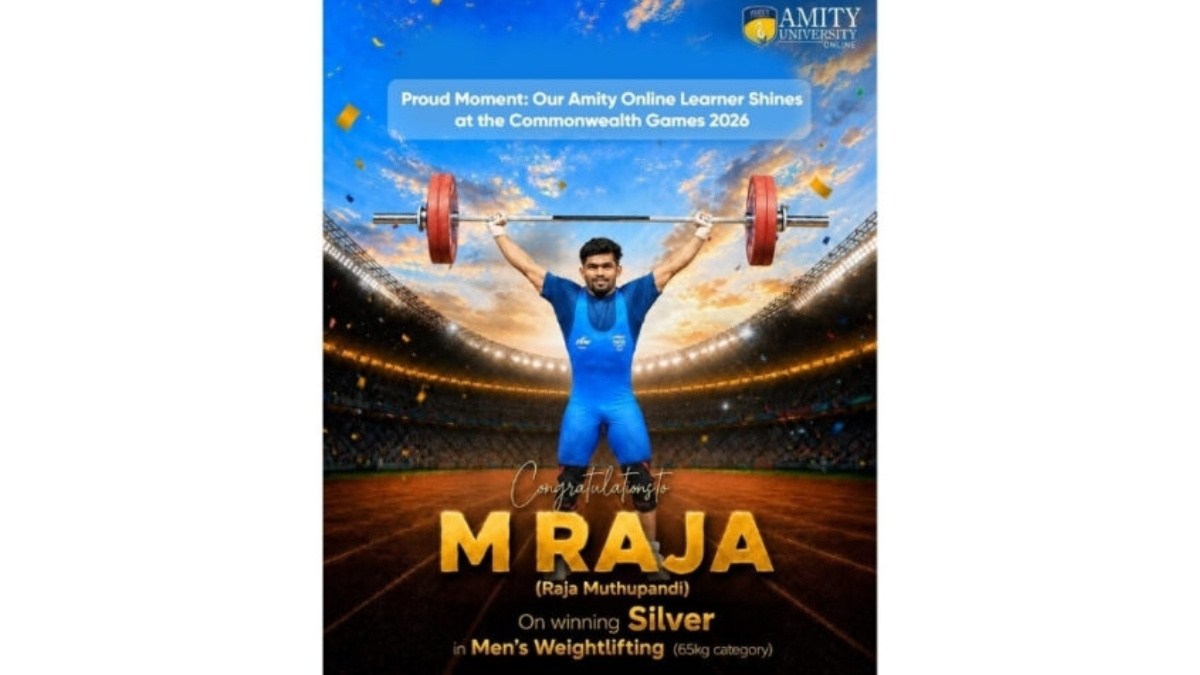
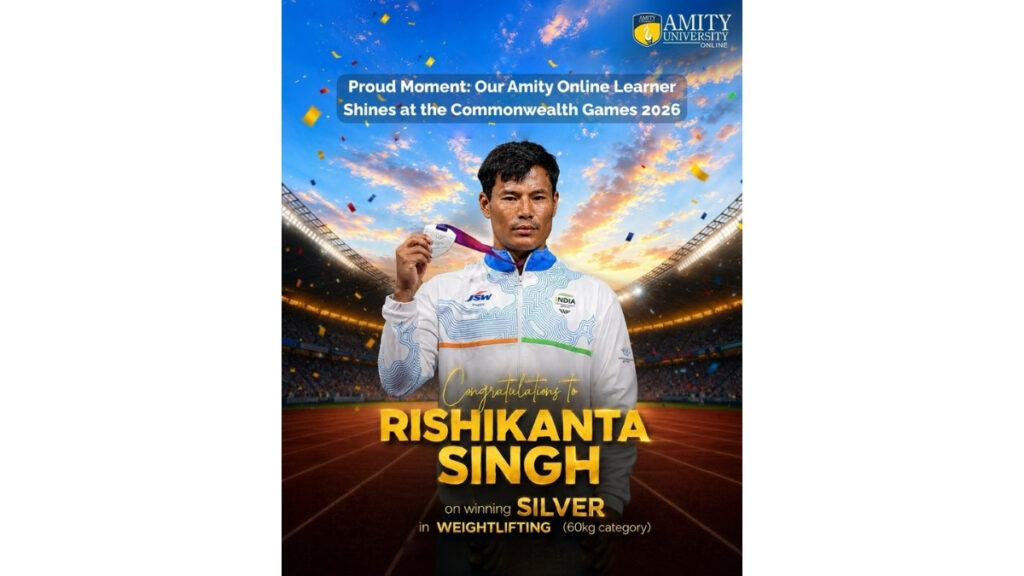
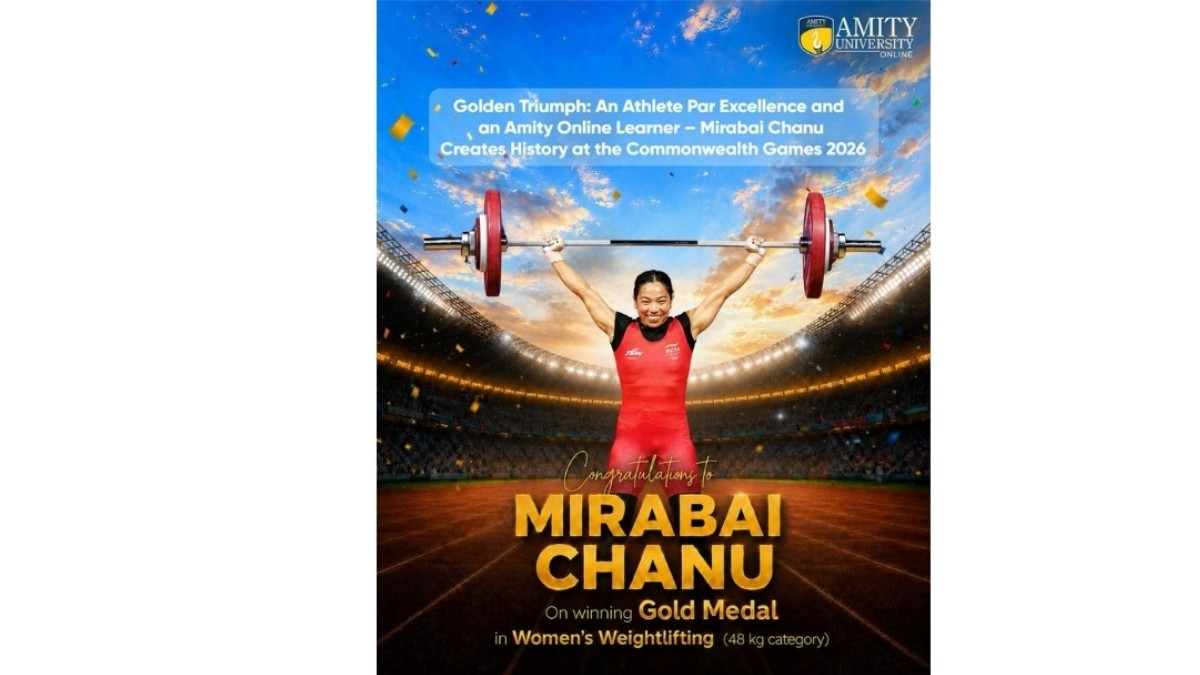
    These athletes have already delivered moments of immense pride for both the nation and the university. Weightlifter Saikhom Mirabai Chanu clinched the Gold Medal in the Women’s 48 kg category, while fellow weightlifters Rishikanta Singh and M. Raja secured Silver Medals in the Men’s 60 kg and Men’s 65 kg categories, respectively. Their achievements stand as a powerful reminder that India’s champions are preparing not only for podium finishes but also for life beyond competitive sport through quality online higher education.

    Representing India across multiple disciplines, the AUO learner’s contingent includes boxers Aditya Pratap Yadav (Men’s 65 kg) pursuing a Bachelor of Arts, Kapil Pokhariya pursuing a Master of Business Administration, Jaismine Lamboria (Women’s 57 kg) pursuing a Master of Business Administration, Arundhati Choudhary (Women’s 70 kg) pursuing a Bachelor of Arts, and Sakshi Chaudhary (Women’s 51 kg) pursuing a Master of Business Administration. The University’s cycling contingent comprises David Beckham Elkatohchoongo, Rojit Singh Yanglem, and Sekhon Harshveer Singh, all pursuing Sports Psychology. Representing India in weightlifting are Rishikanta Singh (Men’s 60 kg), M. Raja (Men’s 65 kg), Lovepreet Singh, Saikhom Mirabai Chanu (Women’s 48 kg), Seram Nirupama Devi, and Martina Devi, each enrolled in Sports Psychology. Together, these athletes embody the spirit of determination, proving that online higher education empowers sportspersons to earn recognized qualifications while competing on the world’s biggest stages. 

    To further support the vision of accessibility for all, Amity University Online extends dedicated academic support to sportspersons through its CHAMPS (Celebrating Heroes with Amity Merit Program) initiative, ensuring that athletes receive the flexibility and guidance needed to pursue their education while remaining fully focused on their competitive careers. This initiative complements AUO’s learner-centric approach, reaffirming its commitment to making quality online higher education accessible to every learner, regardless of where their ambitions take them. Amity’s CHAMP initiative provides up to a 100% fee waiver, enabling athletes to pursue their education while focusing on their sporting goals. 

    For Amity University Online, the success of its learner-athletes at the Commonwealth Games 2026 is more than an institutional milestone; it is a celebration of India’s emerging generation of champions who are proving that sporting excellence and higher education are no longer competing ambitions. As these athletes return home carrying medals, experience and national pride, they also carry something equally valuable: the confidence that while they represented India on the global stage, their education continued uninterrupted, preparing them for success both during and beyond their sporting careers.

    If you object to the content of this press release, please notify us at pr.error.rectification@gmail.com. We will respond and rectify the situation within 24 hours.

  • The Road to Olympic Success: Can India Become a Global Sporting Power?

    Mumbai (Maharashtra) [India], July 28: When Neeraj Chopra sent his javelin flying in Tokyo and took home gold, something clicked for Indian sports fans. It was more than just one medal—it felt like proof that the endless wait might finally be over. For years, India’s huge population watched the Olympics from a distance, rarely making much noise on the medal table. Now, five years after that golden moment, people are asking: can India turn these rare flashes of brilliance into steady Olympic success, or are we stuck chasing miracles every few years?

    Talent Isn’t the Problem

    India’s struggles at the Olympics have always seemed a bit odd. We crank out cricket stars without pause, light up chess boards, and send badminton players toe-to-toe with the world’s best. But at the Olympics—where cricket barely counts and badminton is just a small piece of the puzzle—raw talent doesn’t always translate into medals.

    The real story’s pretty simple. For most of modern history, India ignored everything but cricket. Young athletes from small towns often faded out before even getting a shot at the big stage—there just wasn’t a clear path from village tournaments to international glory. Gifted shot-putters and wrestlers, especially from Haryana or Punjab, had the drive, but not the resources—no real coaching, nutrition, or exposure. So their chances fizzled.

    What’s Different Now

    But things are finally shifting—and it’s not just because of Chopra’s gold. The Target Olympic Podium Scheme (TOPS) started picking athletes with genuine medal potential, backing them with real support, foreign coaches, and world-class equipment, long before the Games even started. That made a big impact in Tokyo and Paris, boosting athletes across the board—from Chopra to shooters and wrestlers.

    Then there’s Khelo India. It kicked off as a school talent program in 2017, but it’s grown into much more: annual competitions for all ages, from school kids to university students, even winter and beach games. Over 63,000 athletes got their moment on a national stage. Now, the new Khelo India Rising Talent Identification system uses standardized tests at centers all over the country to track down promising kids aged nine to eighteen. The scouting’s systematic these days, not just guesswork.

    Money is flowing in, too. The sports ministry’s budget keeps climbing—â‚č4,479 crore for 2026-27. They’re also ramping up sports goods manufacturing, trying to win back ground there. And the vision? It’s bold—India wants to crack the top ten Olympic nations by 2036, top five by 2047, and maybe even host the Games.

    Athletes Are Proving the Point

    Plans are fine, but now India has actual results—more than ever. PV Sindhu’s back-to-back medals pushed badminton into the mainstream. Wrestlers like Bajrang Punia and the Phogat sisters kept the winning streak alive, showing wrestling medals weren’t just flukes. Shooters, after stumbling in Tokyo, bounced right back in Paris. And Neeraj Chopra? He didn’t fade away. He stayed at the top, kept lifting his game.

    What’s really cool is how these athletes are coming from all over. Not just one state or social group anymore. Haryana’s wrestling hubs, Manipur’s boxing gyms, Odisha’s hockey fields, Kerala’s athletic tracks—talent’s popping up everywhere. That wider spread matters a lot. It means the pipeline is bigger, and not just limited to elite, big-city schools.

    The Gaps Still Showing

    But it’s not perfect yet. The India Open badminton tournament got slammed for lousy facilities earlier this year, so even big events can stumble. Beyond the headline sports, there aren’t enough good coaches; Pullela Gopichand’s task force called this the top obstacle. And those grassroots facilities—especially outside major cities—are way behind countries like China, Korea, or even smaller Olympic nations that got into this decades ago.

    One hurdle that’s hard to ignore is cricket’s dominance. It steals most of the money, attention, and TV coverage. Not necessarily a bad thing, but Olympic sports end up fighting for scraps, even when the government boosts funding.

    What’s Realistic?

    So, can India become a global sports powerhouse? Honestly, it’s already happening, just slower and messier than the news makes it sound. We’ve had two straight Olympics showing real medal growth, plans stretching years ahead, and a wider talent pool than ever. China took thirty years to become a sports superpower. South Korea took almost as long.

    India’s about ten years into its own journey, aiming for 2036 and beyond. If Tokyo sparked the change and Paris strengthened it, the real test is whether the next few Olympics can push things from rare medal wins to a lasting system. Right now, that shift feels real. The final step won’t come from just one superstar—it’ll happen when coaching, facilities, and opportunities finally match up with the ambition that’s taken root.

    PNN Sports

  • Why More Indian Parents Are Pushing Sport Alongside Studies

    Why More Indian Parents Are Pushing Sport Alongside Studies

    Mumbai (Maharashtra) [India], July 25: Ten years ago in a small town in Haryana, if a father told his neighbors his daughter was skipping tuitions for wrestling practice, most people would have raised their eyebrows. Some might’ve said it out loud. Today? The same news gets nods, maybe even a proud grin. Something has genuinely shifted in how Indian families look at sport—not just because of Neeraj Chopra’s Olympic throw or the medals after, but something deeper: parents are rethinking what a “good future” actually looks like for their kids.

    The old equation is breaking down

    For years, the formula was set in stone. Study like your life depends on it, get good marks, engineer or doctor—those were the gates to a secure life. Sports? Fine, play a little, blow off steam, but don’t let it interfere with JEE or NEET prep. A kid who put hours into badminton instead of the coaching center was usually just “wasting time.”

    That old mindset is fading. It’s not gone, but it doesn’t rule like it used to. The difference is, people are seeing proof. When Manu Bhaker grabbed two Olympic bronzes in Paris, or Gukesh took the world chess title at nineteen, or the women’s hockey team kept making it to the big leagues—suddenly, parents in Rohtak or Kochi or Nagpur saw something they hadn’t before: a “regular” kid could turn sport into a real career, not just a hobby.

    Money has entered the picture, and that changes minds fast

    Let’s be honest—money talks. Indian parents are nothing if not practical. The rise of the Pro Kabaddi League, the Indian Super League, all those new badminton and volleyball circuits—they’ve opened up careers with salaries and sponsorships that didn’t even exist fifteen years ago. One kabaddi player from a Punjab village can make more in a single season than most first-year engineers, and that reality probably did more to swing attitudes than any “awareness program” ever could.

    Government support matters, too. Khelo India has spent the last decade putting scholarships, coaching, even actual sports grounds into places that never had proper playgrounds, let alone stadiums. The ASMITA initiative, focusing on girls, is a game-changer—families that would have held their daughters back are suddenly rethinking. There are parts of Kashmir where sports used to be considered a distraction at best; now, school notice boards brag about sporting wins right next to board exam results.

    It isn’t only about becoming an athlete

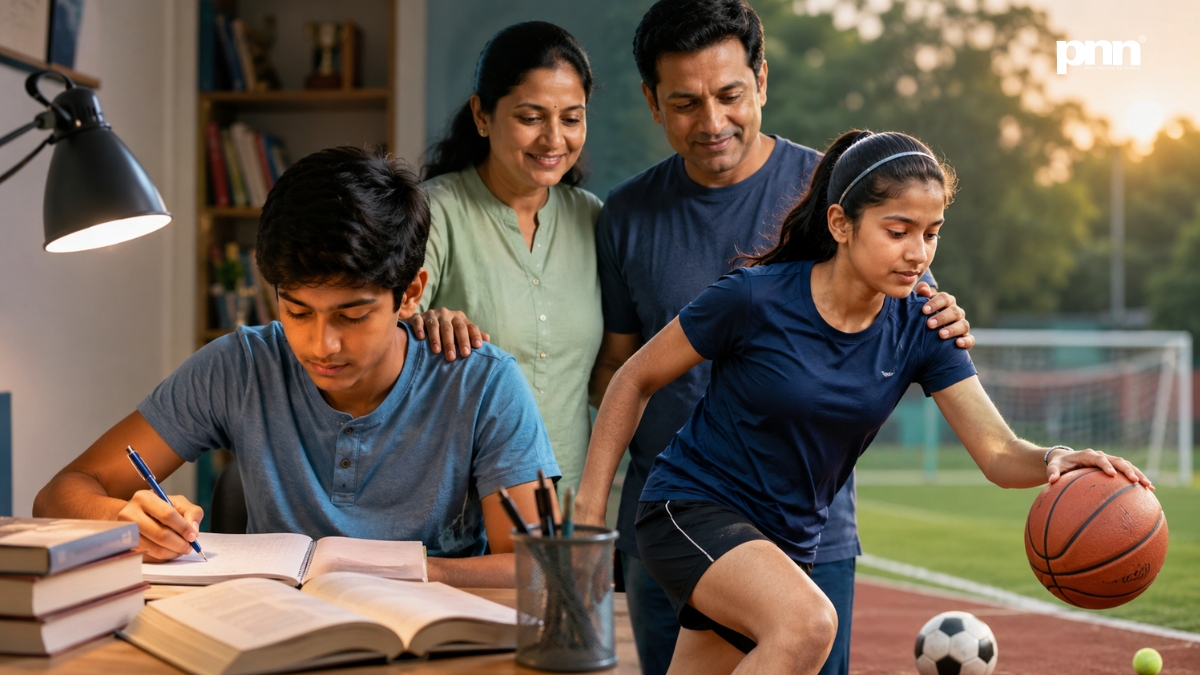
    But here’s what most stories miss: it’s not really about producing professional athletes. If you talk to parents in cities like Bengaluru or Pune, sending kids to weekend football academies, they’re not expecting a national jersey. They want their kids to learn discipline, get stronger, maybe toughen up a bit. They want their kid to lose a match on Saturday and still show up for the Monday test unfazed.

    It’s not just parents saying this, either. Quite a few IIM grads and startup founders have openly talked about how their years playing cricket or track taught them how to manage pressure—better than any school lesson. Over time, stories like these start to stick. A parent working in marketing in Gurugram reads that stuff and starts looking at their ten-year-old’s football practice in a new light.

    There’s another big reason: screens. So many parents remember climbing trees, street cricket, outdoor play. Now, their own kids spend evenings on phones. Dragging them off to the badminton court or the swimming pool feels less like academic strategy, more like a rescue mission.

    The tension hasn’t fully gone away

    Of course, none of this means the struggle is over. Many parents still pull their kids out of sports the moment board exams get close. Coaches at Mumbai and Delhi academies will tell you: every year, as soon as kids hit class 9 or 11 and the pressure ramps up, attendance drops. The fear is real. What if the sports plan doesn’t take off? What’s left if your kid neither gets a medal nor a degree? That anxiety isn’t going away, and honestly, it’s not baseless—a handful of athletes can make this a steady living, most can’t.

    Schools are trying to bridge the gap. The National Education Policy treats sports as equal to academics on paper, so kids don’t have to pick one or fall behind. But whether that actually happens, well, it really depends—on the school, the state, sometimes just luck. A lot of parents are muddling through without much help.

    What’s actually changed

    What’s really changed is the story parents tell themselves about what sports mean for their kid’s future. It’s not a threat to academics now. It’s a parallel investment—something that builds a different set of muscles, literal and figurative. And thanks to people like Chopra, Bhaker, Sindhu, it doesn’t feel like a dead end.

    Whether this hope lasts depends on a lot: on more sports jobs opening up, on schools actually backing up their promises, on whether infrastructure keeps growing as fast as ambition. For now, though, the change is real. And you can see it in a simple thing—a father in a small town, smiling, not scowling, when his daughter ties up her shoes for wrestling instead of settling in for another round of tuitions.

    PNN Sports

  • Why Staying Active Through Sports Matters More Than Ever

    Why Staying Active Through Sports Matters More Than Ever

    Mumbai (Maharashtra) [India], July 23: Not long ago, I ended up at a community hall watching a group of retirees play badminton on a random weekday. There were no medals or trophies at stake. They were really just chasing connection—a reason to get up, see familiar faces, and move a little before the afternoon slipped away. That moment stuck with me. Honestly, it says more about why sports matter today than any statistic ever could.

    We’ve Engineered Movement Out of Daily Life

    The way daily life works now, you barely have to move if you don’t want to. Groceries show up at your door. Meetings happen on a laptop. Entertainment? It’s right there on your phone. None of that’s bad, but it’s easy to lose sight of how much activity we’ve quietly stripped out of everyday life.

    The World Health Organization keeps sounding the alarm: We’re just not moving enough, and it’s making us sicker. That’s not just a lecture—it’s the real result of a life where bodies built for action spend more and more time sitting still.

    Sports step in here in a way forced “exercise” never really does. Most people don’t drag themselves to a weekly football match because they feel guilty. They go because it feels good—to compete, to laugh, to move together. Nobody has to force it.

    It’s Not Just the Body—It’s the Mind

    If you run, you know the deal: a bad day just doesn’t look quite so bad after you sweat it out. That’s not some old wives’ tale. Exercising kicks in the body’s happy chemicals, helps you sleep, and keeps stress in check. That’s why therapists are telling people to get moving—and not as a substitute for other help, but as an extra tool.

    Think about those “walking football” teams at English clubs for seniors, including folks struggling with depression or early dementia. They don’t just walk away fitter. They get that sense of belonging back—the feeling that someone notices when they don’t show up. That’s community. And sometimes, it makes just as much difference as any physical change.

    Real Examples Worth Seeing

    Iceland’s Youth Sports Revolution. Back in the late ‘90s, Iceland had sky-high rates of teen substance use. To turn it around, the country invested hard in sports, music, and art programs—and tightened curfews. Over the next two decades, teenage smoking and drinking plummeted. Sure, there were a few ingredients, but sports were a big one. Give kids something real to do, and things change.

    Morning Stretch in Japan. Look at companies in Japan—they’ve been leading group stretching sessions before work for ages. It’s quick, it’s simple, it’s almost cheesy. But it works: a short burst of movement that brings people together, costs nothing, and makes a difference.

    The Marathon Boom. Cities across the planet—Mumbai, London, Chicago—now see crowds of amateurs signing up for marathons. Most of these runners aren’t winning anything. They’re in it for the training: the early alarms, the tiny improvements, the community. That slow, patient progress is the real prize.

    Sport Builds Something That Schedules Don’t

    If you’ve ever tracked your steps or calories, you know the drill: it works, right up until it just
 doesn’t. For a lot of people, staring at stats loses its charm fast. Sport sneaks past all that. It brings in rivalry, teamwork, actual fun—and the subtle thrill of realizing you’re just a little better this month than last.

    Think about Serena Williams. Tennis didn’t just give her a strong body. She built a global career, a voice, and a business from a game she started as a kid with her sister on public courts. Or Roger Federer—if you listen to him reflect, he keeps talking about friendships and memories alongside the wins. They’re proof: when movement is something you choose, not something you drag yourself through, it sticks.

    So, If You’re Reading This at a Desk

    You don’t need an arena. You don’t need a coach. Find a regular game of , cycle with a group on weekends, join a swimming club. Make it routine and give yourself a reason—not just a nagging obligation.

    The health guidelines say 150 minutes of moderate activity a week, but the number is less important than building a habit. The person who plays tennis twice a week for years will end up healthier than the one who hammers the treadmill for a month and then stops.

    The Bottom Line

    Sports aren’t just for the young or the naturally gifted. They’re for anyone who wants to show up for themselves and others, mind and body, all at once. In a world where sitting still has become the norm, moving—through a game, a run, a swim, whatever you enjoy—isn’t really about performance anymore. It’s about staying connected and whole. And that’s something we could all use.

    PNN Sports

  • Three athletes of Odisha AM/NS India Gymnastics High-Performance Centre to represent India in the Commonwealth Games 2026

    Mumbai (Maharashtra) [India], July 22: Three athletes of Odisha AM/NS India Gymnastics High Performance Centre (Odisha AM/NS GHPC) to represent India in the Commonwealth Games 2026 to be held in Glasgow, Scotland during July 23 – August 02, 2026.

    Out of the eight athletes in the artistic gymnastics category, three athletes — Tapan Mohanty, Tapeswaranath Das and Olympian Pranati Nayak are part of the Odisha AM/NS GHPC.

    Tapan Mohanty and Tapeswaranath Das are part of the India Men’s Team in the Men’s Artistic Gymnastics (MAG) category. Olympian Pranati Nayak is part of the India Women’s Team in the Women’s Artistic Gymnastics (WAG) category.

    This achievement highlights the dedication and hard work of the athletes, and world-class training and holistic development provided at the Odisha AM/NS GHPC, which continues to play a pivotal role in nurturing young talent and elevating Gymnastics in India.

    Mr. Ashutosh Telang, Director & Vice President – HR & Administration, AM/NS India said,

    “Having three athletes from our Odisha AM/NS GHPC competing at the Commonwealth Games is a proud milestone for us. Tapan Mohanty, Tapeswaranath Das, and Olympian Pranati Nayak exemplify the excellence, discipline, and resilience nurtured at our Centre. Their achievement reflects the world-class training and holistic development ecosystem we have built in Odisha. On behalf of AM/NS India, I extend my heartfelt congratulations to them and wish them all the very best as they showcase their talent on the global stage.”

    The athletes of the Odisha AM/NS GHPC have been achieving laurels in various prestigious international and national platforms such as the International Continental Cup 2026, Lisbon, Artistic Gymnastics Asian Championship 2025, the FIG World Cup 2025 in Antalya, Turkey, Artistic Gymnastics National Championships 2025 – 2026, etc., showcasing the center’s consistent performance and readiness for the global stage.

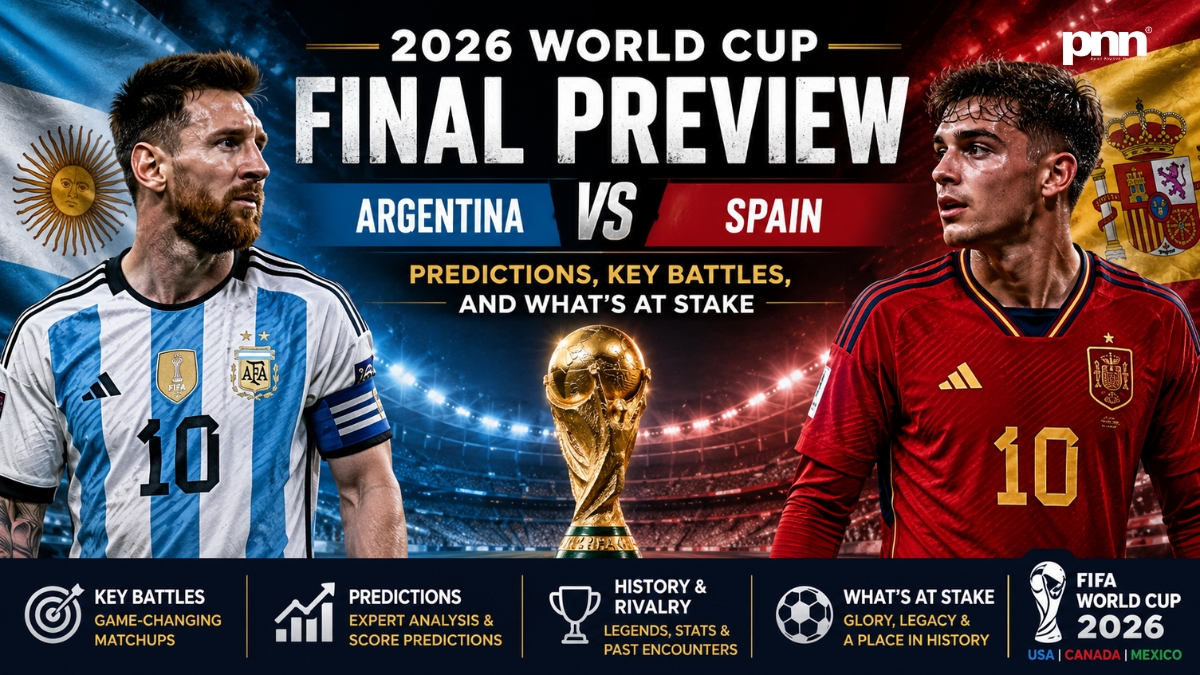
  • 2026 World Cup Final Preview: Argentina vs Spain — Predictions, Key Battles, and What’s at Stake

    2026 World Cup Final Preview: Argentina vs Spain — Predictions, Key Battles, and What’s at Stake

    Mumbai (Maharashtra) [India], July 18: Sunday, July 19. New York New Jersey Stadium. Two teams, one trophy, and honestly — did anyone actually predict this exact final back in June? Doesn’t matter now. It’s here.

    Argentina, the defending champions, against Spain, the reigning European champions. Messi against Yamal. The old king against the kid who grew up with his poster on the wall. Football writes itself sometimes.

    How We Got Here

    Let’s be real, these two ran very different roads to get to Sunday.

    Spain has been almost boringly good, in the best way. One draw against Cape Verde to open things, then six straight wins where they just
 didn’t concede much of anything. A 3-0 statement against Austria, a tight 1-0 over Portugal that ended Ronaldo’s run, a 2-1 grind past Belgium, and then the semifinal — a 2-0 dismantling of France where MbappĂ©, DembĂ©lĂ© and Olise barely got a sniff. That’s not luck. That’s a team playing with total control.

    Argentina’s story is messier, and honestly more dramatic. They haven’t led in the 90th minute of a single knockout match, and yet here they are. Extra time against Cape Verde. Extra time against Switzerland. A comeback against Egypt after going down 2-0. And then the semifinal against England — down 1-0 late, looking dead in the water, before two goals in under ten minutes flipped the whole thing. Enzo Fernández and Lautaro Martínez did the finishing, but it was Messi pulling the strings behind it, same as always.

    One team wins with control. The other wins with chaos and nerve. Sunday will tell us which one actually matters more.

    The Key Battles

    Messi vs Yamal. This is the storyline everyone’s leading with, and fair enough — it’s a good one. Messi is 39, chasing a second World Cup and a chance to join Brazil and Italy as teams that defended the trophy. Yamal is 19, and there’s that photo everyone keeps bringing up, the one where his family met a young Messi at a charity shoot years before any of this. Full circle stuff. But this isn’t really a head-to-head duel since they play different positions and roles — it’s more like two eras of the sport sharing a stage for ninety minutes.

    Spain’s defense vs Argentina’s chaos-scoring. Spain has conceded exactly one goal this whole tournament. One. Against a team that keeps finding a way to score in the 80th minute and beyond, that’s the matchup that decides everything. If Argentina can’t break Spain down early, do they have the legs left for another late miracle? They’ve pulled it off four times. Nobody does it five.

    Oyarzabal’s quiet brilliance. He’s not the flashy name, but Mikel Oyarzabal has been Spain’s difference-maker in the knockouts, adding to the winner he scored in the Euro 2024 final. Underrated players like this often end up deciding finals while everyone’s watching someone else.

    Midfield control. Spain’s whole identity is built on suffocating possession — they strangled France’s attack simply by never letting them touch the ball. Argentina will need their midfield to actually win the ball back high and often, or they’ll spend ninety minutes chasing shadows.

    What’s at Stake

    For Argentina, this is about history. Win, and they become just the third nation ever to defend a World Cup title, joining Brazil and Italy in a very exclusive club. It’s also almost certainly Messi’s last World Cup — there’s no version of 2030 where he’s still doing this at international level. A win here seals the “greatest ever” argument shut, if it wasn’t already.

    For Spain, it’s about proving 2010 wasn’t a one-off. A second star on the crest, a golden generation finally getting the ultimate prize to go with their Euros, and a changing of the guard with Yamal as the face of the next decade of Spanish football.

    Prediction

    Spain enters as the betting favorite, and it’s not hard to see why — the numbers back it up, and their path here has been about as convincing as a run to a final can look. But finals aren’t played on paper, and Argentina has made a habit this tournament of not caring what the scoreline says with twenty minutes left.

    If Spain gets an early goal, this could genuinely be one-sided. If it stays level into the final half hour, don’t bet against Messi finding one more moment of magic. Give me Argentina, 2-1, in extra time — mostly because doubting this team by now feels like betting against the sun coming up.

    Either way, we get a first-time World Cup final matchup between these two nations, decades of near-misses finally resolving into ninety minutes (or more) of the best story football has left to tell this summer.

    Kickoff is 3:00 PM ET. Don’t be late.Argentina vs Spain: This Is the World Cup Final We Didn’t Know We Needed

    Sunday, July 19. New York New Jersey Stadium. Two teams, one trophy, and honestly — did anyone actually predict this exact final back in June? Doesn’t matter now. It’s here.

    Argentina, the defending champions, against Spain, the reigning European champions. Messi against Yamal. The old king against the kid who grew up with his poster on the wall. Football writes itself sometimes.

    How We Got Here

    Let’s be real, these two ran very different roads to get to Sunday.

    Spain has been almost boringly good, in the best way. One draw against Cape Verde to open things, then six straight wins where they just
 didn’t concede much of anything. A 3-0 statement against Austria, a tight 1-0 over Portugal that ended Ronaldo’s run, a 2-1 grind past Belgium, and then the semifinal — a 2-0 dismantling of France where MbappĂ©, DembĂ©lĂ© and Olise barely got a sniff. That’s not luck. That’s a team playing with total control.

    Argentina’s story is messier, and honestly more dramatic. They haven’t led in the 90th minute of a single knockout match, and yet here they are. Extra time against Cape Verde. Extra time against Switzerland. A comeback against Egypt after going down 2-0. And then the semifinal against England — down 1-0 late, looking dead in the water, before two goals in under ten minutes flipped the whole thing. Enzo Fernández and Lautaro Martínez did the finishing, but it was Messi pulling the strings behind it, same as always.

    One team wins with control. The other wins with chaos and nerve. Sunday will tell us which one actually matters more.

    The Key Battles

    Messi vs Yamal. This is the storyline everyone’s leading with, and fair enough — it’s a good one. Messi is 39, chasing a second World Cup and a chance to join Brazil and Italy as teams that defended the trophy. Yamal is 19, and there’s that photo everyone keeps bringing up, the one where his family met a young Messi at a charity shoot years before any of this. Full circle stuff. But this isn’t really a head-to-head duel since they play different positions and roles — it’s more like two eras of the sport sharing a stage for ninety minutes.

    Spain’s defense vs Argentina’s chaos-scoring. Spain has conceded exactly one goal this whole tournament. One. Against a team that keeps finding a way to score in the 80th minute and beyond, that’s the matchup that decides everything. If Argentina can’t break Spain down early, do they have the legs left for another late miracle? They’ve pulled it off four times. Nobody does it five.

    Oyarzabal’s quiet brilliance. He’s not the flashy name, but Mikel Oyarzabal has been Spain’s difference-maker in the knockouts, adding to the winner he scored in the Euro 2024 final. Underrated players like this often end up deciding finals while everyone’s watching someone else.

    Midfield control. Spain’s whole identity is built on suffocating possession — they strangled France’s attack simply by never letting them touch the ball. Argentina will need their midfield to actually win the ball back high and often, or they’ll spend ninety minutes chasing shadows.

    What’s at Stake

    For Argentina, this is about history. Win, and they become just the third nation ever to defend a World Cup title, joining Brazil and Italy in a very exclusive club. It’s also almost certainly Messi’s last World Cup — there’s no version of 2030 where he’s still doing this at international level. A win here seals the “greatest ever” argument shut, if it wasn’t already.

    For Spain, it’s about proving 2010 wasn’t a one-off. A second star on the crest, a golden generation finally getting the ultimate prize to go with their Euros, and a changing of the guard with Yamal as the face of the next decade of Spanish football.

    Prediction

    Spain enters as the betting favorite, and it’s not hard to see why — the numbers back it up, and their path here has been about as convincing as a run to a final can look. But finals aren’t played on paper, and Argentina has made a habit this tournament of not caring what the scoreline says with twenty minutes left.

    If Spain gets an early goal, this could genuinely be one-sided. If it stays level into the final half hour, don’t bet against Messi finding one more moment of magic. Give me Argentina, 2-1, in extra time — mostly because doubting this team by now feels like betting against the sun coming up.

    Either way, we get a first-time World Cup final matchup between these two nations, decades of near-misses finally resolving into ninety minutes (or more) of the best story football has left to tell this summer.

    Kickoff is 3:00 PM ET. Don’t be late.
  • Nurturing Champions: The Role of Sports in Youth Development

    Mumbai (Maharashtra) [India], July 16: Stop by any park on a Saturday morning, and it’s impossible to miss—a blur of kids chasing a ball, tripping, arguing about the rules, and laughing way too loud for how early it is. It just looks like regular playtime. But beneath all the racket, these kids are actually picking up things they’ll lean on for the rest of their lives: dealing with losing, pushing through tough moments, and figuring out how to treat people right.

    Sure, trophies and final scores get everyone excited, but, honestly, that stuff fades. The real wins show up years later. You see it in grown-ups who don’t give up when things get tough, who know how to work alongside people they don’t always get along with, and who learned—usually the hard way—that a loss isn’t the end.

    Building Character, One Practice at a Time

    Every early morning, every long practice, leaves a mark. Take swimming, for example. You can’t cut corners. You crawl out of bed, dive into cold water, and do the work over and over. That kind of discipline sticks with you long after you forget where those medals ended up.

    Rules? There’s no escaping them in sports. Everyone plays by the same ones, and nobody can talk their way past an offside call. That’s not how life always works, but it is how sports work, and it teaches kids to accept their mistakes.

    Resilience is everywhere on a team. Coaches see it all the time—the kid who misses the big shot, feels completely crushed, but then comes back to try again anyway. That messy, awkward moment after a setback is where real character grows.

    The Social Classroom

    Team sports toss kids into the deep end when it comes to people skills. You’ve got to speak up when it counts, trust teammates you just met, and follow someone who isn’t your mom or dad. These lessons don’t vanish—they pop up later on, whether you’re sitting in a classroom, pitching an idea at work, or just hanging out with friends.

    Humility sneaks in, too. Sometimes the star has to pass up the spotlight. Sometimes the kid who sits on the bench the whole game has to keep showing up, even when playing time feels out of reach. Both end up learning something you can’t teach from a textbook: you’re important, even if you’re not the best out there. And effort means the most when things aren’t going your way.

    Physical Health as a Foundation

    Let’s not skip the obvious—sports get kids moving. Physical health gets a boost: strong bones, tough muscles, healthy hearts, better sleep. That alone means a lot. On top of that, when kids take care of their bodies, they start to figure out self-care in a real way—something a lecture just can’t teach.

    Mental health gets a lift, too. Running around and working up a sweat chases off stress and lifts your mood. It’s a healthy way to blow off steam, and without it, stress tends to crawl out in nastier ways—outbursts, withdrawal, or just bouncing off the walls at home.

    The Role of Adults: Coaches and Parents

    But all this good stuff? It needs the right adults to make it happen. You’ve seen those coaches barking at little kids for dropping a catch—they’re not helping. They’re just making kids anxious. The best coaches? They know their job is building confident people first, athletes second.

    Parents matter too, sometimes more quietly. The ride home after a game—what gets said (or not said) can either light a spark or snuff it out. Saying, “I loved watching you play,” honestly does a lot more for your kid than breaking down every missed shot.

    When Sports Go Wrong

    It’s not perfect, though. Push too hard, obsess over winning, or force one sport on a kid, and you risk burnout, injuries, or making them hate exercise. Youth sports aren’t about cranking out pros—they’re about laying down a healthy foundation, even if a kid never joins a team again.

    So let kids dabble in different sports. Let them take breaks, and keep it fun, especially when they’re little. That’s what builds healthy habits and, usually, better athletes too.

    Champions, Redefined

    Maybe it’s time to rethink what it means to be a “champion.” It’s not just the kid with the biggest trophy. It’s the one who takes a loss with grace, backs up a struggling teammate, and still shows up when it’s pouring and nobody’s there to clap. Done right, sports create more than athletes—they shape people. People with grit, who work as a team and find strength in bouncing back, even after a loss. These are lessons that last, long after the final whistle, wherever life takes them.

    Honestly, that’s a win that sticks.

  • More Than A Game, Less Than A Religion: How The FIFA World Cup Quietly Became A Global Lifestyle Movement

    Mumbai (Maharashtra) [India], July 11: Every four years, football politely reminds the world that it was never just about ninety minutes on a pitch. Streets transform into fan zones, cafĂ©s become miniature stadiums, wardrobes suddenly acquire suspicious amounts of national colours, and people who couldn’t locate a football last month somehow develop passionate opinions about formations and substitutions. The FIFA World Cup doesn’t simply dominate sports headlines; it quietly infiltrates everyday life. From fashion and food to travel and social habits, the tournament has evolved into one of the world’s most influential lifestyle events, proving that the biggest trophy isn’t always lifted on the field. Sometimes, it’s carried home in a shopping bag.

    As the tournament continues capturing global attention, businesses, tourism operators, and retailers are witnessing a familiar surge in football-inspired consumer behaviour. Across several countries, themed cafĂ©s, public screenings, limited-edition merchandise, football-inspired hairstyles, and travel experiences have become part of the broader World Cup economy. The tournament’s influence now stretches well beyond stadium gates, creating opportunities across industries that have little to do with scoring goals.

    Apparently, football found a way to sell coffee, sneakers, and haircuts.

    When Football Escapes The Stadium

    Major sporting events have always influenced popular culture, but the World Cup occupies a league of its own.

    Its global audience regularly reaches billions of viewers, making it one of the largest recurring sporting spectacles on the planet. That enormous attention naturally spills into lifestyle industries, where brands race to create experiences rather than simply products.

    Restaurants introduce football-themed menus, cafés organise live screenings, shopping centres host fan festivals, while fashion retailers launch jerseys, sneakers, and accessories inspired by participating nations.

    The match may last ninety minutes.
    The marketing campaign lasts months.

    Fashion Finds A New Captain

    Football has increasingly become part of mainstream fashion.

    Replica jerseys have evolved beyond sportswear into everyday streetwear, while scarves, sneakers and national-colour collections frequently dominate seasonal retail displays during tournament periods. Hairstyles inspired by popular players and limited-edition collaborations between sportswear brands and designers continue attracting younger consumers.

    For many fans, supporting a team now extends beyond cheering from the stands.

    It becomes a wearable identity.
    Sometimes, permanently, if someone gets an unfortunate tattoo before the knockout stage.

    The Business Of Shared Experiences

    The World Cup has also transformed how people socialise.

    Public screenings, rooftop events, and themed cafĂ©s have become gathering spaces where strangers celebrate or collectively question refereeing decisions, as though they’ve supported the same team since childhood.

    The broader economic impact reaches sectors including:

    • Hospitality and themed dining experiences.
    • Sports merchandise and licensed apparel.
    • Domestic and international sports tourism.
    • Entertainment venues hosting live screenings.

    For businesses, the tournament represents more than entertainment.
    It represents footfall.

    FIFA - PNN

    Travel Follows The Tournament

    Host cities naturally experience increased tourism during World Cup competitions, but the ripple effects extend much further.

    Football enthusiasts increasingly plan vacations around matches, fan festivals, and stadium tours. Even countries not hosting games often organise community events that stimulate local hospitality businesses.

    Travel companies have responded by introducing football-themed itineraries, while airlines and hotels frequently experience higher demand around major fixtures.

    The beautiful game, it seems, travels exceptionally well.

    Every Trend Has Its Extra Time

    The tournament’s lifestyle influence isn’t entirely positive.

    Consumer enthusiasm often encourages impulse spending on merchandise that may lose relevance once the final whistle blows. Counterfeit products also tend to surge during major sporting events, creating challenges for brands and consumers alike.

    Other concerns include:

    • Over-commercialisation of fan culture.
    • Excessive spending driven by limited-edition marketing.
    • Waste generated by disposable decorations and merchandise.
    • Crowding at public screenings and entertainment venues.

    Football inspires passion.

    Marketing occasionally mistakes that for unlimited spending power.

    Why The FIFA World Cup Feels Bigger Than Sport

    The enduring appeal of the FIFA World Cup lies in its ability to unite people across cultures, languages, and generations. Whether through neighbourhood screenings, themed cafés or spontaneous conversations between strangers, the tournament creates shared experiences that few global events can replicate.

    Its influence on lifestyle trends reflects something deeper than consumer behaviour.
    People aren’t simply buying jerseys.
    They’re buying belongings.

    Perhaps that’s why the World Cup continues shaping fashion, travel, and everyday culture long after kickoff.
    Because football doesn’t merely change scoreboards.

    For a few unforgettable weeks, it quietly changes how the world dresses, dines, travels, and celebrates together.

    PNN Sports

  • Successful Completion of the 28th West Bengal State Karate Do Championship 2026

    Khudiram Anushilan Kendra, Kolkata | 27th & 28th June 2026

    Kolkata (West Bengal) [India], July 9: The 28th West Bengal State Karate Do Championship 2026 was successfully organized by the Karate Do Association of Bengal (KAB) at Khudiram Anushilan Kendra, Kolkata, on 27th & 28th June 2026.

    The Championship once again showcased the remarkable growth of karate in West Bengal, bringing together 1,200 players from all affiliated district associations under KAB. The event was conducted with exceptional discipline and professionalism by 70 WKF, AKF & KIO qualified Referees and Judges, ensuring that every bout was judged according to international standards.

    The Karate Do Association of Bengal (KAB), an official member of the Bengal Olympic Association (BOA) and the Karate India Organisation (KIO), has continued its unwavering commitment to nurturing sporting excellence and creating opportunities for karate players across the state.

    The Championship was held under the dynamic leadership of Hanshi Premjit Sen, President, KAB, and Hanshi Joydeb Mondal, General Secretary, KAB, whose relentless dedication has transformed the karate movement in West Bengal into one of the strongest in the country.

    One of the major highlights of the Championship was the presentation of cash rewards amounting to â‚č1,62,000 to 46 medal-winning players who brought laurels to West Bengal by winning medals at the KIO National Karate Championships held in Delhi and Uttarakhand. This initiative reflects KAB’s continued commitment to recognizing talent and motivating athletes to strive for greater success.

    The prestigious Championship was graced by the presence of distinguished guests:

    • Sri Kamalesh Chatterjee – Vice President, Bengal Olympic Association
    • Sri Kamal Maitra – Treasurer, Bengal Olympic Association

    Both dignitaries congratulated the players, officials and organizers for conducting one of the finest state karate championships in India.

    Contribution of Hanshi Premjit Sen

    For more than three decades, Hanshi Premjit Sen has been one of the foremost architects of karate development in West Bengal. Under his visionary leadership, KAB has expanded karate across the state by strengthening district associations, organizing state, national and international championships, producing internationally qualified referees and coaches, introducing scientific training methods, and creating a transparent pathway for talented athletes to excel at national and international levels.

    His tireless efforts have helped hundreds of young karatekas represent West Bengal and India with distinction. His philosophy has always been centered on athlete welfare, discipline, opportunity and excellence, making KAB one of the most respected karate organizations in the country.

    Quote by Hanshi Premjit Sen

    “KAB has always stood beside its players, and it always will. Every achievement of our athletes is our greatest reward. We remain committed to providing every possible opportunity, encouragement and support so that our players can proudly represent West Bengal and India on the world stage.”

    Appreciation by Hanshi Joydeb Mondal

    Speaking on the occasion, Hanshi Joydeb Mondal, General Secretary, KAB, expressed his heartfelt appreciation for the leadership of Hanshi Premjit Sen.

    “Hanshi Premjit Sen is the man who has changed the face of karate in West Bengal. His vision, dedication and selfless service have built a strong foundation for thousands of karate players. Today, Bengal is recognised across India because of his relentless efforts. We are fortunate to work under his guidance, and together we will continue to create greater opportunities for every player.”

    Medal Winners Honoured

    GOLD MEDAL

    1. Parikrit Mistry – 6 Years Kata

    2. Rayan Chanda – 7 Years Male Kata

    3. Raktim Mondal – 8 Years Male Kumite (-20kg)

    4. Anshika Saha – 10 Years Female Kumite (-35kg)

    5. Sahana Nandi – 11 Years Female Kumite (-30kg)

    6. Samadrita Banerjee – 12 Years Female Kumite (-45kg)

    7. Ginia Tarafdar – 13 Years Female Kumite (-40kg)

    8. Indrakshi Pramanik – 13 Years Female Kumite (+60kg)

    9. Anushka Ghosh – Cadet Kumite (-47kg)

    10. Ahana Debta – Junior Female Kumite (-53kg)

    11. Rupkatha Dutta – Under-21 Female Kata

    12. Sohini Chatterjee – Under-21 Female Kumite (-50kg)

    SILVER MEDAL

    1. Padmanava Kundu – 10 Years Male Kata

    2. Krishnendu Ray – 12 Years Male Individual Kata

    3. Bipasa Paul – Cadet Individual Kata

    4. Santunu Rajbanshi, Debayush Mitra & Rishiraj Nath – Junior Male Team Kata

    5. Bipasa Paul, Chitralekha Kar & Diya Roy – Junior Female Team Kata

    6. Amrita Chakraborty – 9 Years Female Kumite (-25kg)

    7. Sreya Ghosh – 10 Years Female Kumite (-25kg)

    8. Ayantika Saha – 10 Years Female Kumite (+40kg)

    BRONZE MEDAL

    1. Pekham Ghosh – 7 Years Female Kata

    2. Samriddho Karmakar – 8 Years Male Kata

    3. Soumili Dey – 8 Years Female Kata

    4. Mehedi Hasan – 9 Years Male Kata

    5. Riddhima Dey – 11 Years Female Kata

    6. Eshin Roy – 11 Years Male Kata

    7. Bitan Sarkar – 13 Years Male Individual Kata

    8. Mahranab Karmakar – Cadet Kata

    9. Sresth Choubey – 7 Years Male Kumite (-20kg)

    10. Mitakshi Roy – 7 Years Female Kumite (-25kg)

    11. Ishan Pal – 10 Years Male Kumite (-25kg)

    12. Anindita Saha – 11 Years Female Kumite (-35kg)

    13. Snigdha Ray – 12 Years Female Kumite (-35kg)

    14. Debarghya Roy – 12 Years Male Kumite (+60kg)

    15. Adhyayan Kundu – 12 Years Male Kumite (-55kg)

    16. Soumyadip Mondal – 12 Years Male Kumite (+60kg)

    17. Anushka Sharma – 13 Years Female Kumite (-45kg)

    18. Adrija Das – Junior Female Kumite (-66kg)

    19. Shivam Poddar – Senior Male Kumite (-55kg)

    20. Debanjali Karmakar, Aishika Ghosh & Sohini Chatterjee – Senior Female Team Kata

    The resounding success of the 28th West Bengal State Karate Do Championship 2026 reflects KAB’s unwavering commitment to excellence, transparency, and athlete development. With visionary leadership, dedicated officials, and the enthusiasm of thousands of players, West Bengal continues to strengthen its position as one of India’s leading states in karate, inspiring the next generation to dream bigger and reach greater heights.

    Read More about International Karate Championship

    If you object to the content of this press release, please notify us at pr.error.rectification@gmail.com. We will respond and rectify the situation within 24 hours.

  • FIFA World Cup 2026: Everything You Need to Know About the Biggest Football Tournament Ever

    FIFA World Cup 2026: Everything You Need to Know About the Biggest Football Tournament Ever

    New Delhi [India], July 4: The countdown has started for the FIFA World Cup 2026. Football fans over the world are excited. Every four years the World Cup brings together countries, cultures and millions of fans to celebrate football. The 2026 edition will be different. It will be bigger, longer and more inclusive. It will be the FIFA World Cup ever.

    For football fans this tournament is not a sporting event. It’s a festival where dreams are made legends are born and memories are created.

    A Historic First for Three Nations

    One of the interesting things about the FIFA World Cup 2026 is that three countries will host it. The United States, Canada and Mexico will work together to host the tournament. This is a first.

    This partnership shows how popular football is in North America. Fans will watch matches in stadiums in different cities. Each city has its culture, atmosphere and football passion. From Mexico’s energy to the United States world-class facilities and Canada’s welcoming spirit the tournament will be an amazing experience.

    More Teams, More Matches, More Excitement

    The 2026 World Cup will have a format. There will be 48 teams of 32. This means more countries can play in the tournament.

    The new format will have matches. Fans will watch exciting games. Smaller football countries that couldn’t qualify before have a chance now. They can make history. Inspire young players.

    This change brings rivalries and unexpected stories. The World Cup is unpredictable. Every tournament has surprise teams and upsets. With 48 teams the chances of seeing football moments are higher.

    A Global Celebration of Football

    The FIFA World Cup is more than a competition. It unites billions of people no matter where they are from or what language they speak.

    During the tournament streets are filled with flags. Fans gather in homes and public squares. Social media is full of celebrations and debates. Every match creates heartbreaking and dramatic moments that bring people together.

    The 2026 World Cup will likely break records for viewership and fan engagement. Modern technology and broadcasting will let fans from over the world follow every goal, save and moment in real time.

    The Worlds Biggest Stars on One Stage

    Another reason to be excited is the talent that will play in the tournament. The World Cup is where footballs greatest players shine.

    Established stars will try to add to their legacies. Young talents will try to announce themselves to the world. History shows that many football icons became famous through World Cup performances.

    Fans can expect goals, stunning skills, dramatic penalty shootouts and emotional victories that remind everyone why football is called “the beautiful game.”

    Economic and Cultural Impact

    Hosting a World Cup is not about football. The tournament brings economic activity. It attracts millions of visitors. Creates opportunities for tourism, hospitality, transportation and local businesses.

    The three host nations will welcome fans from around the world. The event will be an exchange like no other. Fans will experience traditions, foods and customs while sharing a love for football.

    For generations the tournament can inspire more people to play football. Seeing the worlds best players compete often motivates children to pick up a football and dream of representing their country.

    Why FIFA World Cup 2026 Could Be the Greatest Ever

    Every World Cup has its story. The 2026 edition has all the ingredients to be the most memorable tournament in football history. It will have teams, more matches, more host cities and a larger global audience.

    The competition promises rivalries, emotional moments and inspiring underdog stories that capture the imagination of millions. Whether you’re a fan or someone who only watches football every four years the FIFA World Cup 2026 will offer something special.

    As the opening match approaches anticipation will build around the world. Fans will wear their colors with pride. Players will chase dreams. The world will unite through its shared passion, for football.

    One thing is certain: FIFA World Cup 2026 is not another tournament. It will be the celebration of football the world has ever seen.

    PNN Sports