Tag: Business

  • Neemsi, the Bengaluru vegetarian restaurant that cooks with spices straight from the farm

    Neemsi, the Bengaluru vegetarian restaurant that cooks with spices straight from the farm

    For two and a half years, Neemsi has been building its restaurants around a very Indian idea. Serving someone well is the most serious kind of care.

    Bengaluru (Karnataka) [India], October 1: In most Indian homes, the first question isn’t “how are you”. It’s “khana khaya?” Your grandmother asks it. Your mother asks it on the phone from another city. The neighbour asks it when you drop in for five minutes. Food is how we check on people, and serving someone a proper meal has always been taken very seriously.

    Staff Reporter · Food & Lifestyle Desk · Bengaluru, Karnataka

    Neemsi, the pure vegetarian restaurant with outlets in JP Nagar and Basavanagudi, is built on that habit. It opened in April 2024, and everything about the place, from what goes into the kitchen to how a guest is met at the door, comes back to one line the team uses internally: no one at a Neemsi table eats second best.

    Two plants, one name

    Neemsi is neem and tulsi joined into one word. Neem is the tree at the edge of the compound that keeps the house safe. Tulsi grows in the courtyard and is offered to a guest before anything else is discussed. Both show up at the restaurant before the food does.

    Neem incense is lit at the entrance before every service, at both outlets, so it is the first thing you smell walking in. A house-made tulsi palate cleanser reaches the table as soon as you sit down, before anyone has taken an order. It is served in the restaurant’s own glassware.

    Nothing here comes to the table straight out of a bottle.

    Spices that come straight from the farmer

    The kitchen buys its whole spices directly from farmers in the regions known for them, instead of picking up packets from a wholesale market. Cardamom from Idukki in Kerala. Black pepper from Wayanad and Coorg. Byadgi chillies from north Karnataka, prized for their colour more than their heat. Jeera from Rajasthan and Gujarat, turmeric from Erode, saffron from Pampore in Kashmir.

    Buying this way means the spice reaches the kitchen fresher, with its oils intact, and the money goes to the person who actually grew it. You can taste the difference in something as simple as a dal tadka. A pod of cardamom that was on the plant a few months ago smells nothing like one that has sat in a godown for two years.

    Guests get to see this for themselves. The Spiceology wall inside the restaurant lays out the whole spices the kitchen cooks with and where each one comes from. People stop there between courses, read the cards, and very often end up talking to the staff about which masala their own family swears by. The kitchen is pure vegetarian, and most of the menu can be made Jain on request, so you only need to tell the steward when you sit down.

    A menu that starts with dishes you already know

    The regular menu runs to over 100 dishes across North Indian, Italian, Thai, Continental and Indo-Chinese, and each of these cuisines comes with a Neemsi twist. The range matters when a table of eight wants eight different things. A lot of it takes a dish people grew up with and rebuilds it.

    The Mysore Pak Cheesecake is exactly what it sounds like, the Mysuru sweet set into a cheesecake, and it is usually the first thing a regular tells a new guest to order. Dahi papdi chaat arrives with avocado. The Tapri Paneer Chilli is served in a cabbage nest. The taste you remember is still there. Everything around it has been rethought, which is where the restaurant’s line, “Veg Cuisine Redefined”, comes from.

    The Neemsi Edit, and what’s on now

    The Edit came about a year and a half after the restaurant opened, because so many guests had started coming back again and again. The share of repeat guests was higher than anything the team had seen, and those regulars needed something new to look forward to.

    So every season, Neemsi now adds a short, limited menu called the Edit. Each one runs for a few months and is then taken off for good. The Summer Edit was built around Alphonso mango. The Monsoon Edit brought Jamun Ginger Jaljeera and a Mushroom Stroganoff Toast for rainy evenings.

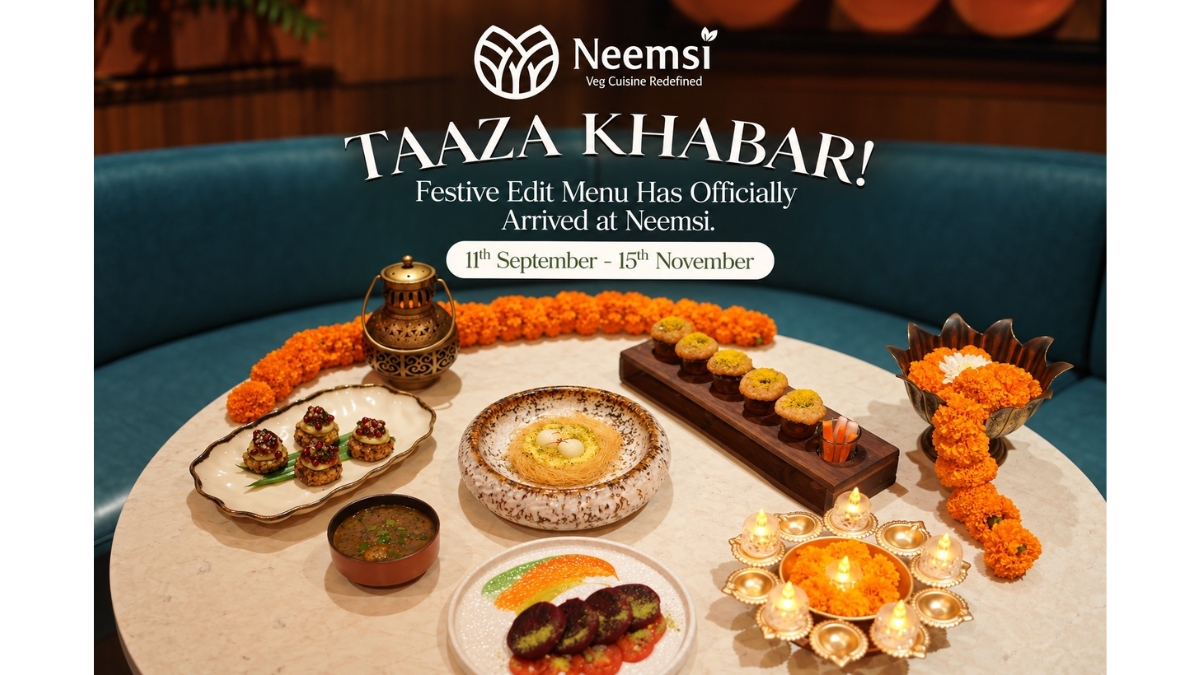
    The current one is the Festive Edit, on till 15 November 2026 and timed for Navratri, Durga Puja, Dussehra and Diwali. It is made for the many people in Bengaluru who can’t travel home for the festivals, and each dish points to a different part of the country. There is a Kolkata Mini Club Kachori with aloo saag, a Beetroot Galauti with molten pudina, a Sabudana Ratna Tikki with shakarkandi mousse, a Moringa and Rice Shorba made with the nugge soppu every Kannada kitchen knows, and a Royal Kunafa Toast with makhana kheer and mini rasgulla to finish.

    The people who make it work

    The kitchen team is in by 8 am, and prep for lunch starts right then. By 12, when the doors open, lunch is ready to go out. On the floor, the stewards are the ones guests mention most in their reviews, often before they get to the food. They will warn you when a portion is big enough to share.

    If there is a birthday at the table, dessert has a way of arriving without anyone asking. When a family walks in with a toddler, the high chair is usually already waiting.

    None of this is complicated. It just has to happen at every table, every service, at both outlets. That is the hard part, and it is what the team spends most of its effort on.

    “People don’t come to a restaurant only to eat. They come because it’s someone’s birthday, or the in-laws are visiting, or it’s been a long week. Somebody has trusted us with that evening. If they leave a little happier than they came in, we’ve done our job. We take that responsibility very seriously.”

    FOUNDER, NEEMSI

    Families, kitty parties and big tables

    Walk in on a Sunday afternoon and you will see three generations at one table, with the grandparents ordering Jain, the kids going straight for the Italian, and everyone sharing the dessert. On weekdays, the lunch service is popular with kitty parties and office groups.

    Birthdays, anniversaries and small family celebrations make up a good part of the bookings. The Basavanagudi outlet sits on KR Road, in a neighbourhood that has always taken its food seriously.

    The JP Nagar outlet is in 6th Phase, close to a lot of south Bengaluru’s family homes.

    Two and a half years in, the two restaurants have more than 20,000 Google reviews between them, with an average rating of 4.8, and a third outlet is being planned. The growth has come mostly from guests who come back and bring someone new with them. For a restaurant built on the idea of serving people well, that is probably the result that counts most.

    Plan your visit

    JP NAGAR
    Ground Floor, Sai Panorama, 15th Cross Road,
    KR Layout, JP Nagar 6th Phase, Bengaluru
    560078
    +91 96860 60429

    BASAVANAGUDI
    2, Krishna Rajendra Road, Basavanagudi,
    Bengaluru 560004
    +91 96860 60443

    TIMINGS
    Lunch 12 noon – 3:30 pm
    Dinner 7 pm – 11 pm

    COST FOR TWO
    Around ₹1,500

    Pure veg · Jain on request

    RESERVATIONS
    neemsirestaurant.com

    Festive Edit till 15 Nov 2026

    If you object to the content of this press release, please notify us at pr.error.rectification@gmail.com. We will respond and rectify the situation within 24 hours.


  • Khaki Bistra: Sleep Comfort Redefined with Customised Mattress Solutions for Homes and Hotels

    Khaki Bistra: Sleep Comfort Redefined with Customised Mattress Solutions for Homes and Hotels

    Chandigarh (Punjab) [India], October 2: With the significance of quality sleep in daily life, selecting the appropriate mattress is crucial for a comfortable and supportive sleep environment, especially for people in Punjab, Himachal Pradesh and Chandigarh. Khaki Bistra is expanding its footprint in sleep solutions through bed mattress manufacturing that will seek to marry comfort, support and personal sleep needs, as well as providing customised solutions for bed size and comfort. The brand also offers bed accessories, including Ortho memory foam pillows and fibre pillows, to complement its mattress range.

    Khaki Bistra has the vision of “One Name For All Your Sleeping Needs,” and provides a variety of mattresses and sleep products that are designed to meet different sleep comfort and support needs. The brand offers mattresses in various categories such as Ortho Care, Essential, Spiral and Cushion Plus, which enables customers to discover mattresses according to their sleeping preferences.

    The mattress is created for sleep ease and back help. The mattress is designed for sleep comfort and back assistance.

    The mattress development is one of the main focus areas of Khaki Bistra, which is aimed to offer a comfortable sleep and support for the spine. Its Ortho Care Series offers a focus on spinal and joint support, whereas the other categories of mattresses provide various levls of comfort, cushioning and body support.

    The company’s product line includes mattresses like Trang, Cushion ET, Curve Care, Memoria, Resil-O-Mat and Takhtposh, as well as other bed accessories. The range allows shoppers to try out various mattress types and feel levels based on their preferences and needs.

    There is also Khaki Bistra’s Spiral Series, which has pocket-coil technology that adjusts to the body’s movements and helps to minimise the transfer of movement. The Cushion Plus Series is offered for customers who desire a more luxurious sleep experience, featuring memory foam and high quality latex.

    The emphasis continues to be on offering mattresses that offer a good level of sleep comfort and spinal support, enabling customers to select a mattress based on their desired firmness, cushioning and support.

     Customised Mattress Solutions for Different Requirements

    Each bed can be different sizes, in design and comfort level to the user. Understanding these diverse needs, Khaki Bistra offers personalised mattress options based on bed size and comfort preferences.

    This can be especially helpful for customers who have a particular sized bed or a distinctive bedroom layout. Unlike standard mattress sizes, customers can explore options based on their unique mattress dimensions and desired sleep experience.

    The personalised approach also ensures that customers can take into account the type of mattress, their comfort level and the level of support they are looking for when choosing the right sleep solution.

    Mattress Solutions for the Hotel and Hospitality Industry

    The Khaki Bistra also provides mattress solutions for the hotel and hospitality industry where comfort, durability, size and uniformity are all key factors.

    Mattresses of different sizes and configurations might be needed in hotels, resorts and hospitality establishments. Khaki Bistra’s bespoke approach enables hospitality businesses to investigate mattress options based on room layouts, bed sizes and the comfort level they would like to offer their guests.

    Khaki Bistra focuses on the comfort, spinal support and bespoke sizing features which it believes will help to deliver appropriate mattress solutions for hotels and hospitality properties seeking to provide a comfortable sleeping environment for their guests.

    It can also be an ideal solution for hotel properties with varying room sizes and mattrress types, as well as for individual rooms.

    Special savings for the festive season are being offered at Khaki Bistra Fest.

    Khaki Bistra Fest is offering special savings for the festive season.

    In addition to its mattress collection, Khaki Bistra is currently offering a promotion, the “Khaki Bistra Festive Fest,” which allows consumers to upgrade their current sleep system during the holidays.

    With the festive offer, customers can enjoy:

    25% OFF on MRP

    Swap an old mattress for an additional 10% off!

    2 Ortho Memory Pillows FREE, worth ₹4,946 MRP

    Offer is subject to availability and terms and conditions apply.

    The festive promotion gives the customer who wants to replace his or her old mattress, a chance to take a look at Khaki Bistra’s mattress collection and to enjoy the extra benefits of the offer.

    A focus on comfort, support and choice is the key to success.

    Khaki Bistra is striving to meet a variety of sleeping needs, from mattresses for different levels of comfort to customised sizing and solutions for hospitality providers.

    Its product categories give customers a choice of comfort and support levels and its customised mattress options give flexibility to customers with particular size or preference needs.

    When it comes to sleeping, the concern is for the homeowner to discover one that fits the size of their bed and their sleep design. In the hotel and hospitality industry, it’s not just about the mattress; it’s about the ability to offer solutions that fit various room layouts and guest needs.

    With a focus on sleep comfort, spinal support and customised solutions, Khaki Bistra continues to evolve its suite of products for those seeking personalised mattress solutions for the home and hospitality sectors.

    For more information about Khaki Bistra’s products and customised mattress solutions, visit http://www.khakibistra.in

    Contact Khaki Bistra

    Khaki Bistra

    Headquarters: Mohali, Punjab, India
    Email: info@khakibistra.in
    Website: www.khakibistra.in

    Festive offer is available for a limited period. Terms & Conditions apply.

  • Ultravibrant Integrated Energy Limited Filed DRHP With SEBI

    Ultravibrant Integrated Energy Limited Filed DRHP With SEBI

    Mumbai (Maharashtra) [India], October 1: Ultravibrant Integrated Energy Limited, a Jaipur-based end-to-end integrated renewable energy solutions provider with a focus on independent power-producing projects for solar and battery energy storage solutions (“BESS’’), offering engineering, procurement and construction (“EPC’’) and operation and maintenance (“O&M’’) services and operating as a solar independent power producer (“IPP’’), has filed its Draft Red Herring Prospectus dated September 24, 2026 with SEBI in preparation for its Initial Public Offering (“IPO”). Ultravibrant Integrated Energy …

    The IPO will comprise a Fresh Issue of up to 1,20,00,000 equity shares and an Offer for Sale of up to 25,00,000 equity shares by the Promoter Selling Shareholder, Mr. Rajeshwer Singh, aggregating up to 1,45,00,000 equity shares with a face value of ₹ 10 each. The equity shares are proposed to be listed on BSE Limited and the National Stock Exchange of India Limited.

    The company’s objective is Funding long-term working capital requirements of the Company, Pre-payment or scheduled re-payment, in full or in part, of all or a portion of certain outstanding borrowings availed by the Company, and for general corporate purposes.

    The Book Running Lead Manager to the Offer is Beeline Capital Advisors Private Limited & MUFG Intime India Private Limited (formerly Inktime India Private Limited) is Registrar to the Offer. Ultravibrant Integrated Energy …

    About Ultravibrant Integrated Energy Limited

    Ultravibrant Integrated Energy Limited is an end-to-end integrated renewable energy solutions provider in India, with a focus on independent power-producing projects for solar and battery energy storage solutions. The company provides EPC services, with executed projects in Rajasthan, Telangana, Gujarat, Haryana and Maharashtra and further projects awarded in Karnataka. It is also a solar energy IPP in Rajasthan, with further IPP projects awarded in Leh-Ladakh and Uttar Pradesh. In addition, we provide operation and maintenance (“O&M”), installation and commissioning (“I&C”) and consultancy services. Its EPC services include land aggregation, obtaining connectivity approvals, installation and commissioning of solar assets, facilitating captive arrangements, providing end-to-end transmission and sub-station infrastructure services, and integrating BESS technology.

    During FY24 to FY26, the company commissioned 61 ground-mounted solar projects for a combined 189.97 MWp and 12,130 kWp across 37 rooftop projects. As on 31st August 2026, its Order Book for EPC projects stood at ₹ 65,451.41 Lakhs, and its Order Book for IPP projects stood at 37 MW (AC) in solar and 50 MW / 200 MWh in BESS. Ultravibrant Integrated Energy …

    As an IPP, the company operates 31.25 MW (AC) and 39.90 MWp (DC) of solar projects under long-term Power Purchase Agreements with state government power companies, and provides O&M services for 31 renewable energy projects with an aggregate installed capacity of 116.23 MWp.

    The company has secured and executed solar power projects pursuant to tenders issued by state government power companies under the Pradhan Mantri Kisan Urja Suraksha evam Utthaan Mahabhiyan (PM-KUSUM) Scheme. Through its associate, it also offers turnkey BESS solutions for commercial and industrial and open-access customers.

    For the period ended 31st March 2026, the company reported Revenue from Operations of ₹ 38,399.24 Lakhs, EBITDA of ₹ 5,675.08 Lakhs & PAT of ₹ 3,339.04 Lakhs. Ultravibrant Integrated Energy …

  • Rooted in Jaipur, Growing Across India: Brand ‘Jaipur Kurti’ Enters Its Next Growth Chapter

    Rooted in Jaipur, Growing Across India: Brand ‘Jaipur Kurti’ Enters Its Next Growth Chapter

    Jaipur (Rajasthan) [India], October 2: Nandani Creation Limited, the company behind Brand “Jaipur Kurti”, outlined its growth strategy and next phase of business expansion at its 14th Annual General Meeting held on September 30, 2026. The Company highlighted the significant progress made during FY2025-26 and outlined its roadmap to build Jaipur Kurti into a stronger, more scalable and nationally recognised Indian women’s fashion brand.

    FY2025-26: Strong Growth with Increasing Focus on Quality of Growth

    Nandani Creation Limited recorded a turnover of approximately ₹110 crore in FY2025-26, representing growth of approximately 50% over the previous financial year. While the Company continues to focus on revenue growth, its approach is increasingly centred on the quality and sustainability of growth. The Company is strengthening operational efficiency, inventory productivity, working-capital management, asset utilisation, cost discipline and sustainable profitability.

    Project 50: Expanding the Retail Footprint with Purpose

    A key strategic initiative is Project 50, under which Jaipur Kurti is working towards expanding its Exclusive Brand Outlet network to 50 stores by March 2027. The Company views Project 50 as more than a store expansion programme. Each new store is intended to create a new customer touchpoint, provide insights into local consumer preferences and strengthen Jaipur Kurti’s understanding of different geographies and customer segments.

    As the retail network expands, the Company is simultaneously strengthening its people, processes, technology, merchandising, warehousing, supply chain and data capabilities to support store productivity and sustainable growth.

    From Multiple Channels to One Integrated Consumer Ecosystem

    Jaipur Kurti is building an integrated omnichannel business across Exclusive Brand Outlets, Large Format Retail, Shop-in-Shop formats, Marketplaces, D2C and social media. The Company’s strategy is to give each channel a distinct role within the broader consumer ecosystem:

    • Retail creates brand experience and physical customer engagement.
    • D2C enables direct consumer relationships and loyalty.
    • Marketplaces provide wider geographic reach and customer acquisition.
    • Social media drives discovery, engagement and brand interaction.
    • Data and technology connect these channels and enable better decision-making.

    The Company believes the future opportunity lies not in viewing these channels independently, but in creating an ecosystem where each channel strengthens the others. A consumer may discover Jaipur Kurti through social media, purchase through a marketplace, experience the brand through a store and subsequently return through the Company’s D2C platform. The objective is to progressively convert these interactions into long-term customer relationships.

    Technology, Data and AI Becoming Core Business Capabilities

    As Jaipur Kurti expands across physical and digital channels, the volume of consumer and business data generated by the Company is also increasing. The company is therefore progressively strengthening its use of data analytics and Artificial Intelligence across areas including product and assortment planning, demand forecasting, inventory allocation, replenishment, customer understanding, pricing and promotions, digital marketing, sales analysis and operational planning.

    The Company believes that the combination of human creativity, fashion expertise, business experience, data and AI can become an important competitive capability for Jaipur Kurti.

    Strengthening the Operating Engine Behind Growth

    With increasing scale across stores, marketplaces, D2C and retail partners, operational excellence is becoming an increasingly important part of the Company’s strategy. Nandani Creation is focusing on improving warehousing, inventory visibility, allocation, replenishment and supply-chain capabilities, with the objective of ensuring that the right product reaches the right location at the right time.

    The Company believes that stronger inventory productivity and operational discipline can support customer availability while maintaining greater control over working capital.

    Building a Brand with an Identity

    Jaipur Kurti’s philosophy remains centred on creating Indian fashion that combines design, quality, accessibility and value for the modern Indian woman. The brand aims to remain contemporary in its thinking, Indian in its identity and accessible to customers across the country.

    The Company continues to invest across product development, design, technology, digital marketing, people, operations and customer experience to strengthen the brand and create a more integrated fashion business.

    Commenting on the Company’s next phase of growth, Mr. Anuj Mundhra, Chairman & Managing Director of Nandani Creation Limited, said: “Our objective is not growth for the sake of growth. We are building the capabilities that can make growth sustainable -stronger retail, a deeper digital presence, better inventory productivity, technology-led decision-making, and a closer understanding of our customers. Project 50 represents an important step in this journey, but the larger opportunity is to build Jaipur Kurti into an integrated fashion ecosystem where retail, D2C, marketplaces, social media, data and technology work together. We believe that the combination of our Indian fashion identity, customer understanding, people, technology and disciplined execution can create a stronger and more scalable business for the years ahead.

    The Company believes that its next phase will be defined not only by the number of stores it opera’tes or the channels through which it sells, but by its ability to build a trusted brand, understand its customers better, operate more efficiently and create sustainable long-term value for all stakeholders.

    The Company places on record its appreciation for the continued support of its shareholders, customers, employees, franchise partners, vendors, bankers, business partners and other stakeholders.”

  • Truevis Technologies and Neusoft Establish Service and Spare-Parts Hub in Chennai to Strengthen Pan-India Medical Imaging Support

    Strategic facility to improve spare-parts availability, streamline supply chains and support faster service response for healthcare institutions across India

    New Delhi [India], September 30: Truevis Technologies Pvt. Ltd., in collaboration with Neusoft Medical Systems, has established a strategic service and spare-parts hub in Chennai to strengthen the management and distribution of medical imaging spare parts, components and accessories across India.

    The initiative is aimed at supporting hospitals, diagnostic centres and healthcare institutions with a more responsive and reliable service infrastructure for advanced medical imaging systems, including CT, MRI, PET/CT and other diagnostic technologies.

    As the adoption of advanced imaging equipment continues to grow across India, healthcare providers increasingly require dependable access to technical support, maintenance services and critical components. The new Truevis–Neusoft Mega Hub in Chennai has been established to address this requirement by bringing essential inventory closer to the Indian market and enabling a more organised and responsive distribution network.

    The Chennai facility builds on the existing India-wide support network, complementing the established facility in Visakhapatnam and creating a stronger, more connected infrastructure for customers across the country. It will serve as a central point for receiving, managing and distributing medical imaging spare parts and accessories based on demand from customer locations.

    The supply-chain model integrates international sourcing with centralised inventory management and pan-India distribution. Parts, tubes and accessories sourced from China can be consolidated and brought into India through the Free Trade Warehousing Zone (FTWZ) ecosystem, enabling structured customs processing, inventory management and onward distribution from Chennai.

    Through this model, components can be dispatched to hospitals, diagnostic centres and healthcare institutions as required. The streamlined flow from global sourcing to the Chennai Mega Hub, inventory management and nationwide distribution is designed to make the availability of critical components more predictable and efficient.

    The initiative also reflects a broader shift from equipment supply to complete service infrastructure. For healthcare providers, the value of sophisticated medical imaging technology depends not only on the performance of the equipment but also on the availability of timely and dependable support throughout its operational lifecycle.

    The Mega Hub will support demand-driven inventory management by monitoring consumption patterns and requirements to maintain appropriate stock levels and enable timely replenishment. This approach is intended to improve inventory visibility, strengthen supply-chain readiness and reduce the risk of critical parts becoming unavailable when required. The facility will also support structured processes for returned and defective components, integrating forward distribution with reverse logistics.

    A Spokesperson from Truevis Technologies Pvt. Ltd. said, “The establishment of the Chennai Mega Hub marks an important step in strengthening the infrastructure that supports medical imaging across India. By bringing critical spare parts and accessories closer to healthcare institutions and combining centralised inventory management with demand-driven distribution, we aim to enable a more responsive and dependable service ecosystem. Our collaboration with Neusoft reflects our commitment to supporting hospitals and diagnostic centres with the supply-chain readiness required to maintain the continuity and effectiveness of advanced imaging services.”

    Chennai’s strategic position as a major logistics and business gateway further strengthens its role in connecting the Mega Hub with customer locations across the country. The facility will enable inbound shipments, inventory management and outbound distribution to be coordinated through a structured logistics framework, supporting service teams in accessing and moving components where they are needed.

    As India’s healthcare infrastructure continues to expand and advanced diagnostic technologies become increasingly important to clinical decision-making, dependable service support will remain a critical priority. Through the Chennai Mega Hub, Truevis Technologies and Neusoft Medical Systems are investing in the infrastructure behind medical imaging technology and working towards a more connected, organised and responsive spare-parts ecosystem for healthcare institutions across India.

    If you object to the content of this press release, please notify us at pr.error.rectification@gmail.com. We will respond and rectify the situation within 24 hours.
  • Beneath the Surface: How Digital Imaging Is Re-Engineering Precision Dentistry

    New Delhi [India], October 1: For decades, oral diagnostics relied heavily on two-dimensional film projection – a method that essentially compressed complex, three-dimensional human anatomy into a flat shadow. In modern clinical practice, treating an impacted tooth or a curved root canal using only 2D radiographs is akin to navigating a complex highway exchange with a two-dimensional map: critical spatial depth is entirely lost.

    The integration of advanced digital imaging has fundamentally altered this paradigm. By providing high-resolution, volumetric data of sub-surface structures, digital modalities allow clinicians to shift from reactive intervention to predictive, highly targeted treatment planning. At the forefront of this evolution is Fredna Dental Systems (FDS), India’s largest dental diagnostic centre, which brings advanced digital imaging capabilities to the centre of modern dental diagnostics.

    Different clinical presentations require distinct imaging tools. The modern digital workflow leverages a spectrum of hardware depending on the required resolution, field of view, and anatomical scope.

    Digital intraoral X-rays offer instant rendering and high-contrast local views with a low radiation footprint, making them ideal for detecting interproximal decay and checking margin fits. Panoramic radiography provides a broad extraoral overview of the entire arch in a single exposure, useful for general jaw assessments.

    When sub-millimetre anatomical detail is required, Cone Beam Computed Tomography (CBCT) provides true 3D volumetric reconstructions without distortion. Complementing these are intraoral scanners, which capture dynamic 3D surface meshes to eliminate physical impression materials for digital aligners, crowns, and guided surgery templates.

    Third molar extractions frequently present anatomical challenges. Wisdom teeth often erupt at severe angles or develop root tips in close proximity to the inferior alveolar nerve, the nerve pathway responsible for lower lip and chin sensation. On a standard 2D panoramic radiograph, a root tip may appear superimposed directly over the nerve canal, leaving the surgeon to estimate whether the structures are actually touching or merely overlapping in perspective.

    Consider a lower third molar whose roots curve directly around the inferior alveolar canal. On a standard film, you see an overlap and have to estimate proximity. On a CBCT volume, you can rotate the jaw in 3D space, measure the exact distance to the nerve in fractions of a millimetre, and plan an extraction vector that avoids neurological injury altogether.

    By utilizing targeted CBCT scans in complex cases, clinicians eliminate guesswork. Reconstructing the jaw in three dimensions reveals the true spatial relationship between bone, tooth, and nerve pathways, significantly minimizing post-operative complications and nerve morbidity.

    Root canal therapy presents its own set of micro-surgical challenges inside an unseen environment. The internal architecture of a tooth can feature calcified channels, lateral branches, accessory canals, or severe root curvature that flat radiographs fail to reveal.

    Missed canals, such as the frequently obscured MB2 canal in upper first molars, are a leading cause of endodontic retreatment. 3D digital imaging exposes these hidden pathways long before access opening. Furthermore, viewing exact canal angles and radii allows clinicians to select instrument tapers that preserve natural tooth structure and prevent instrument fracture, while real-time digital radiovisiography provides immediate feedback during canal cleaning and sealing.

    Beyond diagnostic accuracy, digital imaging streamlines interdisciplinary workflows and patient governance. High-resolution digital files can be instantly transmitted across cloud networks, allowing general dentists, endodontists, and oral surgeons to collaborate on complex cases in real time.

    When patients observe high-definition 3D renders of their own tooth structures on a chairside screen, treatment necessity becomes visually self-evident, building clinical trust and informed consent. Additionally, digital sensors require significantly lower radiation exposure compared to historical film-based methods, aligning with modern safety protocols.

    The evolution of dental diagnostics is rapidly moving toward integrated intelligence. At Fredna Dental Systems, this evolution is reflected in the integration of advanced imaging technologies and digital diagnostic workflows, while emerging software pipelines utilize artificial intelligence algorithms to automatically highlight early decay, spot periapical lesions, and trace nerve pathways automatically.

    However, advanced hardware and software remain tools to support clinical judgment. The application of imaging must always be tailored to individual patient presentation, balancing diagnostic yield with clinical necessity. When applied thoughtfully, digital imaging transforms unpredictable dental procedures into precise, repeatable, and patient-centred treatment outcomes.

  • SpotX Is Reimagining Digital Screens: The Next Generation Won’t Just Display. They’ll Understand.

    SpotX Is Reimagining Digital Screens: The Next Generation Won’t Just Display. They’ll Understand.

    New Delhi [India], October 1: SpotX, a SaaS platform founded by Sanya Jindal and Virkaran Singh, is building an AI-powered technology layer that brings audience intelligence, analytics, automation and accountability to digital screen networks.

    Walk into a mall, restaurant, retail store, cinema or real-estate experience centre and chances are you will encounter a digital screen.

    They are everywhere.

    But while digital screens have become increasingly sophisticated, the technology managing them has often remained surprisingly basic: upload content, schedule it and play it.

    SpotX believes the screen can do much more.

    Founded by Sanya Jindal and Virkaran Singh, SpotX is a SaaS platform designed to turn distributed screen networks into intelligent, measurable and centrally managed business infrastructure.

    The platform brings together content management, campaign scheduling, AI-powered audience analytics, remote monitoring, proof-of-play, automation and performance intelligence within a single system.

    The idea is simple: if businesses can track, analyse and optimise almost every interaction in the digital world, why should physical screens be any different?

    When a Screen Becomes More Than a Display

    For years, the success of a digital screen campaign has largely been measured by whether the content was displayed.

    SpotX is looking at the bigger picture.

    Through camera-powered audience intelligence, the platform is designed to help businesses understand factors such as audience demographics, dwell time, engagement patterns and content performance—creating a richer layer of data around what happens in front of a screen.

    That changes the role of the screen.

    It is no longer simply a surface for communication. It becomes a source of operational and audience intelligence.

    “The real opportunity is not just putting intelligence into the screen, but creating an intelligence layer around the entire screen ecosystem,” said Sanya Jindal, Founder & Director, SpotX. “We are looking at how audience data, content performance, campaign delivery and operational metrics can work together to create a much clearer picture of what is happening in a physical environment. The ability to analyse these signals in real time can help businesses understand audience behaviour, identify patterns and continuously optimise content and campaigns. In many ways, we are bringing the analytical depth businesses are accustomed to in digital environments into the physical world.”

    From ‘Did It Play?’ to ‘Did It Work?’

    Running a screen network at scale comes with a different set of problems.

    Is the screen online? Is the right campaign playing? Did every scheduled impression run? Which device has gone offline? What content is running at a particular location? Can everything be updated without sending someone to the site?

    SpotX is designed to bring these questions into one dashboard.

    Businesses can manage content, build playlists, schedule campaigns, monitor device health, track connectivity and generate proof-of-play reports remotely.

    For DOOH operators and brands managing distributed networks, this creates a more transparent connection between campaign delivery, operational performance and audience data.

    “The problem we are solving is very practical,” said Virkaran Singh, Founder, SpotX. “When a business has screens across multiple locations, managing them individually quickly becomes inefficient. SpotX brings those operations into one platform so teams can deploy content, schedule campaigns, monitor devices and verify delivery without constantly relying on manual intervention. The goal is to make screen networks easier to operate, easier to control and ultimately easier to scale.”

    One Dashboard. Hundreds of Locations. Thousands of Screens.

    SpotX is built for businesses where screens are not limited to one location.

    From a central dashboard, teams can publish content, update playlists, schedule campaigns, manage permissions and remotely monitor screen and device status across multiple sites.

    The platform also integrates with Canva, allowing creative teams to move more seamlessly from designing content to deploying it across screen networks.

    Its hardware-flexible approach is designed to work with existing infrastructure, including web- and Android-based deployments, helping businesses modernise their screen networks without necessarily replacing the underlying hardware.

    The company says SpotX is already managing 1,500+ screens across 75+ business locations, with applications spanning retail, QSR, hospitality, healthcare, real estate, malls, cinemas and Digital Out-of-Home (DOOH).

    Why This Matters Now

    The physical world is becoming increasingly digital.

    Retailers are using screens to influence purchase decisions. Restaurants are deploying dynamic menus and promotions. Malls and cinemas are combining advertising with information and entertainment. Real-estate brands are turning experience centres into immersive digital environments.

    As the number of screens grows, so does the complexity of managing them.

    And that is where SpotX sees an emerging opportunity—not simply to help businesses run more screens, but to help them understand what those screens are doing.

    The company is building toward a model where content, audience intelligence, automation and measurement operate together, creating a more connected layer between media owners, advertisers, businesses and audiences.

    The Screen Economy Is Changing

    The first generation of digital screens was about replacing static displays.

    The next could be about making those displays intelligent.

    SpotX is betting that the future of physical-world communication will be shaped not just by what appears on a screen, but by the data, automation and intelligence operating behind it.

    And if that vision plays out, the screen in front of you may no longer be simply showing you something.

    It may be learning from what happens around it.

    About SpotX

    SpotX is a SaaS platform for intelligent screen network management, enabling businesses to centrally manage content, automate campaigns, remotely monitor screens and measure performance.

    Its capabilities include AI-powered audience intelligence, analytics, proof-of-play reporting, multi-location screen management, dynamic content automation and enterprise governance.

    SpotX serves screen-driven industries including DOOH, retail and QSR, malls and cinemas, hospitality, real estate and healthcare.

    Website: SpotX.in

    If you object to the content of this press release, please notify us at pr.error.rectification@gmail.com. We will respond and rectify the situation within 24 hours.
  • DraperU India Demo Day: 13 Startups Pitch to Investors; Ordo and WearSynapse Secure Rs 25 Lakh Each

    DraperU India Demo Day: 13 Startups Pitch to Investors; Ordo and WearSynapse Secure Rs 25 Lakh Each

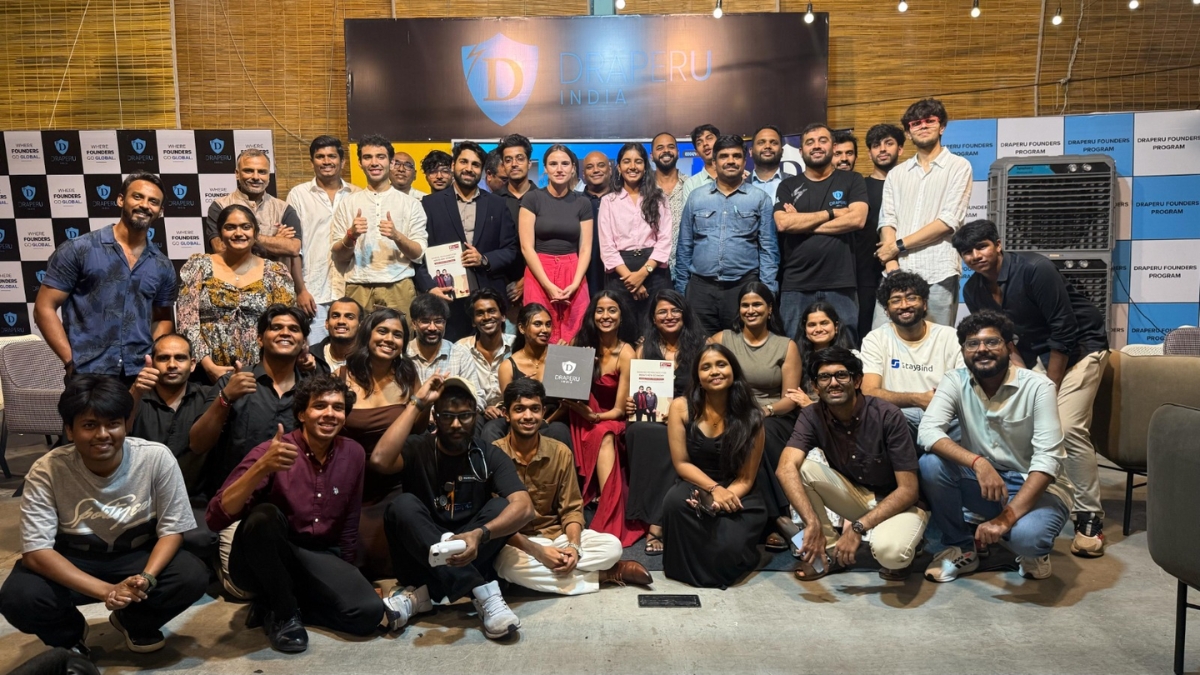
    Hyderabad (Telangana) [India], October 1: DraperU India concluded its latest DraperU Founders Program with a Demo Day in Hyderabad, where 13 startups pitched their businesses to 150+ investors, venture capitalists, ecosystem leaders, and industry experts. The Demo Day also saw Ordo and WearSynapse secure ₹25 lakh investment commitments each from DraperU India, along with an investment commitment from Rathnakar Samavedam of Hyderabad Angels.

    • Ordo and WearSynapse Secure ₹25 Lakh Commitments from DraperU India and Rathnakar Samavedam of Hyderabad Angels
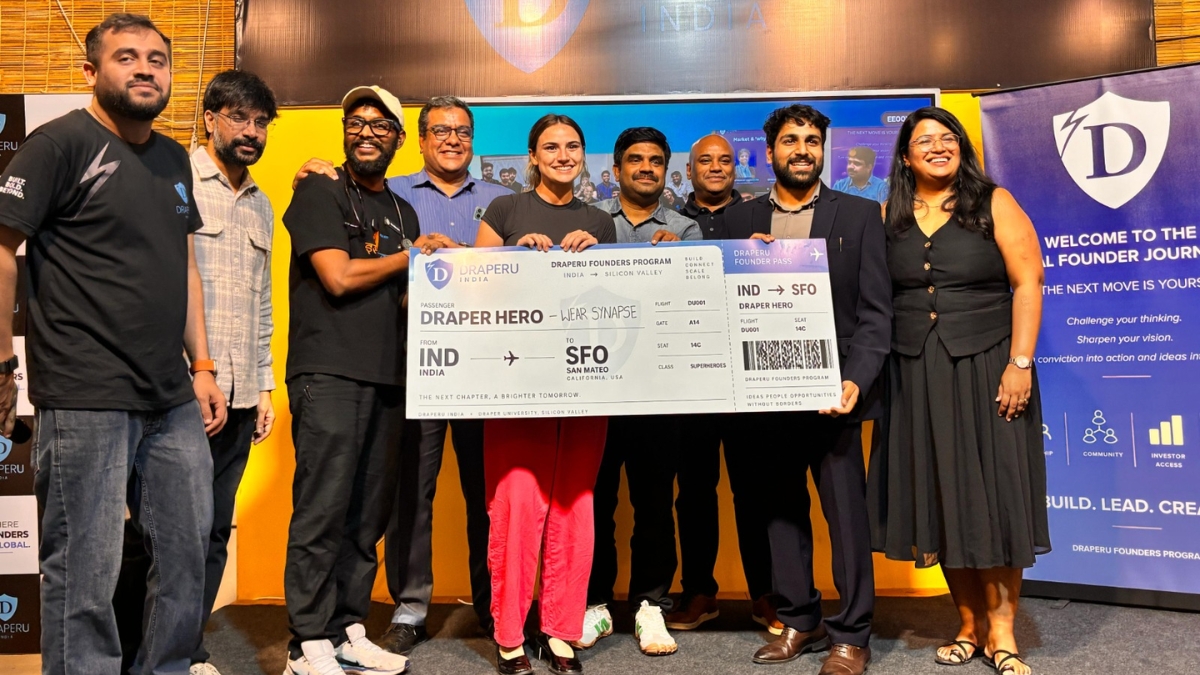
    • Ordo and WearSynapse win ₹90,000 IDFC FIRST Bank prize pool and earn boarding passes to Draper University’s Hero Training Program in Silicon Valley

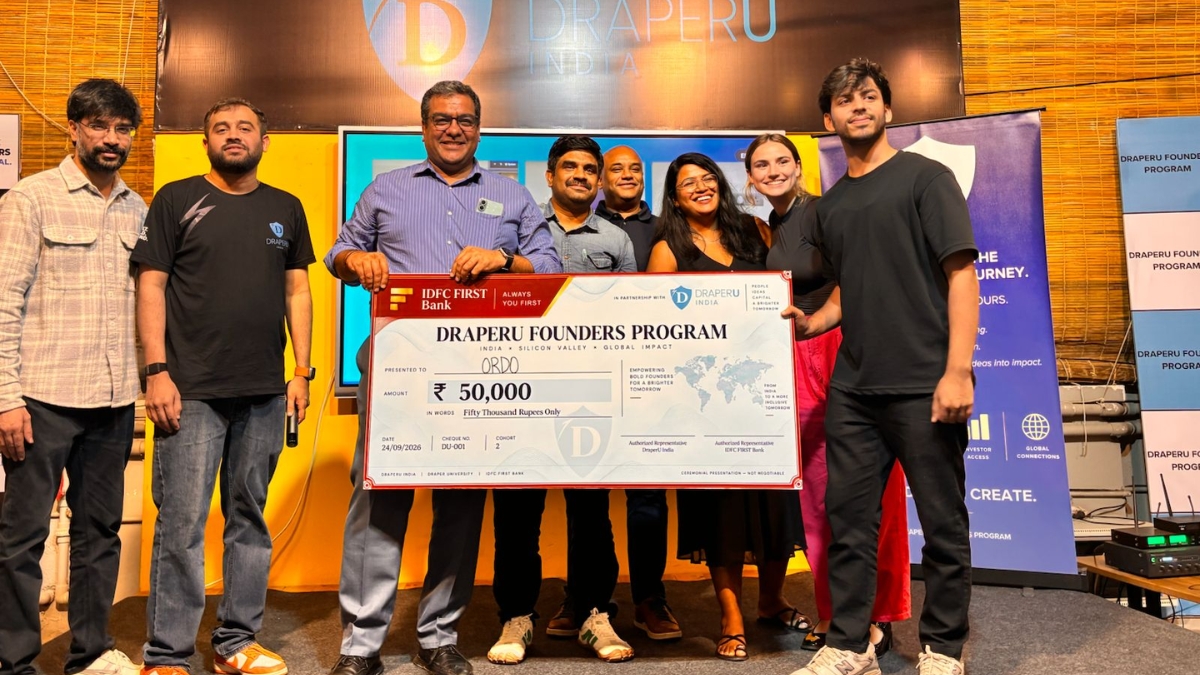
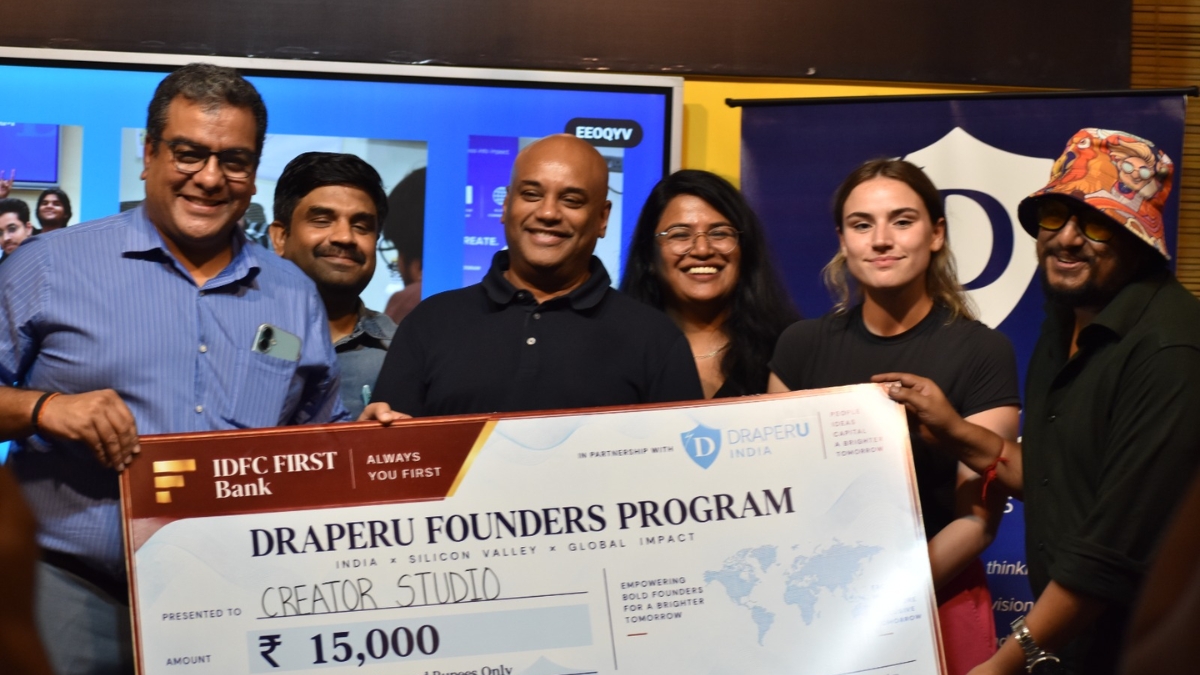
    The two startups also won the opportunity to represent DraperU India at Draper University’s Hero Training Program in Silicon Valley, following their selection at the Demo Day. In addition, Ordo, WearSynapse and Creator Studio were awarded a share of the ₹90,000 IDFC FIRST Bank prize pool, with Ordo receiving ₹50,000, WearSynapse ₹25,000 and Creator Studio ₹15,000.

    DraperU

    The Demo Day marked the culmination of an intensive 12-day residential DraperU Founders Program, designed to help early-stage founders strengthen their products, business models, go-to-market strategies, storytelling, and fundraising narratives through hands-on mentorship and investor interactions.

    The 13 participating startups represented emerging sectors including:

    1. Arkadhi – Deep Tech
    2. Aagya – Physical AI / Health Tech
    3. Creator Studio – Media Tech
    4. invyte.ai – AI Native SaaS
    5. Jurix AI – B2B SaaS
    6. Latitude 54 – Defence Tech
    7. Ordo – Physical AI
    8. Picapool – Hyperlocal Community Commerce
    9. Ring Zero Security – Cyber SaaS
    10. Shore Autonomy – Defence Tech
    11. StayBind – Proptech SaaS
    12. Weez AI – GTM / B2B SaaS
    13. WearSynapse – Physical AI / Health Tech

    The Demo Day jury featured Aaliyah Barker, Principal, DraperU Ventures; Rathnakar Samavedam, CEO, Hyderabad Angels; Murali Bukkapatnam, Executive Chairman & CEO, Volksy Technologies; Srinivas Kollipara, Managing Partner, Biome and Founder, T-Hub; Rohith V. Nair, National Head – Client Coverage NEG, IDFC FIRST Bank; and Deepika Palreddy, Co-Founder & COO, DraperU India.

    DraperU

    The event also brought together prominent investors, founders and industry leaders including Dr. Rama Iyer, Head – Innovation, GMR Group; Kishore Indukuri, Founder & CEO, Sid’s Farm, Viiveck Verma, Founder, Upsurge Global, and Surya Prakash, Director of MSME -Telangana.

    The Hero Training Program is Draper University’s flagship residential program in Silicon Valley, founded by venture capitalist Tim Draper. It brings together founders from across the world for entrepreneurship training, investor interactions, pitching opportunities and access to the Draper global network. Ordo and WearSynapse will represent DraperU India in an upcoming batch.

    Commenting on the Demo Day, Sai Krishna Vepuri, Co-Founder & CEO, DraperU India, said, “Demo Day is where the work done inside the DraperU campus meets the realities of the market. Over these 12 days, the founders have worked intensively on their products, business models, storytelling, and fundraising narratives. Seeing 13 startups take the stage before investors and ecosystem leaders reflects the depth of entrepreneurial talent we are building for. The investment commitments to Ordo and WearSynapse, along with the opportunity to represent India at Draper University in Silicon Valley, are important next steps in their founder journeys.”

    Deepika Palreddy, Co-Founder & COO, DraperU India, added, “The DraperU Founders Program is designed around learning by doing. Founders challenged their assumptions, refined their pitches, and engaged directly with investors throughout the program. Demo Day gave them an opportunity to put that preparation into practice. The investor response, investment commitments and international opportunity for Ordo and WearSynapse reflect the kind of founder journey we aim to create at DraperU India.”

    DraperU

    During the 12-day program, founders received mentorship from investors and operators including Kiran Chandra Valluri, Partner & Advisor, Dallas Venture Capital; Biswadeep Das, Chief Investment Officer, VC Mint; Sravanth Gajula, Co-Founder, AdOnMo; Indraneel Gupta, Investor & Founder, Portl Technologies; Avinash Chenreddy, Co-Founder & CTO, Constelli; Sai Chaitanya Kokku, Founder & Managing Director, DraperU India; Christ Joanna, VP – Venture Ecosystem, Draper University; and Aaliyah Barker, Principal, Draper University.

    Following the Demo Day, the participating startups will continue engaging with DraperU India through investor follow-ups via the Draper Angel Network and continued campus access. The next DraperU Founders Program is scheduled to begin in early 2027 at DraperU India, Hyderabad, with applications currently open.

    About DraperU India

    DraperU India, formerly known as Draper Startup House Hyderabad, is an all-in-one startup ecosystem hub located in Gachibowli, Hyderabad. Spanning 27,000 sq. ft., it combines an entrepreneur hostel, premium coworking space and community launchpad, connecting founders, digital nomads and innovators to the global Draper Venture Network.

    Media Contact:
    Shashank Sethi
    +91 99581 96997
    shashank.sethi@ihorizoncommunications.com

    If you object to the content of this press release, please notify us at pr.error.rectification@gmail.com. We will respond and rectify the situation within 24 hours.

  • Satish K. Naidu is Building India’s First Water Super Market® with the World’s Finest Waters

    Satish K. Naidu is Building India’s First Water Super Market® with the World’s Finest Waters

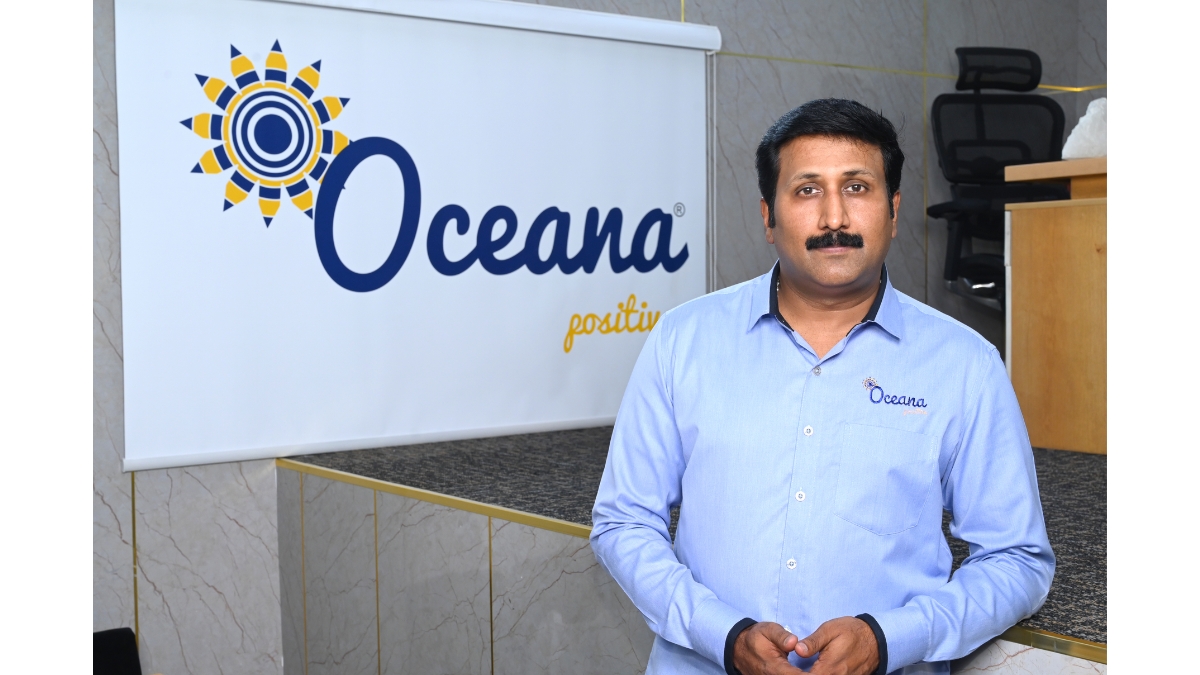
    Hyderabad (Telangana) [India], September 29: Entrepreneur Satish K. Naidu, Managing Director & CEO of Oceana Positive, is redefining India’s water industry by transforming drinking water from a commodity into a platform for branding, wellness, premium experiences and global distribution.

    With over 25 years of leadership experience, Naidu has built Oceana Positive into one of India’s leading private-label water companies while pioneering India’s First Water Super Market®—a unique business model offering an extensive portfolio of premium, functional, natural mineral and international waters.

    Founded in 2013 with a single customer and an order of just 20 customised water bottles, Oceana Positive has grown to partner with 1000+ brands, supplying approximately 45,000 bottles every day across hospitality, corporate, retail and institutional segments. What began as a small entrepreneurial initiative has evolved into a differentiated water platform built around innovation, customisation, quality and customer-centric solutions.

    This journey has been powered not only by Naidu’s vision but also by the significant contributions of Priya Naidu and Yatheendra Ram, alongside a committed and execution-focused team. Their collective efforts across operations, transformation, technology, market development and distribution are strengthening the capabilities required to scale Oceana Positive nationally and globally.

    One of Oceana Positive’s significant strategic assets is its ownership of an exclusive recognised Natural Mineral Water source in the Himalayan region, located in Himachal Pradesh. Naturally replenished through the Himalayan ecosystem, the source provides premium natural mineral water and forms an important part of the company’s differentiated portfolio.

    The defining transformation in Naidu’s entrepreneurial journey came during the COVID-19 pandemic. As consumers became more conscious of hygiene and businesses increasingly sought meaningful branding opportunities, he identified an untapped opportunity: water bottles could become powerful brand ambassadors rather than mere commodities. This insight transformed Oceana Positive from a conventional manufacturing-led business into an innovation-driven water solutions company, culminating in the launch of India’s First Water Super Market®.

    Today, Oceana Positive offers nearly 20 specialised water categories, spanning packaged drinking water, Himalayan natural mineral water, alkaline water, sparkling water, collagen water, sports water, kids water, wellness-focused waters and premium beverage blenders. Customers can choose from PET, glass, aluminium cans, tetra packs and biodegradable packaging, supported by patented bottle designs and highly customised branding solutions.

    The company is now taking this vision beyond India by bringing some of the world’s finest spring waters to the Indian market. Oceana Positive has been appointed the exclusive importer of Avanto Finnish Spring Water for India and has also entered into a strategic partnership with Polar Spring, bringing premium Finnish spring water sourced from ancient glacial landscapes formed thousands of years ago.

    These international partnerships complement Oceana Positive’s Himalayan natural mineral water portfolio, creating a distinctive ecosystem where exceptional waters from India and premium international waters can be discovered through a single platform. The company aims to make the diversity of the world’s finest waters accessible to discerning Indian consumers, hospitality establishments, corporates and premium retail channels.

    Oceana Positive is simultaneously scaling through a distribution-led business model, actively appointing partners across India to expand the Water Super Market® into major cities and emerging markets. The model enables entrepreneurs and distribution partners to access customised, functional, natural mineral and imported waters through one integrated ecosystem, while giving businesses the ability to create differentiated water brands tailored to their markets.

    With the backing and confidence of marquee investors, Oceana Positive is entering its next phase of growth—expanding its distribution network, strengthening technology and innovation, deepening global partnerships and building a scalable national platform. The combination of its differentiated portfolio, strong team, strategic partnerships and distribution model is positioning the company to create a significant new category within India’s evolving premium beverage sector.

    Sustainability remains central to this growth strategy. Oceana Positive is committed to being plastic positive, recovering and recycling more plastic than it introduces into the marketplace through specialised recycling partnerships. Rainwater harvesting, responsible packaging options and automated manufacturing further support its commitment to sustainable growth.

    Looking ahead, Naidu envisions Oceana Positive becoming the world’s largest white-label water company, bringing together proprietary Himalayan natural mineral water, globally sourced premium spring waters, innovative functional beverages and a nationwide distribution ecosystem.

    Through India’s First Water Super Market®, Oceana Positive is creating a new category where businesses and consumers can discover an exceptional range of waters—and, where required, make them their own brand.

    From the Himalayas of India to the pristine springs of Finland, Oceana Positive is building an ecosystem that is redefining how India discovers, experiences and consumes water—one exceptional bottle at a time.

  • IEM–UEM Group takes IEEE IEMCON 2026 to UC Berkeley, linking Indian researchers with global technology community

    IEM–UEM Group takes IEEE IEMCON 2026 to UC Berkeley, linking Indian researchers with global technology community

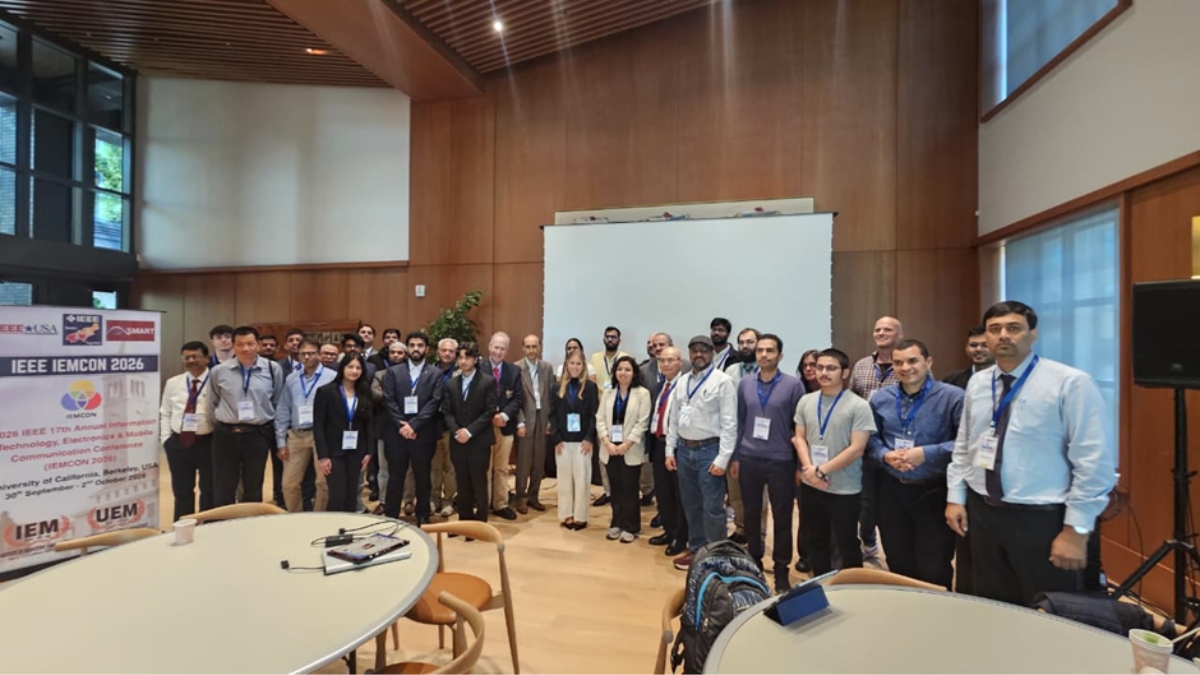
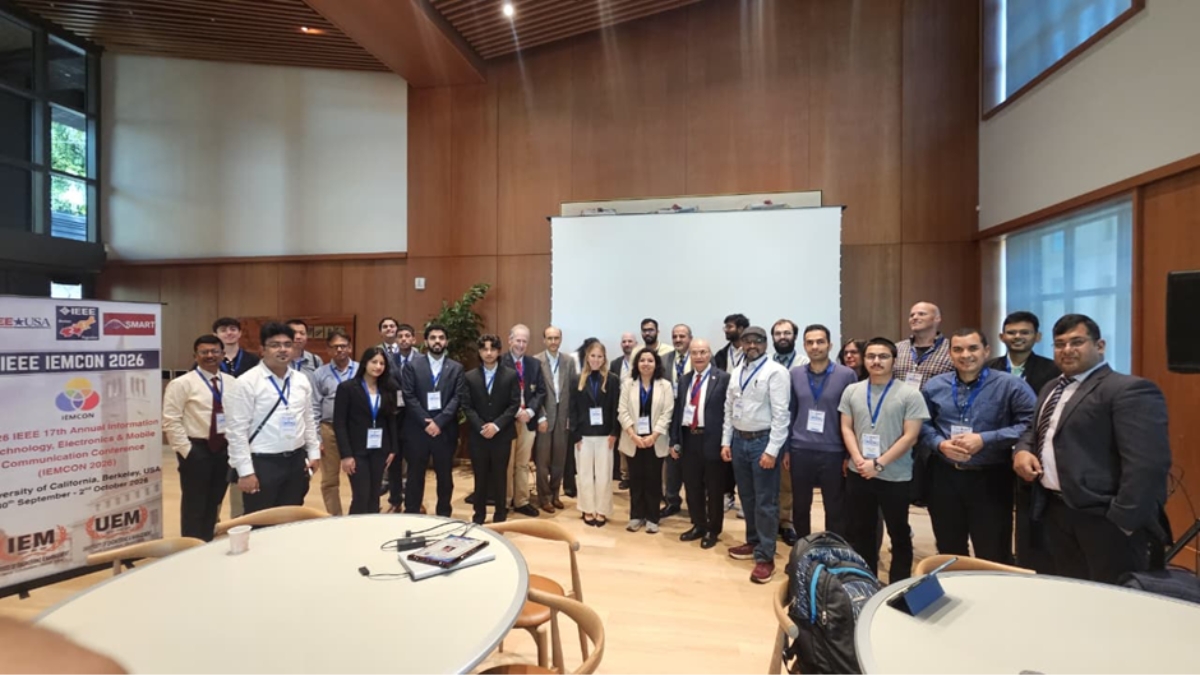
    New Delhi [India], October 1: Researchers, academics, technology professionals, industry experts, students and innovators from across the world have come together at the University of California, Berkeley, for the 2026 IEEE 17th Annual Information Technology, Electronics, and Mobile Communication Conference (IEEE IEMCON 2026), being organised by the IEM–UEM Group from Kolkata and Jaipur.

    The three-day international conference, being held from September 30 to October 2, 2026, is an important international academic initiative of the Institute of Engineering & Management (IEM), Kolkata, and University of Engineering & Management (UEM), Kolkata and Jaipur.

    For the IEM–UEM Group, the Berkeley conference is also about taking Indian researchers and students closer to the global research community. Through the platform, thousands of Indian researchers, students and faculty members are expected to benefit directly and indirectly from exposure to international research, emerging technologies, global academic networks, keynote lectures, research collaborations and ideas emerging from the conference.

    IEEE IEMCON 2026 brings researchers and professionals together to present their latest work and exchange ideas across fast-developing areas such as Artificial Intelligence (AI), Information Technology, Electronics, Mobile Communication, Cybersecurity, Internet of Things (IoT), Big Data, Cloud Computing, Wireless Communication and Human–Device Interaction.

    IEM–UEM

    Taking Indian academia to global research platforms

    The decision to organise IEEE IEMCON 2026 at Berkeley reflects the IEM–UEM Group’s continuing effort to build stronger links between Indian students and researchers and the international academic and technology community.

    For Indian researchers, the conference provides an opportunity to interact with internationally recognised scientists, professors, technology professionals and industry researchers, while getting a closer look at research directions emerging from universities and technology organisations across the world.

    The knowledge and international connections developed through the conference are also expected to make their way back to classrooms, laboratories, research groups and innovation initiatives in India. In turn, this could extend the benefits of the conference to thousands of students, researchers and faculty members.

    14 technical sessions on emerging technologies

    The three-day programme features 14 technical sessions covering subjects including Artificial Intelligence; Applications of AI; IoT and Big Data; Advanced Mobile Communication and AI; AI and Cybersecurity; Cloud and Big Data; Cybersecurity and Blockchain; AI and Consumer Electronics; AI and Wireless Technologies; Consumer Electronics and Human–Device Interaction; Communication and AI; and other AI-driven technologies.

    The inaugural session on September 30 was formally initiated by Prof. (Dr.) Rajashree Paul, Technical Co-Chair. Welcoming the delegates, she highlighted the importance of international collaboration and technological innovation in addressing emerging global challenges.

    The session was followed by addresses from the conference leadership — Prof. (Dr.) Son Vuong, University of British Columbia, General Co-Chair; Dr. Mohammad-Reza Alam, University of California, Berkeley, General Co-Chair; Prof. (Dr.) Phillip Bradford, University of Connecticut, Technical Co-Chair; and Prof. (Dr.) Charles Rubenstein, Pratt Institute, USA, Financial Chair.

    The speakers highlighted the growing importance of interdisciplinary research, emerging technologies and international academic collaboration in advancing engineering and computing.

    “Creating global opportunities for Indian students and researchers”

    Commenting on the significance of the initiative, Prof. Satyajit Chakrabarti, Vice Chancellor of UEM Kolkata, said:

    “One of the major objectives of the IEM–UEM Group is to create opportunities for Indian students, faculty members, and researchers to participate in the global knowledge and innovation ecosystem. By organising IEEE IEMCON at Berkeley, we are creating a bridge between our academic community in India and some of the world’s leading researchers, universities, and technology organisations. The knowledge, collaborations, and international exposure generated through this conference can ultimately benefit thousands of Indian students, researchers, and faculty members. We want our young researchers not only to learn about the technologies shaping the future, but also to participate actively in creating that future.”

    IEM–UEM

    International experts headline keynote programme

    A major attraction of IEEE IEMCON 2026 is its keynote programme, which features experts from leading academic institutions and technology organisations.

    On September 30, Thomas Kehler, CEO of CrowdSmart and former CEO of IntelliCorp and CEO Connect, delivered a keynote on “Rebuilding the Artificial Neuron for a Distributed Intelligence Reasoning System.”

    This was followed by Prof. Hamid Jafarkhani of the University of California, Irvine, who addressed “UAV Wireless Communication and Sensing Networks.”

    On October 1, Dr. Yan Liu of the University of Southern California is scheduled to speak on “Frontiers of Physics-Informed Foundational Models for Time Series.”

    Anna Lisa Gentile, Senior Research Scientist at IBM, will deliver another keynote titled “From Conversation to Memory: Consolidating What Agents Learn About Us.”

    The final day will feature Dr. Robert W. Heath Jr. of the University of California, San Diego, speaking on “The Tri-Hybrid MIMO Architecture for 6G.”

    The keynote programme will conclude with Dr. Yuhong Liu of Santa Clara University, California, speaking on “Trustworthy AI.”

    Researchers from across countries join the programme

    The conference programme features research contributions from academics, students, researchers and professionals affiliated with universities, research institutions and technology companies across several countries.

    The research being presented covers a wide range of areas, including large language models, machine learning, autonomous systems, AI-enabled healthcare, cybersecurity, blockchain, wireless networks, edge and cloud computing, multi-agent systems, consumer electronics, human–computer interaction and next-generation communication technologies.

    The technical programme includes contributions from researchers associated with institutions and organisations including Indian Institute of Technology Madras, University of California campuses, Arizona State University, George Mason University, Marshall University, Trinity Western University, PayPal, NVIDIA, Roku and several other academic and industry organisations.

    Researchers participating in the programme represent countries including the United States, India, Canada, Saudi Arabia, Germany, the Netherlands, Brazil, Pakistan and Taiwan, among others.

    Selective international research platform

    The paper acceptance rate for IEEE IEMCON 2026 is 34.6%, reflecting the conference’s selective peer-review process.

    IEEE IEMCON 2026 continues through October 2, 2026, with technical presentations, keynote addresses, research discussions and opportunities for international academic and industry collaboration.

    Through initiatives such as IEEE IEMCON, the IEM–UEM Group, with its institutions in Kolkata and Jaipur, seeks to expand international research engagement and provide Indian students, researchers and faculty members with greater access to global developments in science, engineering and emerging technologies.

    If you object to the content of this press release, please notify us at pr.error.rectification@gmail.com. We will respond and rectify the situation within 24 hours.