
Mumbai (Maharashtra) [India], July 22: Go to any currency exchange in Mumbai or Delhi this year, and you’ll see it right away. Those rate boards are changing faster, and not in the rupee’s favor. Not long ago, a dollar cost around 83 rupees. Now? You’ll get quotes anywhere from 91 to 95, depending on the week. That’s not just noise—it’s one of the rupee’s worst slides since 2013.
For most people, exchange rates sound like background chatter—something you skim past in the paper. But this year, the rupee’s drop is starting to show up in real life. It’s sneaking into fuel prices, groceries, bills for overseas colleges, and even your investments. So, what’s going on?
Oil Still Calls the Shots
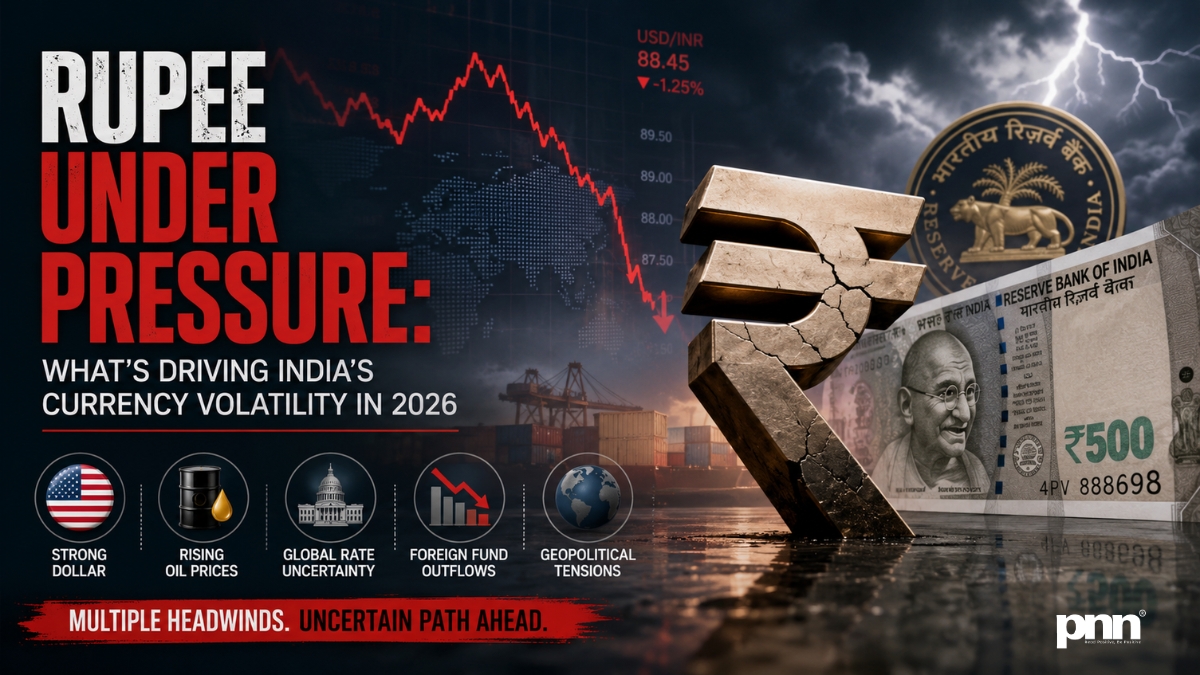
India buys nearly 88% of its crude oil from other countries. That one number explains a lot of the rupee’s ups and downs. When Brent crude jumped into the $111–$121 range this year, India’s refiners rushed to the market, snapping up dollars to pay. Every tanker that arrives pulls more dollars off the market—and the rupee loses ground.
People watching the numbers say there’s a $40–50 billion dollar gap this year, mostly because of oil. When your currency depends this much on just one import, any spike in global oil prices punches straight through. There’s not much of a buffer.
Foreign Investors Are Pulling Out
Then there’s the foreign money. This year, global funds yanked out about $17–18 billion from Indian stocks, sending it to places like East Asia and Europe, where the risk-adjusted returns looked better. And every time an overseas investor sells and swaps those rupees for dollars before sending their cash home, that’s more pressure on the rupee.
India’s not alone here. Most emerging markets saw money run for the exits in 2026, especially while the US Federal Reserve kept rates high—making dollars look safer than anything else.
New Tariffs Pile On
If oil and FPI were slow-burning problems, tariffs were a spark. Suddenly, Indian exports—like gems, electronics, and auto parts—were hit with new tariffs hitting 26% to 50%. These are the very sectors that usually bring in steady dollars. So when those earnings dropped, there were fewer dollars flowing in to offset demand from oil and departing investors. The rupee slid even faster after the tariffs, and it hasn’t really bounced back.
The RBI Steps In—But Only So Much
That doesn’t mean the Reserve Bank of India just let it happen. They dipped into their foreign reserves—still sitting healthy at $640–700 billion—to smooth out the roughest days. They aren’t trying to reverse the trend. That’s out of their hands with global forces this big. Their job is to keep things from spiraling suddenly—no wild, single-day plunges that might panic businesses or investors.
Axis Bank’s Neelkanth Mishra pointed this out last year. The RBI, he said, would step in only if things got messy, not just because of steady weakness. And that’s how it’s gone: a managed, if uncomfortable, slide—not a crash.
There was even a bit of a comeback. When the rupee touched record lows near 95 per dollar in the spring, it started to claw back a little after RBI’s measures in early June. By midyear, the rupee settled between 91 and 96 to the dollar. Still weak, but at least no longer falling off a cliff.
Winners and Losers
A falling rupee isn’t pure bad news. Exporters in IT, pharma, and textiles usually do well in these times—their dollar earnings turn into more rupees at home. Companies like Infosys and TCS have often enjoyed a gentle boost when the rupee slid.
But most of the pain lands with people filling gas tanks, companies owing money in dollars, students paying for school abroad, and ultimately, anyone feeling inflation. Pricier imports eventually drive up what everyone pays day-to-day.
What Comes Next
Most experts think the rupee will stick somewhere in the low-to-mid 90s for the rest of 2026, unless something big changes—like a major trade deal easing tariffs, oil prices cooling off, or a shift in US rate policy. Longer-term, predictions are all over the place. Some see the rupee passing 100 before 2030, others think it’ll recover somewhat. That kind of uncertainty says a lot—no one really knows.
So, this year, there’s no single dramatic collapse story. It’s those old, stubborn issues—oil, fleeing capital, and trade shocks—all landing at once and feeding off each other. The rupee’s story in 2026 is a reminder: a currency’s strength isn’t just about who prints it; it’s about how that country weathers the world, for better or worse.